








A workforce can be rich in talent and still be slow where it matters.
Capabilities may exist across the organisation, yet remain buried beneath job titles, fragmented systems and functional boundaries. Employees complete learning programmes but struggle to find opportunities to apply what they have learned. Managers protect their strongest people, while business-critical roles remain unfilled. By the time a skills gap becomes visible, the business is already competing externally for talent it may have been able to build or redeploy from within.
In 2026, this dynamic defines the core challenge across leadership, learning, and organizational culture. The primary focus has evolved beyond merely inventorying existing skills within a workforce to anticipating where those capabilities can generate maximum impact next, and redeploying them seamlessly before opportunities fade.
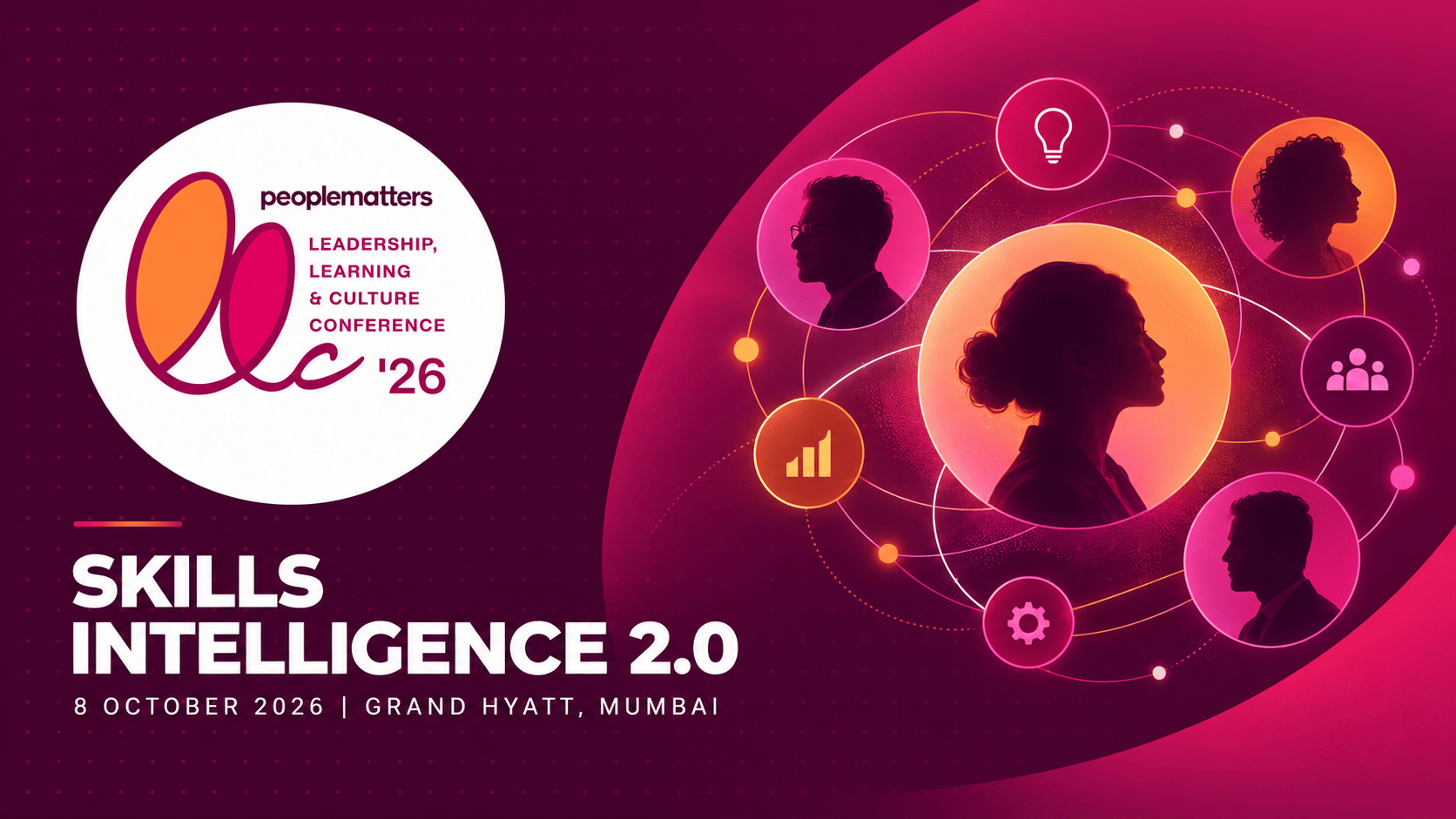
That is the next step People Matters is taking with the Leadership, Learning & Culture Conference 2026, taking place on October 8 at Grand Hyatt, Mumbai.
Last year, LLC challenged leaders to move beyond inherited playbooks and reimagine human potential. This year, the conversation advances from reimagining potential to engineering the systems that turn it into performance.
Under the theme Skills Intelligence 2.0: Optimising Workforce Liquidity Through Strategic Orchestration, LLC 2026 will bring leadership, learning and culture together around one defining business question: Can organisations identify, build, move and deploy capability at the speed at which their priorities are changing?
The 2026 shift: From collecting skills to orchestrating impact
For years, organisations have invested in skills taxonomies, learning platforms, assessments and employee profiles. These have helped create visibility, but visibility alone cannot produce business value.
A skills inventory may show what employees say they know. Skills Intelligence 2.0 must go further: revealing proficiency, experience, adjacent capability, learning velocity and readiness for emerging work. It must connect what people can do with what the business needs, and update that understanding as employees learn, perform and move.
Workforce liquidity is what happens when that intelligence becomes actionable. It reflects the speed and precision with which an organisation can redirect people and capabilities towards its most valuable priorities, whether through internal movement, project deployment, reskilling, role redesign or collaboration between humans and AI.
Strategic orchestration is the leadership capability that brings these elements together. It converts workforce insight into decisions about how work should be organised, which capabilities should be built, where talent should move and what must remain under human judgement.
The urgency is growing as AI moves deeper into everyday work. Microsoft’s 2026 Work Trend Index found that 66% of AI users are spending more time on high-value work, while 58% say they can produce work they could not have created a year earlier. The implication is bigger than productivity: as technology expands who can perform higher-value work, leaders must reconsider how tasks, authority and opportunity are distributed across the organisation.
LLC 2026 will examine this shift through three connected pillars.
Leadership: From managing capacity to orchestrating work
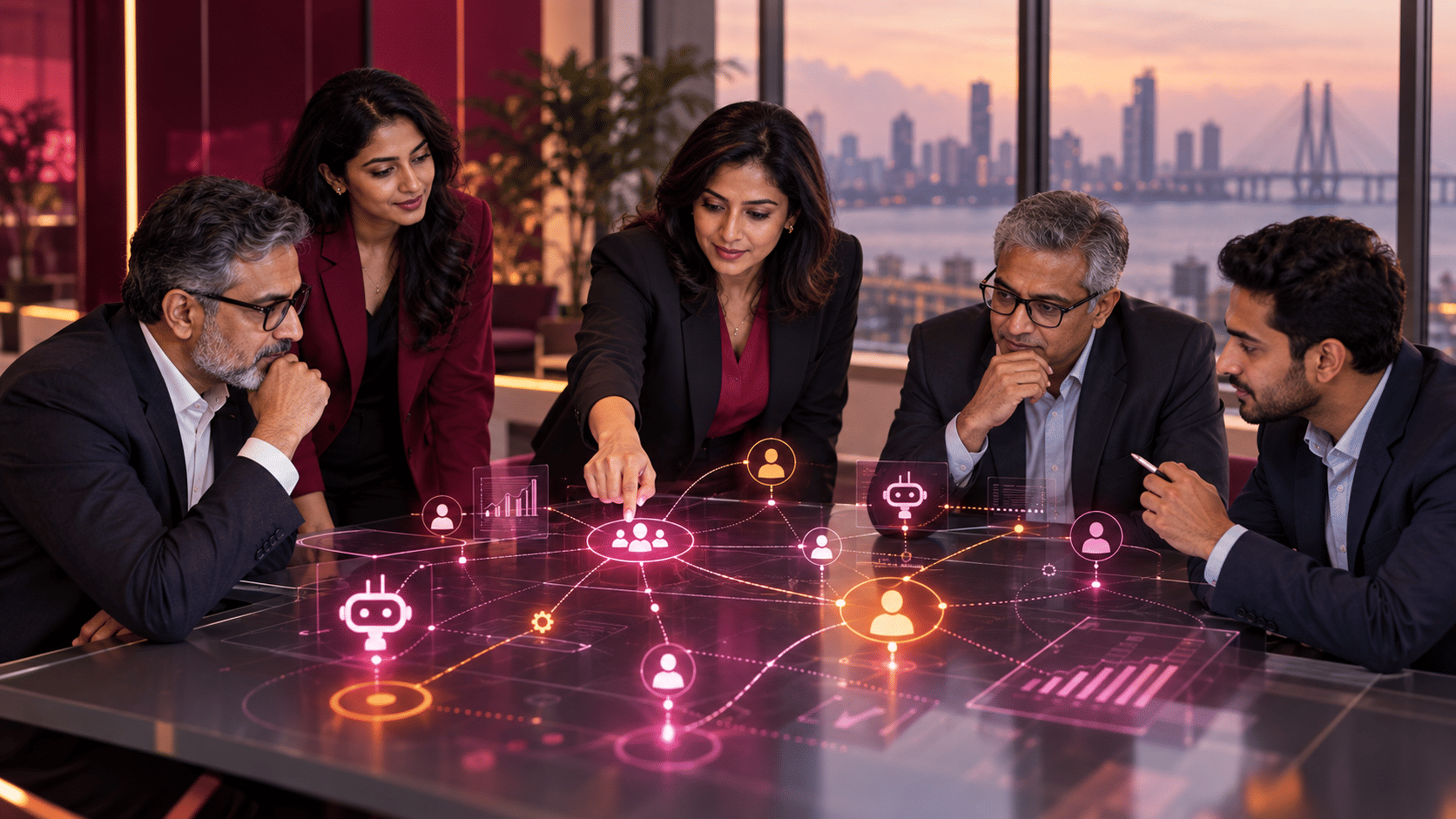
Leadership is entering an orchestration era.
As work is increasingly distributed across employees, AI agents, algorithms, external talent, and cross-functional teams, leaders must decide how these different contributors combine around a shared outcome. Their role is expanding from managing headcount to designing work, allocating capability and creating the conditions for faster execution.
This raises questions that cannot be answered through technology strategy alone. Which decisions can AI inform, and where must human judgement prevail? Who owns the outcome when an algorithm shapes a consequential decision? How can organisations increase decision velocity without weakening governance or accountability?
Leadership development must also catch up with the pace of redesign. Multi-year programmes built around stable competency models struggle when business priorities and operating models change every few months. Organisations need composable leaders who can combine technological fluency, commercial judgement, empathy and execution according to the situation, and continually learn, unlearn and reconfigure their approach.
The Leadership Studio at LLC 2026 will explore what it takes to build these strategic orchestrators: leaders who can coordinate humans and machines, move capabilities towards value and retain accountability for the choices made along the way.
Learning: From programme delivery to capability intelligence
The learning function is being asked to solve a more consequential problem than course participation. It must help the organisation determine which capabilities matter, where they are missing, and whether learning is changing performance.
The shift towards Skills Intelligence 2.0 will require L&D teams to connect learning data with business demand, work experience, mobility and performance signals. Instead of responding after a capability gap appears, learning leaders will need to anticipate which skills are losing relevance and which ones the organisation will require next.
This will also change how AI fluency is built. General awareness may familiarise employees with tools, but practical capability develops when people use, question and improve AI outputs inside real workflows. Learning must move closer to the work through assignments, experimentation, coaching and feedback rather than remain separated from daily performance.
Measurement must evolve with it. Training hours and completion rates reveal activity; they offer little evidence of whether employees are applying new capabilities or producing stronger outcomes. LLC 2026 will examine how learning leaders can connect capability growth with changes in productivity, behaviour, mobility and business execution, and strengthen L&D’s position as a market shaper rather than a training provider.
Culture: From structural stability to intelligent movement
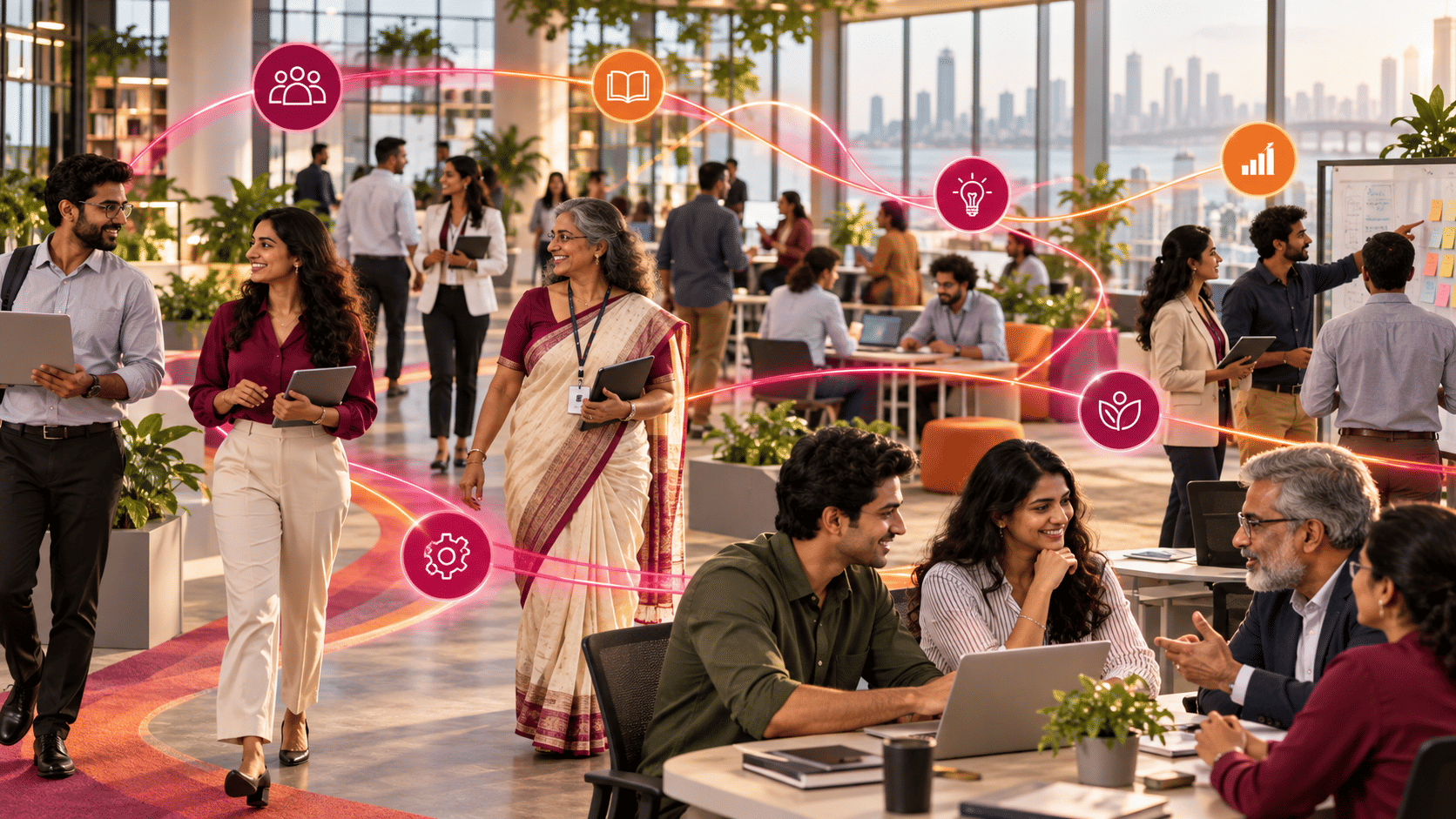
Even the best skills intelligence will create limited value if culture prevents people from moving.
Workforce liquidity depends on whether employees can cross functional boundaries, managers are willing to release talent, teams can experiment with new ways of working, and people can become beginners again without losing professional status. It requires a culture that treats adaptability as an everyday organisational muscle rather than an emergency response to disruption.
This shift is unfolding within an increasingly multigenerational workforce. A Deloitte’s 2026 global study of more than 22,500 Gen Z and millennial respondents found that younger workers are defining progress through a combination of stability, skills and wellbeing rather than advancement alone. Their expectations around transparency, growth, and meaningful participation are challenging organisations to rethink the employment relationship without fragmenting culture by generation.
The answer is not to build a separate culture for Gen Z. It is to create a stronger exchange across generations, where experience, institutional context, digital confidence and emerging capabilities move in multiple directions.
Cultural liquidity does not mean making every principle flexible. Organisations still need clear values and shared decision rules. What must become more fluid are the routes through which people contribute, learn and grow. Roles can give way to assignments, vertical ladders can expand into career lattices, and expertise can travel across teams instead of remaining locked inside organisational silos.
The Culture Lab at LLC 2026 will explore how organisations can enable this movement while preserving belonging, trust and human sustainability. Because a workforce cannot remain adaptable if continuous transformation leaves people anxious, exhausted or uncertain about their place in the future.
Three pillars, one organisational system
Leadership, learning and culture cannot operate as parallel agendas.
Skills intelligence without leadership action becomes another dashboard. Learning without mobility produces capable employees with nowhere to grow. Workforce movement without cultural trust creates friction, resistance and talent hoarding. AI without clear accountability accelerates decisions while making ownership harder to locate.
LLC 2026 is being built around these intersections.
Through immersive experiences, provocations, candid conversations, masterclasses, future labs and cross-industry perspectives, the conference will move beyond discussing workforce trends to examine how organisations are responding to them. The focus will be on practical choices: redesigning work, strengthening skills intelligence, accelerating capability-building, enabling internal movement and creating cultures that can absorb continuous change.
The ambition is captured in a simple call: Move with talent and leave no one behind.
That means recognising workforce liquidity as more than a talent metric. It is an enterprise capability, one that determines how quickly an organisation can respond to change, direct talent towards opportunity and convert human potential into measurable growth.
Join the leaders shaping what comes next
People Matters LLC 2026 will convene over 500 leaders, more than 40 speakers and close to 25 solution partners for more than 10 hours of learning, bringing together CHROs, CLOs, business leaders, transformation heads, talent leaders, culture architects and WorkTech innovators.
If your organisation is working to understand its capabilities more clearly, prepare leaders for an augmented workforce, connect learning with performance, or build a culture where talent can move with opportunity, this is the room to join.
Be part of the People Matters Leadership, Learning & Culture Conference 2026 on 8 October at Grand Hyatt, Mumbai.