







Business
Ten years of UPI: How a 21-bank experiment became the world’s largest real-time payments network






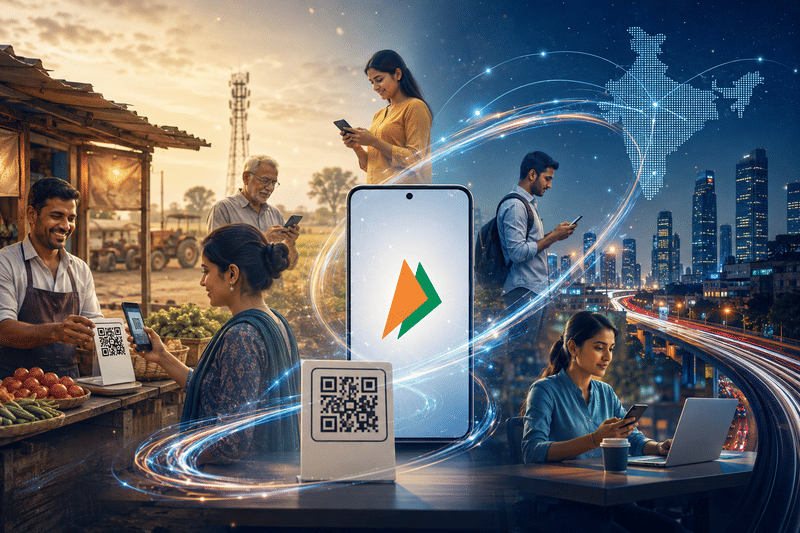
From a pilot launched in 2016 to a payments network handling more than 24,000 crore transactions annually, UPI has transformed how India moves money and set a global benchmark for digital payments.
India's Unified Payments Interface (UPI) completed a decade in 2026. What started as a modest experiment involving 21 banks has evolved into the world's largest real-time payments ecosystem, connecting 741 banks, millions of merchants and hundreds of millions of users.
According to data cited by the State Bank of India (SBI) and industry statistics, UPI processed more than 24,000 crore transactions in FY2025-26, compared with just 2 crore transactions in FY2016-17. India now accounts for nearly half of all real-time digital payment transactions globally.
The story of UPI is not merely one of technological growth. It is a timeline of how interoperability, public digital infrastructure, regulatory support and changing consumer behaviour combined to reshape India's financial system.
2016: The launch of a new payments architecture
UPI was launched on 11 April 2016 by the National Payments Corporation of India (NPCI) with a simple objective: enable instant bank-to-bank transfers through mobile devices.
Key milestones:
- Started with 21 participating banks
- Introduced virtual payment addresses, removing the need to share bank account details
- Enabled real-time payments 24x7
- Created a common interoperable platform for banks and payment providers
At launch, UPI remained largely unfamiliar to consumers. Digital payments in India were still dominated by cards, cash and net banking.
2017: Demonetisation accelerates adoption
The months following the 2016 demonetisation drive created a significant shift towards digital transactions.
UPI emerged as a convenient alternative because it allowed users to transfer money instantly using mobile phones without requiring card infrastructure.
Key developments:
- Rapid increase in user registrations
- Growing participation from banks
- Emergence of consumer-facing payment applications
- Merchant acceptance begins expanding
FY2016-17 closed with roughly 2 crore UPI transactions, laying the foundation for future growth.
2018: QR codes enter everyday commerce
By 2018, UPI moved beyond peer-to-peer transfers and began transforming merchant payments.
The QR code became the defining symbol of India's digital payments revolution.
Small businesses, street vendors and neighbourhood shops adopted digital payments at scale because QR codes required minimal investment.
Key changes:
- Merchant onboarding accelerated
- Digital acceptance expanded into smaller towns
- Transaction costs remained low
- Interoperability improved customer convenience
This period marked the beginning of UPI's transition from a banking product to an everyday utility.
2019: Building trust at scale
As transaction volumes increased, banks and fintech firms focused on improving user experience, reliability and security.
The ecosystem matured through:
- Improved authentication systems
- Better dispute resolution mechanisms
- Stronger fraud controls
- Wider integration across financial services
UPI increasingly became a default payment method for millions of Indians. Trust, rather than technology alone, emerged as the key growth driver.
2020: Pandemic turns digital payments into necessity
The Covid-19 pandemic became one of the most significant accelerators of digital payment adoption.
Lockdowns and mobility restrictions pushed consumers and businesses towards contactless transactions.
Key outcomes:
- Sharp increase in digital payment usage
- Greater merchant acceptance
- Wider adoption among first-time users
- Increased reliance on remote commerce
What began as a temporary adjustment quickly became a lasting behavioural shift. For many consumers, UPI moved from being an alternative payment method to the preferred one.
2021: UPI becomes mainstream infrastructure
By 2021, UPI had become deeply embedded in India's economic activity.
Consumers used it for:
- Grocery purchases
- Utility bill payments
- Transport fares
- Small-ticket merchant transactions
- Peer-to-peer transfers
The scale of adoption highlighted a major shift in payment behaviour.
According to government data cited in the SBI article, small-value transactions became the backbone of the ecosystem, demonstrating that UPI's success was driven by everyday payments rather than high-value transfers.
2022: From payments platform to digital public infrastructure
UPI's role expanded beyond payments as it became increasingly integrated with India's broader digital public infrastructure.
The ecosystem operated alongside:
- Jan Dhan accounts
- Aadhaar-based verification
- Mobile connectivity
- e-KYC systems
- DigiLocker
- Account Aggregator framework
This interoperability created a powerful foundation for financial inclusion and digital service delivery.
Industry experts increasingly viewed UPI not merely as a payment product but as a national digital infrastructure layer.
2023: Expanding financial inclusion
As transaction histories became richer, policymakers and financial institutions began exploring how digital payment data could support broader financial inclusion.
The focus shifted towards:
- Small-business formalisation
- Credit accessibility
- Cash-flow visibility
- Digital financial records
For many micro-enterprises, digital transactions began creating a financial footprint that could support future lending opportunities.
The discussion increasingly moved from moving money to creating economic opportunity.
2024-25: Innovation broadens the ecosystem
UPI entered a new phase marked by product innovation and deeper integration across financial services.
Major developments included:
- Expansion of merchant payment capabilities
- Growth of RuPay credit card transactions on UPI
- Increasing use of biometric authentication
- Wider integration with digital financial products
The platform also continued attracting banks, fintech firms and merchants into a single interoperable ecosystem.
By this stage, UPI had become central to India's digital economy.
2026: A decade later, UPI operates at population scale
Ten years after launch, UPI's numbers illustrate the scale of transformation.
According to SBI's assessment:
- 741 banks are live on UPI
- More than 24,000 crore transactions were processed in FY2025-26
- India accounts for nearly half of global real-time payment transactions
- UPI has expanded its presence across nine countries, with Cambodia becoming the latest addition in 2026
Additional innovations continued during the year:
- UPI Circle enabled delegated payment authority
- RuPay credit card integration expanded
- Biometric authentication gained momentum
- UPI connectivity extended to CBDC wallets and ATM cash withdrawals
In July 2026 alone, more than 800 million UPI transactions, valued at over ₹35,000 crore, were authenticated through fingerprints or facial recognition, according to figures cited in the SBI article.
The decade that changed how India pays
The most significant achievement of UPI may not be its transaction volumes.
Its real success lies in making digital payments routine.
From roadside tea stalls and vegetable vendors to multinational businesses, the same payment infrastructure now supports economic activity across vastly different scales.
The journey from 21 banks in 2016 to a globally recognised payments network in 2026 illustrates how interoperable public infrastructure can reshape consumer behaviour, expand financial inclusion and support innovation.
As UPI enters its second decade, attention is shifting towards credit access, digital trust, cyber security, global expansion and the responsible use of financial data. The next chapter will likely focus less on moving money faster and more on using digital infrastructure to widen economic opportunity.
Author
Loading...