







Business
Tim Cook steps down: 5 things he achieved at Apple that Steve Jobs never did





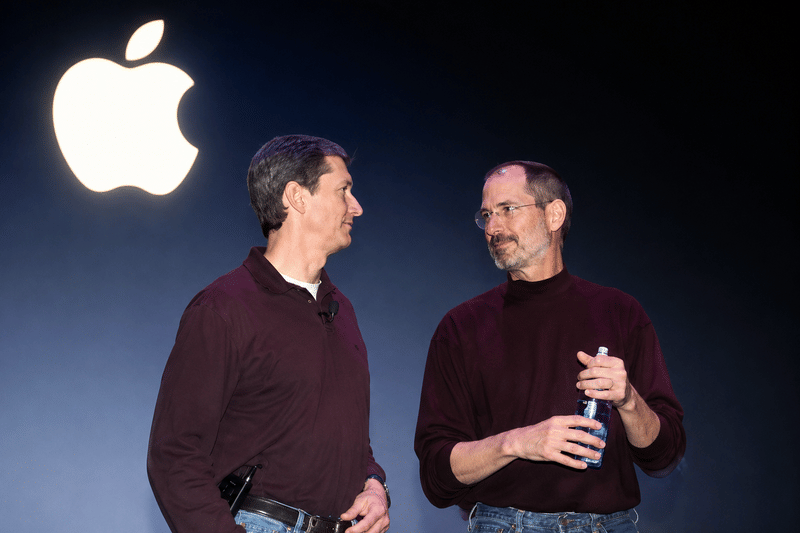
From turning Apple into a multi-trillion-dollar company to building entirely new businesses, Tim Cook leaves behind a legacy that extended far beyond preserving Steve Jobs' vision.
When Tim Cook took over as Apple CEO in 2011 following Steve Jobs, he faced one of the toughest succession challenges in corporate history. Fifteen years later, Cook is stepping down as chief executive and moving into the role of Executive Chairman, with John Ternus set to lead the company. Apple announced the succession plan in April 2026, marking the start of a new leadership era.
While Jobs transformed Apple through breakthrough products such as the iPhone, iPad and iPod, Cook's tenure focused on scale, expansion and operational excellence. Here are five achievements that defined the Cook era and were never realised during Jobs' leadership.
1. Creating Apple's second successful CEO transition
Most companies struggle with one major leadership handover. Apple has now completed two.
Cook succeeded Jobs in 2011 and spent years building a succession process that culminates with John Ternus taking over as CEO in September 2026. Apple described the transition as the result of long-term succession planning approved by its board.
Why it matters:
- Jobs handed Apple to Cook.
- Cook is handing Apple to Ternus.
- Apple remains financially strong during the transition.
- The company has evolved beyond dependence on a single founder figure.
Many analysts view this institutionalisation of leadership as one of Cook's most enduring contributions.
2. Taking Apple from a $350 billion company to a multi-trillion-dollar giant
When Jobs stepped down, Apple was already one of the world's most successful technology companies.
Cook elevated it to an entirely different level.
Under his leadership, Apple became the first company to cross the $1 trillion and $2 trillion valuation milestones. The company later surpassed $4 trillion in market value, according to market reports published during the leadership transition.
Key milestones under Cook:
- Expansion of the iPhone ecosystem.
- Growth of recurring services revenue.
- Global supply chain optimisation.
- Consistent profitability across product categories.
- Record shareholder returns.
No Apple chief executive before Cook managed growth at such scale.
3. Launching Apple's biggest post-iPhone product successes
Critics often describe Cook as an operator rather than an inventor. Yet some of Apple's most successful modern products arrived under his watch.
Among them:
- Apple Watch (2014)
- AirPods (2016)
- AirPods Pro (2019)
- AirPods Max (2020)
- Vision Pro (2024)
The Apple Watch became the world's leading smartwatch platform, while AirPods evolved into one of Apple's strongest hardware businesses. Industry observers widely regard both product families as defining successes of the Cook era.
Unlike Jobs, Cook proved Apple could create major categories beyond the iPhone.
4. Turning Apple into a streaming and entertainment company
Under Jobs, Apple changed how people bought and consumed music.
Under Cook, Apple became a content creator.
The launch of Apple TV+ in 2019 pushed the company directly into the entertainment industry. Through Apple Studios, the company backed original films and television series that quickly gained critical recognition.
Notable achievements included:
- CODA becoming the first streaming-produced Best Picture Oscar winner.
- High-profile productions such as Killers of the Flower Moon.
- Global hits including Ted Lasso and Severance.
- Expansion into live sports programming.
Apple's services business became a major growth engine during Cook's tenure, helping diversify revenue beyond hardware.
5. Building Apple's own AI strategy
Artificial intelligence emerged as the defining technology race of the decade.
Unlike rivals who rushed aggressively into generative AI, Cook pursued a more measured approach focused on privacy, security and on-device processing.
This eventually led to the rollout of Apple Intelligence, Apple's AI framework integrated across its devices. Reports indicate AI will remain a major priority for the company under incoming CEO John Ternus.
Cook's AI approach focused on:
- Privacy-first deployment.
- On-device computing.
- Controlled integration across products.
- Consumer-focused applications rather than experimental features.
Whether this strategy ultimately outperforms competitors remains to be seen, but it established a distinctly Apple approach to AI.
A different kind of Apple legacy
Steve Jobs will always be remembered as Apple's visionary founder and product architect. Tim Cook built a different legacy.
He transformed Apple into one of the most valuable companies in history, expanded its ecosystem, launched successful new product categories, entered entertainment and prepared the company for a post-Cook future.
As John Ternus takes over, Apple enters its next chapter with a scale, structure and global influence that far exceed what existed when Cook inherited the company in 2011.
Topics
Author
Loading...