







Economy Policy
1942 to 2026: How Ambedkar’s labour reforms still define India’s world of work






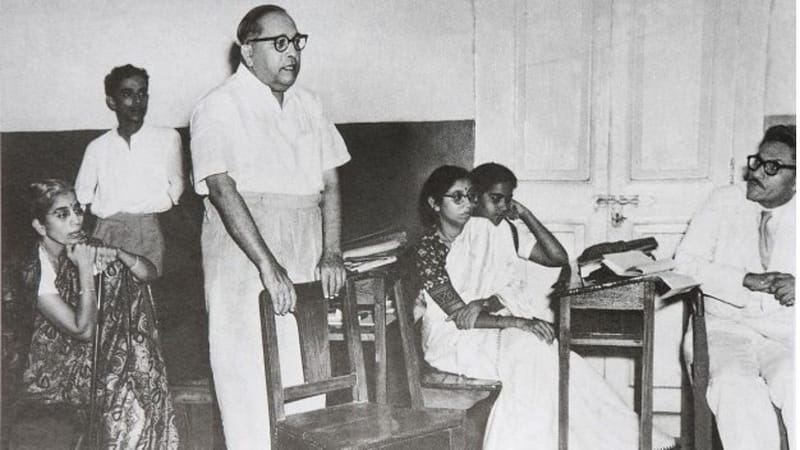
Long before HR handbooks and labour codes, B R Ambedkar helped design the rules that still shape how India works today.
Every workplace runs on a set of assumptions. There is a workday. There is leave. There are benefits. There are rights, at least on paper.
It all feels standard. Almost obvious.
It wasn’t.
Much of what now passes as routine in India’s world of work traces back to a concentrated burst of policy thinking in the 1940s, when B. R. Ambedkar took charge as Labour Member in the Viceroy’s Executive Council.
What he helped put in place was not a list of reforms. It was a structure.
The day work stopped being endless
Start with the simplest question. How long should a workday be?
Before the 1940s, it often stretched to 12 hours. Sometimes more.
One of the most consequential shifts of that period was the reduction of working hours from 12 to 8, bringing India closer to global standards. This was part of a wider set of labour interventions introduced between 1942 and 1946.
The eight-hour day did two things at once. It set a limit on work and, just as importantly, it defined what counted as excess.

When labour stopped being invisible
The next shift was less visible but more foundational. Labour began to be treated as a system, not a side effect of industry.
Policies introduced during this period started stitching together what we now recognise as workplace fundamentals:
- Maternity benefits for women workers, with wage support and defined leave
- Paid leave and dearness allowance, formalising time away from work
- Early thinking around provident funds and social insurance
- Moves towards formal recognition of trade unions
-
Provisions for housing, healthcare and worker welfare
Individually, these look like benefits. Together, they form a framework.
Putting everyone at the same table
Then came something more structural. Conversation.
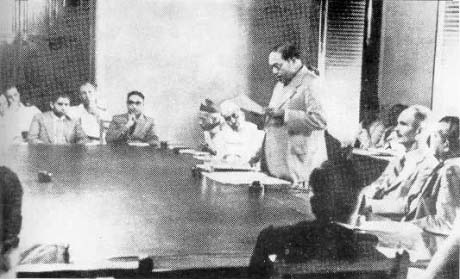
In 1942, India held its first Tripartite Labour Conference. Government, employers and workers in the same room, dealing with the same problems.
According to The Indian Express, Ambedkar ensured that labour and management were brought face to face as equals.
That idea has had a long afterlife. Whether it is wage negotiations or policy consultations, the expectation that all sides have a voice did not emerge by accident.
The early version of data-led policy
There was also an attempt to understand labour beyond anecdote.
The Labour Investigation Committee, set up in 1944, looked at wages, housing and working conditions across industries. It widened the scope beyond a few sectors and built an evidence base for future decisions.
Today, organisations call it data-driven decision-making. The instinct itself is not new.
Not just wages, but dignity
Some of the most telling changes were not about output or efficiency.
- Mining laws were amended to ensure separate facilities for men and women
- Welfare funds were created for industries like mica and coal
- Working conditions were examined in terms of hygiene and basic dignity
These moves expanded the definition of work. It was no longer just about labour as input. It was about workers as people.
From policy to principle
What began as labour policy found its way into constitutional thinking.
Articles such as Article 39 and Article 43 reflect ideas around livelihood, fair wages and decent conditions of work.
These are not operational rules. They are guiding principles. And they continue to shape how labour laws are interpreted and designed.

What still holds
Fast forward to 2026. India has new labour codes, implemented in 2025, consolidating multiple laws into a simplified framework, according to government information.
But look closely and the core ideas remain familiar:
- Defined working hours
- Social security as an objective
- Formal recognition of workers within systems
- Dialogue between state, employer and employee
The language has changed. The logic has not.
Modern workplaces tend to focus on what is new. Remote work. AI. Gig roles. Flexibility.
But much of HR still operates inside a structure built decades ago.
The workday, leave policies, employee benefits, safety norms. These are not recent inventions. They are inherited systems, adapted over time. Which makes this less of a history lesson and more of a reality check!
Topics
Author
Loading...