







Employee Engagement
Azhagiri Selvarajan maps the new meaning of employee engagement at Cognizant
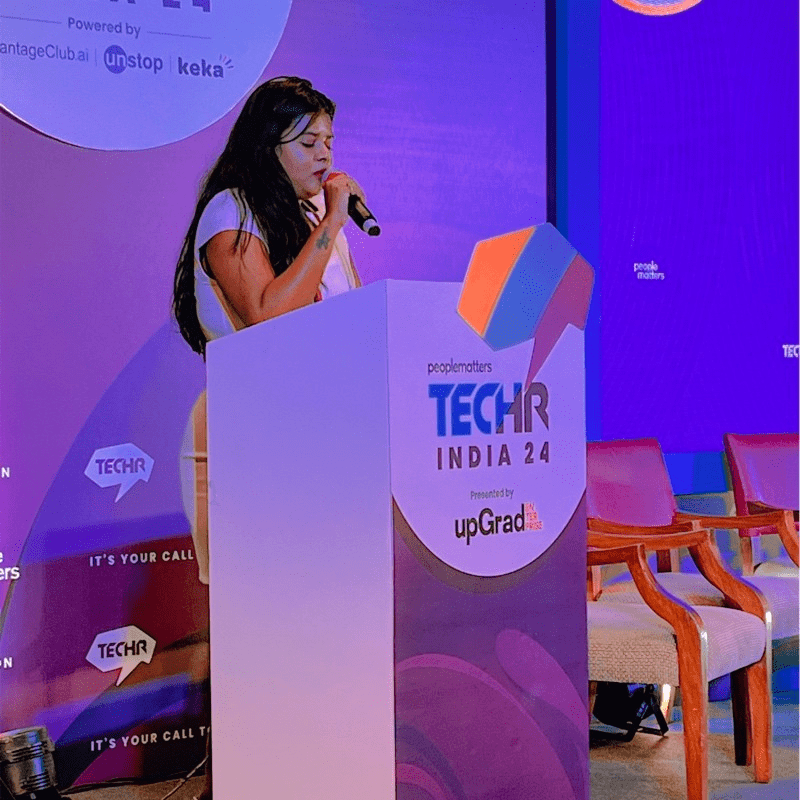





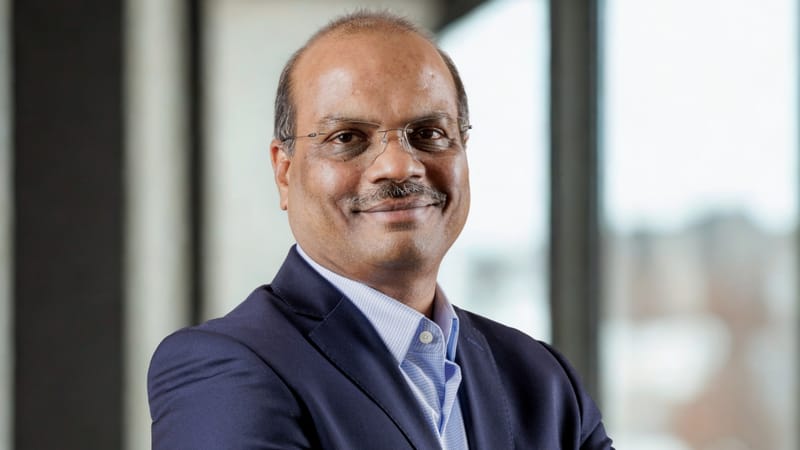
Across two interviews a year apart, Cognizant’s HR chief Azhagiri Selvarajan explains how employee engagement shifted from trust-building to skills, AI and execution.
Employee engagement has become one of the most contested ideas in modern organisations. Once treated as a cultural aspiration, it is now scrutinised as a measure of whether companies are genuinely preparing their workforce for relentless change.
Two interviews with Azhagiri Selvarajan, Senior Vice President and Head of HR – India and Global HR Leader for Tech Service Lines at Cognizant, conducted a year apart, capture that shift with unusual clarity. The first, published in August 2025, focused on leadership, continuity and resilience. The second examines engagement directly—through the lenses of AI, skills volatility, and changing employee expectations.
Together, they show how engagement has shifted from being discussed in values terms to being tested through execution.
A starting point: engagement as organisational assurance
In the 2025 interview, Selvarajan’s reflections were grounded in scale and responsibility. Drawing on two decades at Cognizant, he reflected on what sustains trust during periods of disruption.
The COVID-19 pandemic emerged as a defining episode.
“We were responsible for 250,000 associates in India and their families,” he said. “It went beyond business continuity — we were setting up vaccination camps, securing hospital beds, and even sourcing portable oxygen cylinders.”
The emphasis was not on heroics, but on presence. Engagement, at that moment, was about whether the organisation showed up when it mattered most.
That belief shaped his view of HR’s role more broadly.
“We’ve moved from being operational to strategic, from support to influence,” Selvarajan said. “But the anchor must remain the same — people.”
In that framing, engagement rested on three fundamentals:
-
Credibility built through action
-
Consistency during uncertainty
-
Care demonstrated at scale
It was a definition shaped by crisis, focused on stability and deeply human in its intent.
A year later: engagement as personal agency
The more recent interview reflects a different tension. The disruption is no longer sudden or singular. It is continuous.
Asked about the most defining shifts in employee engagement in 2025, Selvarajan pointed first to a psychological change driven by technology.
“One of the most defining shifts this year has been the change in mindset around AI,” he said. “Whereas previously, many employees viewed AI with apprehension and fear. Today, we’re in a place where people feel empowered by what it can do for their futures.”
That sense of empowerment, he argued, has reshaped how employees engage with work itself.
“At Cognizant, this sense of empowerment and optimism has been one of the most profound cultural shifts we’ve witnessed this year,” he said. “Employees have actively upskilled through our learning ecosystem, embraced new tools, and explored vast opportunities to reinvent themselves.”
The pivot is clear. Engagement is no longer anchored only in belonging. It is increasingly tied to relevance.
What engagement looks like when it works
When asked which engagement practices proved effective, Selvarajan reduced the answer to its essence.
“One word: empowerment.”
He described organisations that sustained engagement as those willing to give employees:
-
Ownership over career direction
-
Flexibility in how work and learning intersect
-
Access to tools rather than controls
-
Time and permission to learn
“Organizations that give employees ownership, flexibility, and support to chart their own path will reap the results,” he said.
The implication is significant. Engagement is no longer something organisations “deliver”. It is something they enable.
AI’s influence: efficiency on the surface, pressure underneath
Technology has been a central force in reshaping engagement, but not always in obvious ways.
“AI has shaped engagement in both visible and subtle ways,” Selvarajan said. “Operationally, it streamlined processes, accelerating HR workflows, improving access to information, and reducing friction in everyday tasks.”
The deeper shift, however, has been managerial.
“The real game-changer, however, has been leadership enablement.”
AI-powered tools now support managers in understanding team dynamics, improving feedback and identifying engagement risks early. That matters because, as he put it plainly, “managers remain the most critical link in driving engagement.”
The caution is explicit.
“AI should enhance, not replace, the human element.”
The quiet fault line: managers under strain
One issue emerges far more sharply in the recent conversation than in the earlier one: pressure in the middle of organisations.
“Return-to-office continues to be a universal challenge,” Selvarajan said. “Employees need a compelling reason to come back, beyond mandates.”
But the more persistent stress lies elsewhere.
“Middle managers—the critical ‘translation layer’ between AI promise and business reality—are under immense pressure.”
Senior leaders define strategy. Employees experience change. Managers are expected to translate both—often while absorbing the strain from either side.
Selvarajan’s prescription is not structural alone.
“Investing in leadership development, especially soft skills like empathy and communication, is essential to keep engagement strong.”
What employees now value most
If engagement has shifted, so has the employee value equation.
“Upskilling has emerged as the ultimate differentiator.”
Learning, once treated as a supplementary benefit, has moved to the centre of how employees judge their relationship with an organisation.
“Companies that help people reinvent themselves through transformation provide a benefit that goes beyond traditional measures.”
He framed reskilling as a statement of intent.
“Companies that prioritize reskilling and career mobility send a powerful message: ‘we’re committed to your growth.’”
Selvarajan’s priorities for 2026 reflect a tightening of focus, bringing sharper alignment across engagement priorities.
-
Skills-first engagement, replacing static job definitions with dynamic pathways
-
Hyper-personalisation at scale, across the employee lifecycle
-
Authentic leadership, visible, transparent and empathetic
“2026 will be about blending technology with humanity,” he said, “creating workplaces where innovation and inclusion go hand in hand.”
What the comparison reveals
Placed side by side, the two interviews show how the meaning of engagement has evolved.
In 2025, engagement was about reassurance during disruption.
In 2026, it is about readiness for continuous change.
The values have not shifted. The expectations have.
Topics
Author
Loading...