







Employee Engagement
Building careers beyond titles: What keeps high-potential talent engaged?


Promotions alone may no longer sustain ambition as employees seek meaningful assignments, new skills, internal mobility and clearer pathways to long-term career growth.
Career growth is no longer measured solely by promotions. For high-potential employees, opportunities to build skills, take ownership, explore different functions and influence business outcomes increasingly shape how they view professional progress.
Traditional career structures continue to offer direction, but employees are looking beyond designations to understand whether their roles are expanding and whether they are acquiring capabilities for the future. For employers, the challenge is to sustain ambition when leadership positions are limited and promotions cannot happen at every stage.
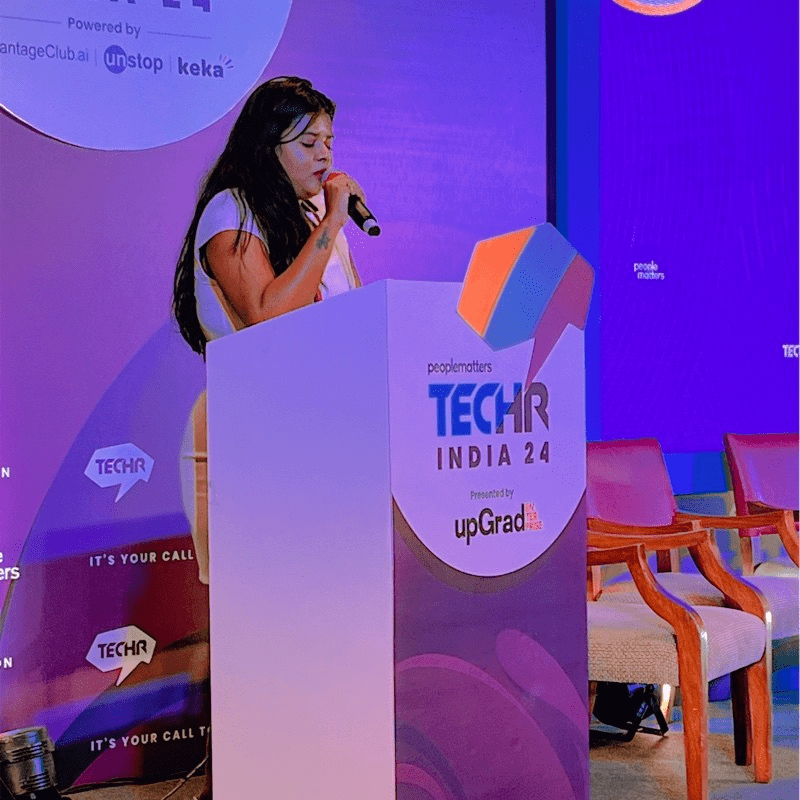
Kshama Singh, HR Head at Powerweave, believes organisations need to rethink how they recognise and develop talent, making career progression more visible through learning, meaningful assignments, internal mobility and greater responsibility.
In a conversation with People Matters, Singh discusses why growth cannot depend entirely on promotions, how managers can become better career coaches, and why the traditional career ladder may be giving way to more flexible pathways.
When progression outgrows the traditional hierarchy
Traditional career ladders still provide employees with direction and a sense of what lies ahead. However, moving from one designation to another may no longer adequately reflect the development of high-potential professionals.
Singh believes employees increasingly evaluate career growth through the skills they acquire, experiences they gain, the scope of their work and the impact they create. Leading a transformation project, working with senior leadership, entering a different business function or developing capabilities for future roles can offer meaningful progression without an immediate promotion.
She says, “Traditional career systems will always have a value despite whatever era we are in because people need a sense of direction and visibility into what their future can look like. However, the traditional model of simply moving from one title to the next is no longer sufficient, especially for high-potential talent.”
This puts the emphasis on continuous development, particularly when formal positions are unavailable. Employees need opportunities to keep expanding their capabilities rather than wait for the next organisational vacancy.
When contribution grows faster than recognition
One of the key frustrations for ambitious employees emerges when their responsibilities increase, but their career progression remains unclear. Taking on more complex assignments, solving difficult problems and influencing business decisions may not translate into visible advancement within organisations that primarily recognise promotions.
Singh distinguishes between being occupied with work and genuinely developing professionally. Employees want to understand whether their experiences are helping them build capabilities that will matter in the future.
She also highlights the experience gap, referring to Deloitte's 2025 Human Capital Trends research, which points to the difficulty organisations face in providing the experiences employees need to develop.
Managers, therefore, have a role in making progression tangible. Singh says career conversations should help employees understand their current position, the expectations of the next level and the experiences required to prepare for it.
At Powerweave, she says, the Success Architecture is intended to simplify KPIs, clarify expectations and connect individual contributions with organisational priorities. Such clarity can help employees understand their growth even when promotions are not immediately possible.
Identifying potential before a leadership vacancy opens
Organisations cannot afford to make leadership development contingent on vacancies. Singh believes potential should be identified through behaviours and capabilities that employees demonstrate well before they receive a new designation.
She looks for ownership, learning agility, problem-solving, resilience and the ability to influence beyond an immediate role. Once these qualities emerge, employees should be given opportunities to handle difficult business problems, lead cross-functional initiatives, engage with clients or senior decision-makers, and make decisions with real business consequences.
The approach shifts leadership development from filling positions to preparing talent for future business requirements.
Singh cites Walmart's internal career pathways as an example of how organisations can build talent from within. She refers to the company's reported finding that approximately 75% of its salaried managers started in hourly positions, alongside pathways enabling frontline employees to move into roles such as truck drivers and technicians.
The broader takeaway from her perspective is that organisations need to build talent pipelines around emerging business requirements instead of waiting for vacancies to create opportunities for development.
Career success is expanding beyond vertical movement
Promotions continue to matter, but employees increasingly view career progression through multiple dimensions. Some aspire to leadership positions, while others seek specialist expertise, cross-functional opportunities, strategic assignments or capabilities in emerging technologies.
Singh describes progression through four dimensions: scope, skills, influence and impact. Professionals may be advancing even without a title change if they are handling greater complexity, building new capabilities and influencing more consequential outcomes.
She refers to LinkedIn's 2025 research, which indicates that organisations with stronger career-development practices tend to report greater learning engagement and internal promotions, including movement into managerial and leadership positions.
The focus, therefore, is shifting towards whether employees can see meaningful forward movement in their careers, rather than how frequently their designations change.
Internal mobility can offer growth without an exit
Internal mobility, cross-training and stretch assignments can help organisations retain employees who might otherwise look outside for their next career opportunity. These experiences allow professionals to develop new capabilities, understand different parts of the business and take on responsibilities beyond their existing roles.
Singh believes such opportunities should form a central part of talent strategy. Internal mobility allows employers to build on employees' existing capabilities and track records, while offering individuals opportunities to expand their expertise.
She describes a meaningful stretch assignment as one that offers:
A new capability or skill set.
Greater decision-making responsibility.
Exposure to another function.
Ownership of a measurable business outcome.
For instance, a technology professional could work with procurement on an automation project, while an operations employee could lead a customer-facing transformation initiative.
At Powerweave, she points to internal job postings, cross-training, stretch assignments and exposure to new technologies as ways of broadening professional experience. The distinction, she says, is between developing broader professionals and simply giving employees more work.
Managers must bridge ambition and organisational constraints
Promotions are limited by organisational structures, and employees cannot all advance simultaneously. However, Singh believes these constraints should not leave employees without a clear development path.
Instead of conversations ending with the absence of an available position, managers should explain what the employee needs to demonstrate to become ready for future opportunities and identify experiences that can help build that readiness.
This requires managers to take on a stronger coaching role. Singh cites LinkedIn's 2025 research, which found that only 15% of employees surveyed said their managers had helped them build a career plan in the previous six months, a decline of five percentage points from the previous year.
The finding highlights the gap between employees' expectations of career guidance and the support they receive. When managers communicate expectations, identify development areas and help employees access relevant opportunities, career progression becomes less dependent on the timing of vacancies.
The career ladder may evolve into a lattice of opportunities
The traditional career ladder is unlikely to disappear entirely, but Singh expects it to evolve into a more flexible structure that allows professionals to move across functions, develop specialist expertise, lead strategic projects or take on temporary leadership responsibilities.
AI is likely to accelerate this change by automating more repetitive and transactional work. As roles evolve, capabilities such as judgement, creativity, problem-solving, collaboration and business understanding may become increasingly important, alongside the ability to work effectively with technology.
For organisations, this could mean shifting talent management from fixed job structures towards skills and experiences. For employees, it could widen the definition of career success beyond upward movement.
As Singh puts it, “Ultimately, the organisations that retain their best people will not necessarily be the ones that can promise the fastest promotions. They will be the ones that can consistently demonstrate that there is always somewhere meaningful to go, something valuable to learn and a larger problem to solve.”
Topics
Author
Loading...