







HR Effectiveness
IndiGo’s FDTL crisis exposes HR’s missing seat at the table? A thought






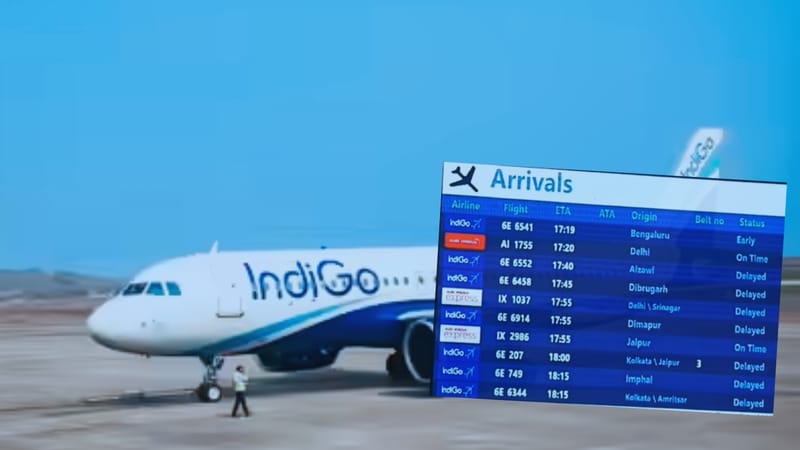
Pilot shortages, new duty rules and a rare regulatory exemption have exposed how fragile crew planning has become in India’s busiest aviation networks.
Over the past week, IndiGo’s meltdown has been hard to miss. Cancellations, rolling delays and mounting passenger anger have turned one of India’s most reliable carriers into the centre of a nationwide disruption. But beneath the chaos at check-in counters lies a quieter story: how one regulatory change, a tight labour market and thin planning buffers can push even the country’s largest airline into days of turbulence.
On Friday, IndiGo cancelled all its domestic flights out of Delhi airport until midnight as it continued to grapple with operational disruption. Earlier in the day, sources within the Directorate General of Civil Aviation (DGCA) told NDTV the cancellations would run only till 3 pm. The reality on the ground looked very different. Two People Matters employees stranded at Mumbai airport described flights being scrubbed “by the hour” as the schedule unravelled.
At the heart of the disruption is a shortage of pilots colliding with stricter Flight Duty Time Limit (FDTL) norms. The new rules cap night flying hours and increase mandatory rest periods to reduce fatigue — entirely reasonable from a safety standpoint, but a significant shock to workforce scheduling in a system already running hot.
IndiGo posted an apology on X, promising refunds for cancelled flights. Civil Aviation Minister Ram Mohan Naidu said the government expected full restoration of domestic services within three days. By then, tens of thousands of travellers had already borne the brunt of extended delays and soaring fares.
How tight the system is
In an unusual step, India’s aviation regulator stepped in to give the airline more breathing space. Reuters reported that the DGCA granted IndiGo a one-time exemption from night-duty limits to help restore schedules. The regulator also withdrew a rule that had stopped airlines from counting pilot leave as weekly rest — another clear sign of how tight the manpower equation has become.
Crew shortages are not new in Indian aviation. But the revised FDTL norms have forced airlines to rethink pilot deployment almost overnight. IndiGo operates around 2,300 flights a day with a fleet of more than 400 aircraft. At this scale, even a modest shortfall can ripple across the network.
Between January 2022 and September 2024, IndiGo accounted for 15,464 of India’s 25,547 flight cancellations, according to the Deccan Herald — roughly 60.5% of all cancellations over that period. That figure reflects the airline’s dominance as much as its exposure. The bigger the network, the larger the impact when one variable shifts.
This week, several variables moved at once:
new rest rules,
night-duty limits,
crew availability pressures, and
winter-weather disruptions in Delhi.
Airports felt the strain, but few wanted to speak publicly. When People Matters contacted officials at several large airports for comment, most declined, citing the sensitivity of ongoing operations.
The backdrop to this crisis is an aviation ecosystem that is growing fast — more passengers, more aircraft, more routes — while the workforce pipelines supporting it stretch thinner each year.
History shows how unforgiving this sector can be. High operating costs, volatile fuel prices, lean margins, regulatory pressure and aggressive competition have helped push nine Indian airlines out of the skies over the past 25 years — from Air Sahara and Air Deccan to Kingfisher, Jet Airways, Go First and others. Each collapse has reshaped the market and, in many cases, helped consolidate IndiGo’s market share. The carrier now commands more than 60% of domestic traffic.
Regulatory pressure is also rising. Reuters reported that the DGCA, in a special audit after a deadly Air India crash, found multiple instances of aircraft defects reappearing “many times” at Mumbai and Delhi airports, pointing to “ineffective monitoring and inadequate rectification action”. The regulator also flagged lapses such as engineers skipping prescribed safety precautions and work orders not being fully followed. None of this, taken alone, signals immediate systemic instability — but together, it suggests an ecosystem where safety oversight, engineering capacity and operational discipline are all under stress.
In that context, it becomes harder to treat FDTL compliance as a simple scheduling adjustment. It is part of a wider set of pressures converging on the same workforce.
FDTL is not admin — it is workforce design
The core point is this: FDTL changes are not administrative housekeeping. They go to the heart of aviation workforce design.
When duty hours shrink, airlines need:
more crews,
better buffers,
stronger fatigue modelling, and
deeper coordination between operations, planning and HR.
That coordination has traditionally been weak. HR often enters the conversation after the network plan is drawn up, expected to “staff to schedule” in a labour market that is anything but elastic.
This incident does not suggest negligence so much as a planning environment that is far less forgiving than it once was. Small errors in forecasting or buffers now translate into very visible failures — cancelled flights, stranded passengers, exposed gaps.
A warning signal for a decade of growth
Yes, IndiGo is working to restore normal operations, and the government expects stability within a few days. But as India prepares for a decade of aviation growth, the episode functions as an early warning.
Workforce planning will have to evolve at the same speed as regulatory expectations and market expansion. The FDTL disruption is not the story of one airline falling short. It is a reminder of how closely talent, safety and scheduling are intertwined in a sector where the margins — operational and human — are narrowing.
If anything, this week has shown that aircraft, routes and terminals can be added relatively quickly. Building a workforce model that can absorb the next regulatory shock will be a much harder, and far more important, task.
Topics
Author

Loading...