







Leadership
Aman Gupta on building OFF/BEAT with failed founders and Gen Z at TechHR 2026





The entrepreneur says resilience, curiosity and an ownership mindset matter more than perfect CVs as he outlines the unconventional talent philosophy behind his new venture, OFF/BEAT.
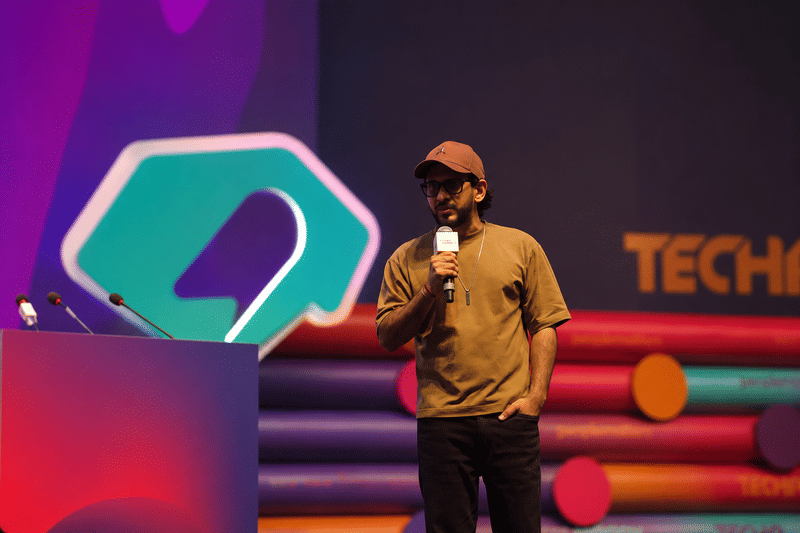
Aman Gupta, entrepreneur and founder of OFF/BEAT, believes companies looking to build enduring businesses need to challenge conventional hiring norms. Speaking at People Matters TechHR India 2026, he said his new venture is intentionally being built with failed founders and Gen Z talent, reflecting his belief that resilience, adaptability and entrepreneurial thinking outweigh conventional credentials.
In a fireside conversation with Pushkar Bidwai, CEO of People Matters, Gupta said the philosophy stems from his own experiences as an entrepreneur and his conviction that failure should not be treated as a permanent setback.
"Failure is looked at negatively in India... I just wanted to push against that mentality," he said, adding that attitudes towards failure are shaped from the education system itself.
Hiring failed founders is a deliberate choice
Gupta revealed that OFF/BEAT recently launched a hiring campaign inviting failed founders to apply, a move that generated thousands of applications.
The campaign asked entrepreneurs to "write your comeback story", challenging the stigma often associated with ventures that do not succeed. According to Gupta, the response confirmed that many entrepreneurs possess capabilities organisations frequently overlook during conventional hiring.
He believes founders who have built and closed businesses bring practical strengths that are difficult to develop in traditional corporate roles.
Among the qualities he highlighted were:
- Experience in building products and finding product-market fit
- First-hand understanding of customers
- Decision-making under uncertainty
- Resilience developed through failure
- An entrepreneurial mindset shaped by real business challenges
Gupta said these experiences make failed founders valuable additions to a growing business, even if their ventures did not succeed.
Why OFF/BEAT is betting on Gen Z
Alongside failed founders, Gupta said OFF/BEAT is intentionally recruiting younger professionals.
He revealed that, excluding himself, the company's average employee age is 24, reflecting the kind of culture he wants to build during the company's early stages.
According to Gupta, startups require flexibility more than rigid organisational structures.
"When you start becoming a big company, you have to organise things," he said. Early-stage ventures, however, demand people who are comfortable wearing multiple hats rather than operating within narrowly defined roles.
He suggested professionals with long years of experience can sometimes become accustomed to fixed systems and processes, while younger employees often adapt more easily to the fluid nature of startups.
Experience alone is no longer enough
Gupta also challenged traditional assumptions around experience.
He cautioned professionals against treating tenure as a competitive advantage, saying continuous learning has become more important than the number of years spent in a role.
"If you don't update yourself, upgrade yourself, I think you become redundant," he said.
He added that in areas such as design and youth marketing, excessive reliance on past experience can even become a disadvantage because consumer behaviour and creative trends evolve rapidly.
AI will transform work, but judgement remains human
AI also featured prominently during the discussion.
Gupta said his organisation is embedding AI across multiple functions, including recruitment, market research, analytics, creative work and content production. He described AI as a transformative force that organisations can no longer afford to ignore.
"AI is here. Embrace it. If you can't, you are dead," he said, comparing its impact to the transition from typewriters to computers.
At the same time, he maintained that technology cannot replace human judgement.
While AI can process information, score candidates and generate analysis, he believes people remain responsible for making contextual decisions and creative choices.
Ownership should replace entitlement
The conversation also turned to compensation and retention.
Gupta said organisations should avoid treating salary increments as standardised exercises for high performers.
Instead, companies should reward exceptional talent more aggressively than the market while creating long-term ownership through equity participation.
He shared that many of boAt's early employees accumulated significant wealth through ESOPs, adding that OFF/BEAT is following a similar philosophy by offering equity to employees from the outset.
"It's not about being an employee or an entrepreneur. It's about thinking like an entrepreneur," he said.
Companies must evolve with Gen Z
Responding to questions from the audience, Gupta said organisations have little choice but to adapt to changing workforce expectations.
He pointed to shifts in attitudes towards work-life balance, mental health and workplace culture, saying every generation brings new expectations that employers must understand rather than resist. Managers and younger employees, he added, both need to adjust to build effective workplaces.
He also encouraged young professionals to make the most of the opportunities available today, citing greater access to entrepreneurial knowledge, startup capital, digital platforms and creator-led careers than previous generations enjoyed.
Building differently
Throughout the session, Gupta returned to a single idea: lasting businesses are rarely built by following established playbooks.
Whether through hiring failed founders, creating Gen Z-led teams or embedding AI across the organisation, he said OFF/BEAT is being designed around experimentation rather than convention.
For HR leaders attending TechHR India 2026, the message was equally clear. As organisations rethink talent strategies for the AI era, qualities such as resilience, curiosity and ownership may prove more valuable than traditional hiring signals.
Topics
Author

Loading...