







Leadership
Leadership in turbulent times





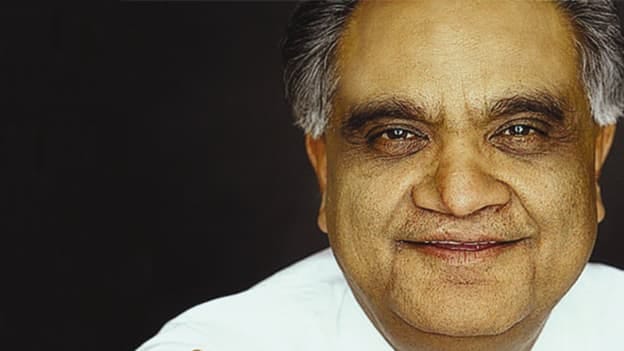
Global Thought Leader Dr Ram Charan on what it takes to be a leader during uncertain times
‘The world is my home and I look at work as my dharma’
These were the opening thoughts by world-renowned business guru, Dr Ram Charan, at the Great Lakes Global Thought Series at Gurgaon in mid-January. Dr Charan was sharing his insights on “Leadership in Turbulent Times – Closing the Gap between Promise and Results” as part of the certified Leadership Development Program.
The Global Thought Leader Series (GTLS) is an initiative by Great Lakes towards leadership development in India by enabling the best Business Gurus, Thought Leaders and Global Experts to share their knowledge and insights with the decision makers and corporate leaders of India. Past GTLS Thought Leaders include Dr. Philip Kotler (Kellogg), Dr. Seenu Srinivasan (Stanford), Dr. Praveen Kumar (Houston), Dr. Srikant Datar (HBS) and Dr. Shyam Sunder (Yale).
Fortune magazine calls Dr Charan “the most influential consultant alive”, with even Jack Welch saying “He has the rare ability to distill meaningful from meaningless and transfer it to others in a quiet and effective way”. Dr Charan has spent the past 35 years consulting with many top companies, CEOs and Boards.
Dr Charan has a unique perspective on how great leaders differ from the rest. He breaks through the façade of leadership to explain the capabilities leaders must possess, how to build a leadership driven company, how to lead in economic uncertainty, how to develop your own leadership capability and finally, how to plan for smooth succession.
“In tune with the external change, the business environment is changing so rapidly that we cannot predict anything. What we can do is to teach our people to deal with uncertainty,” Dr Ram Charan said.
He then pointed to history and talked about how certain companies managed to navigate through turbulent times and what enabled them to do so. He said that such companies had customers at their center-stage. They know what their customers wanted and were willing to adapt to those changes. They were also adept at anticipating changes that could affect their business model and took action on it. They adapted with agility and encouraged innovation, knowing fully well that some ideas will work, while others won’t.
What creates turbulence for companies?
Dr. Charan, who started his career as a craftsman at a very young age to support his family, became Professor at Kellog and Harvard before becoming Global Thought Leader and Top CEOs coach, shares that turbulence does not happen on its own. People create it. Leaders need to find those people who could create the turbulence. “You are seeing it, but it is not registering in you. Look at the human beings that are causing the change in the game.” There are many early warning signals around us that can tell us that our business is at risk. Even though they may be visible and clear, many of us miss them. Dr. Charan suggests that those signals are in our customers, in looking outside, looking at other players, their leaders and what they are trying to achieve.
One of the roadblocks in identifying these early warning signals is linear thinking. Dr. Charan shares three tools to help leaders think different about their business and expand their capacity to be able to identify early warning signals and take better decisions:
Invite people who think differently: People who could represent a customer segment or a leader from a different industry. These conversations create an opportunity to practice open thinking and gives you a break from day-to-day work. “Discuss about what is happening in other industries,” suggest Dr. Charan, “Its effect is more psychological. Since you are an outsider, you can look at it dispassionately. This exercise will help in sharpening the perception antennas.” Build a “social group” of the people from different industries that you meet regularly with the objective of identifying the happening in the world from a very diverse perspective. “These conversations expand your mental capacity,” shares Dr. Charan.
Annual cycles are passé. Business does not wait for your annual strategic cycle, “Do your planning quarterly, write it in one page. No buzzwords. Simple English.” Being the leading computer manufacturer does not mean much as opposed to “a computer on every desk”. If that is the objective, then in the rest of that page, focus on the building blocks: What do we need to do to make it happen.
Grab an idea and think about the 2nd,3rd ,4th level of consequences. Take a situation, an instance and think about what could happen and what could be the second, third and fourth level of consequences if that were to happen. These exercises will help you and your team to push the brain, include conversations that expand the thinking capacity. “Let there be a pause in your discussion,” says Dr. Charan. Nobody has a monopoly on perception. Nobody knows what the future holds. It is about discussing the future, what each one of us thinks and why. Interact with your new generation after they have been on the job for a year.
Try to figure out who have the potential to grow. Figure out ways and means on how to give them these opportunities.
These tools help leaders expand their personal capacity. Great leaders double their capability every three years. While reflecting on business leaders who have continually expanded their capability over their life span, Dr. Charan shares what they all have in common. These are leaders who develop their judgment and have the courage to get the right people into the right jobs. These are leaders who have insatiable appetite for big ideas and they are very good in catching them. They can sense them. Their antennas are tuned in. These are leaders who can think ahead of time, focus on growing themselves, so they can grow others and in turn their business. Everybody has to grow. These are “simple things to say, but they do not come without practice,” shares Dr. Charan. So what is the way to lead during turbulent times? Practice, practice, and practice, according to Dr Charan. No athlete becomes a champion without practice!
Author
Loading...
Loading...