







Organisational Culture
The hidden code: When technology becomes the arbiter of culture





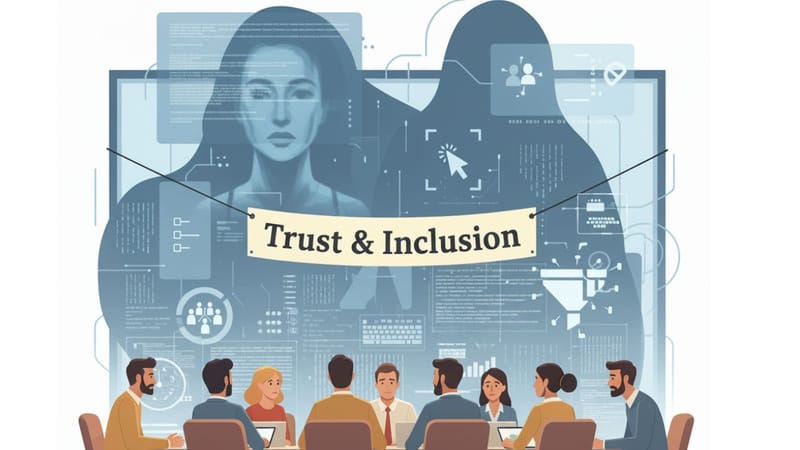
When technology rewrites the rules of work, leaders must ensure it doesn’t silently rewrite the culture — fairness, trust, and human values must remain at the core.
Walk into any organisation today, and you’ll hear the same refrain: ‘Our people are our greatest asset.’ Culture decks get polished, values are pinned on office walls, and leaders speak passionately about inclusivity, collaboration, and purpose.
But behind the scenes, a quieter force is shaping what culture actually feels like: technology.
From AI-powered hiring tools to algorithmic performance dashboards, from productivity trackers to learning platforms, culture is no longer just written in manifestos, it is increasingly coded into systems. And these systems, often designed for efficiency, are becoming the silent arbiters of organisational life.
The problem? Technology doesn’t just execute strategy; it encodes values. And sometimes, those values are unintentional, opaque, or misaligned with what leaders say they stand for.
When the code undermines the culture
Consider a company that champions ‘trust and autonomy,’ yet deploys software that monitors keystrokes and webcam activity to track remote workers. Or an organisation that proclaims ‘diversity and inclusion,’ but uses an AI recruitment tool trained on biased historical data, resulting in the same type of candidates being filtered through.
In both cases, the culture employees experience is not what leaders articulate, but what the technology enforces.
This disconnect creates a trust deficit: employees see one narrative in town halls, and another in their day-to-day reality. The result is cynicism, disengagement, and in some cases, outright resistance.
The rise of cultural techno-ethics
We are entering an era where every tech decision is a culture decision. Choosing an algorithm to evaluate performance, or a system to recommend promotions, isn’t just an operational choice, it’s a value choice.
This intersection, where culture meets code, has given rise to what can be called cultural techno-ethics: the responsibility organisations have to ensure that their technologies are transparent, fair, and aligned with their stated values.
Yet, most organisations haven’t caught up. Tech is often bought for speed and scale, with little attention to how it shapes human experience. Leaders leave the ‘how it works’ to data scientists and engineers, while HR and culture teams wrestle with the fallout.
The productivity paradox: Humans beyond metrics
AI and automation are delivering undeniable efficiency gains. But here lies the paradox: the more we optimise for measurable output, the more we risk devaluing the very human qualities that make organisations thrive, creativity, emotional intelligence, ethical judgement.
If culture is reduced to metrics on a dashboard, employees become data points, not people. And yet, those immeasurable human capabilities, empathy, imagination, resilience, are precisely what organisations will depend on as AI takes over routine tasks.
The real challenge is this: can organisations design cultures where technology amplifies human value, rather than diminishes it?
Debugging the hidden code
Treating culture as code means acknowledging that systems, like software, need debugging, transparency, and continuous updates. Some forward-thinking organisations are experimenting with ‘ethical audits’ of their algorithms, bringing HR, tech, and legal teams together to test systems for bias and unintended consequences.
Others are creating tech transparency rituals, forums where employees can ask how a system works, why it evaluates them the way it does, and who is accountable if it goes wrong.
Still others are embedding culture at the very start of system design: ensuring values like inclusion and fairness are non-negotiable parameters rather than afterthoughts.
Leadership as coders-in-chief
Ultimately, leaders cannot outsource culture to algorithms. They must act as coders-in-chief, responsible for:
Asking hard questions about fairness, transparency, and ethics in tech deployment.
Debugging systems when they drift from values.
Inviting employees to co-create and co-own how technology shapes their experience.
This demands new literacy for leaders, not just emotional intelligence, but algorithmic intelligence: the ability to understand how systems make decisions, and the courage to intervene when those decisions clash with human values.
Why this matters now
The organisations that thrive in the AI era won’t be those that blindly adopt the latest tools. They’ll be the ones that design cultures where humans and machines complement each other, where efficiency does not come at the expense of trust, and where code reflects, rather than contradicts, the organisation’s DNA.
Because the truth is this: culture is no longer only written in values statements or leadership speeches. It is written in lines of code, system defaults, and algorithmic rules.
If leaders don’t take ownership of that hidden code, it will own them.
At People Matters Learning, Leadership and Culture Conference 2025, this is one of the most urgent conversations: How do we ensure that as technology rewrites the rules of work, it doesn’t silently rewrite our cultures in ways we never intended?
The future belongs to those who can bridge the gap, leaders bold enough to code culture with empathy, fairness, and adaptability at its core.
Author
Loading...