







Talent Management
Employees now choose companies as much as companies choose them: Amway






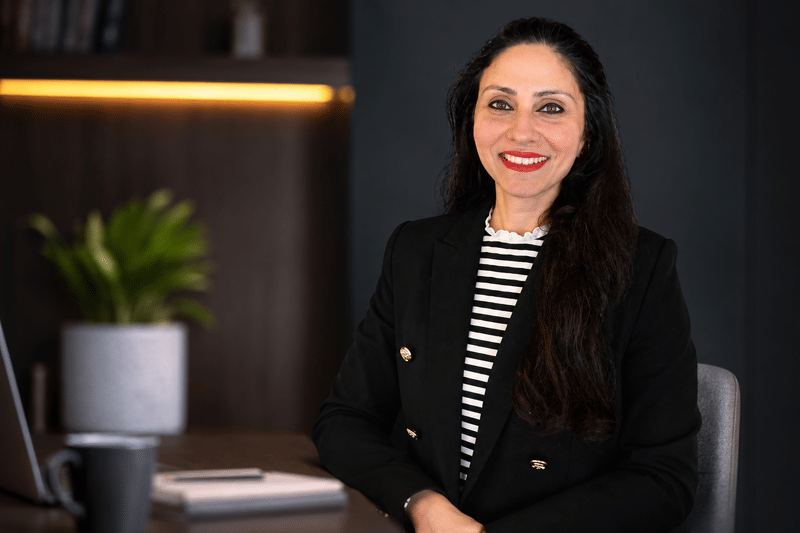
People Matters speaks to Ritika Malik on why careers are becoming shorter, interviews are becoming two-way conversations, and trust is replacing tenure.
For decades, a successful career followed a familiar script. Land a good job. Stay loyal. Climb the ladder.
Ritika Malik, Senior Vice President – Human Resources, Amway India, believes that script is rapidly being rewritten.
In a candid conversation with People Matters, Malik says today's professionals are no longer chasing long tenures or viewing a single employer as the destination. Instead, they are evaluating organisations with the same scrutiny employers once reserved for candidates.
The biggest shift, she says, is simple.
"The long-held notion that the power balance sits with the employer no longer pervades the mind of the modern workforce."
Instead, candidates want to know one thing first.
"They are asking, upfront, what the organisation can offer to support their career aspirations, personal interests, and long-term growth."
The era of the lifelong job is fading
According to Malik, younger professionals no longer see spending decades with one employer as a career milestone.
Instead, careers are becoming more fluid.
"Long careers with a single organisation are no longer seen as an aspiration or a badge of honour."
One phrase sums up the change. "Candidates today view roles almost as 'tours of duty'."
She says people are increasingly willing to leave once they feel they have stopped learning or growing.
"The moment they sense that the role or the organisation no longer has more to offer, or that what is on offer doesn't align with their aspirations, there is little hesitation in moving on."
Malik also points to another behavioural shift among younger workers. "The earlier belief of needing to secure the next job before leaving the current one is no longer held by a vast majority of Gen Z."
Growth and happiness are becoming career goals
Money still matters. But Malik believes it is no longer the defining measure of success. When speaking to younger employees, she hears the same aspirations repeatedly.
"The need to 'grow' and to be 'happy'."
She says mental wellbeing has moved to the top of employees' priority lists.
"Mental wellbeing sits at the very top of their priority list, and workplaces that consciously safeguard it are the ones that stand out as opportunities worth exploring for them, sometimes even ahead of the monetary proposition on offer."
Flexible work has become another expectation rather than a perk.
According to Malik, many younger professionals are questioning the traditional five-day office routine and looking for work arrangements that fit around their lives.
She also points to the rise of "micro-shifting", describing it as "a more structured form of flexibility built around short, non-linear work blocks matched to their energy, responsibilities, and productivity."
Success now means seeking, not staying
Perhaps Malik's sharpest observation is how the very definition of career success has changed.
She contrasts today's workforce with previous generations, for whom success largely meant stability and staying the course.
For younger professionals, the picture looks different.
"Success is no longer about staying; it's about seeking."
She says professionals increasingly want meaningful work and the chance to make a tangible impact.
Money remains important, but "it is increasingly viewed as an enabler, rather than the end goal itself."
The interview room tells the story
Malik believes one of the clearest signs of changing workforce expectations appears during job interviews.
Candidates are no longer using their final few minutes simply to leave a good impression.
Instead, they are asking direct questions.
"The nature of those questions has changed remarkably from carefully framed ones designed to impress, to direct, pointed ones on culture, career pathways, learning opportunities, flexibility and benefits."
For Malik, this reflects a broader redefinition of job security. "Job security isn't losing meaning, but it's being redefined."
She says the new definition is "less about tenure and more about trust", with employees expecting the freedom to decide how they deliver agreed outcomes.
Careers are becoming portfolios, not straight lines
Another trend gaining momentum is what Malik describes as "portfolio careers."
People are increasingly combining multiple income streams and professional identities rather than relying on a single employer.
From content creation to financial consulting, side hustles have become mainstream.
At the same time, she cautions organisations against trying to promise everything. "Leadership teams must reflect honestly on what they can and cannot offer."
Different industries face different realities, she says, and not every organisation can offer the same degree of flexibility.
Authenticity will matter more than promises
Looking ahead, Malik expects India's employment landscape to move towards relationships built on trust rather than control.
She believes organisations will stand out not by offering every possible benefit, but by delivering consistently on the commitments they make.
Her closing thought captures the challenge facing employers.
"The workplaces that endure are not built on the weight of their promises, but on the strength of keeping them."
As employees become more selective about where they work and why they stay, the interview process is becoming a genuine two-way conversation. Companies are still assessing candidates. Increasingly, candidates are assessing companies just as closely.
Author
Loading...

Loading...