







Talent Management
Inclusion, leadership, talent—why doing more isn’t the same as doing it right





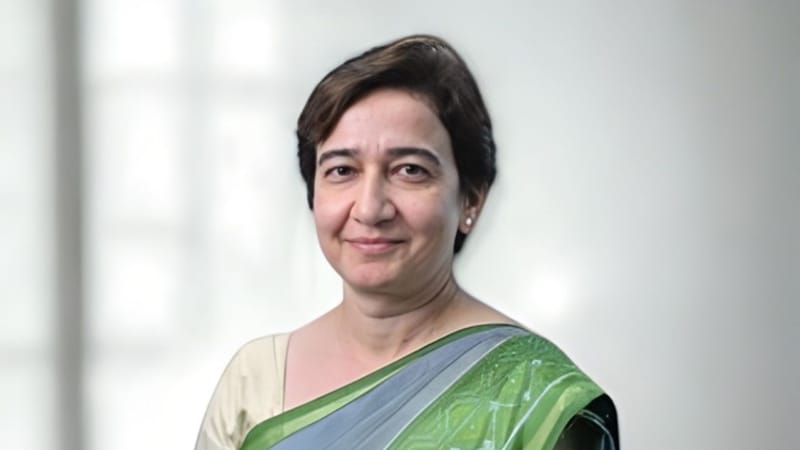
Anupama Kaul on balancing complexity, building leaders, and making inclusion structural—not symbolic.
Here’s the thing—most companies today are doing a lot when it comes to talent, leadership and inclusion. More programmes, more policies, more dashboards.
But as Anupama Kaul, CHRO at Cummins India, puts it, the real problem isn’t effort. Its effectiveness. Because doing more doesn’t automatically mean doing it right.
ONE COMPANY, MANY REALITIES
If there’s one myth Kaul breaks early, it’s this: that a single talent strategy cannot work across a complex organisation. “Talent strategy cannot be one-size-fits-all,” she says.
And honestly, it makes sense. A manufacturing plant, a service network, and a digital capability centre don’t operate in the same world—so why would their people strategies?
At one end, you’re dealing with safety, shop-floor efficiency, and supply chains. At the other, it’s analytics, digital skills, and global delivery. But here’s the tricky part: while the execution changes, the philosophy cannot.
Kaul talks about holding on to a “One Cummins” approach—shared values, shared leadership expectations—while still letting each business breathe and operate in its own context.
The danger otherwise? Silos. Lots of them.
And that’s where things like cross-business talent reviews, internal mobility, and leadership visibility come in—not as HR processes, but as glue holding everything together.
LEADERSHIP ISN’T WHAT IT USED TO BE
If you think leadership in engineering-heavy organisations is still about technical brilliance, Kaul would politely disagree. Yes, expertise matters. But what really sets leaders apart now is something less obvious: how well they enable others.
“Leadership is not just about delivering results. It is about enabling others to deliver them,” she says. That shift shows up in small but powerful ways:
- Decisions moving closer to the ground
- Leaders simplifying chaos instead of adding to it
-
Teams feeling safe enough to speak up, disagree, and improve things
It’s less command-and-control, more clarity-and-trust. And in fast-changing industrial environments, that balance—between decisiveness and empathy, structure and flexibility—is what keeps performance sustainable.
INCLUSION: LESS TALK, MORE SYSTEM
This is where Kaul gets particularly sharp. Because if there’s one area where companies often confuse activity with impact, it’s diversity and inclusion. “Meaningful DEI progress is… systemic transformation and not just standalone and performative initiatives,” she says.
In simple terms: workshops and campaigns don’t move the needle unless the system itself changes. At Cummins, that means baking inclusion into everything—hiring, promotions, leadership pipelines, even how performance is measured.
There are targets (like aiming for 50% women representation), but also the infrastructure to support them—transparent processes, leadership accountability, and programmes that actually build capability over time.
The result? Not overnight change, but steady movement—33% women in the workforce and 36% in leadership today.
And just as importantly, systems that make that progress sustainable.
SO WHAT’S REALLY GOING ON HERE?
Step back, and a pattern starts to emerge. Across talent, leadership, and inclusion, the story is the same:
- One-size-fits-all doesn’t work
- Intent without structure doesn’t last
-
And scale without integration creates chaos
Or, put more simply: you can’t fix complex problems with generic solutions.
As companies deal with AI shifts, business complexity, and changing workforce expectations, this distinction will only get sharper.
The winners won’t be the ones doing the most. They’ll be the ones quietly building systems that actually work—across businesses, across people, and over time. Because in the end, it’s not about how much you’re doing. It’s about whether it’s working.
Topics
Author
Loading...
Loading...