







Recruiting & Onboarding
Serentica, Resonia & Sterlite Electric to hire 1,000, including 500 entry-level employees: Group CHRO
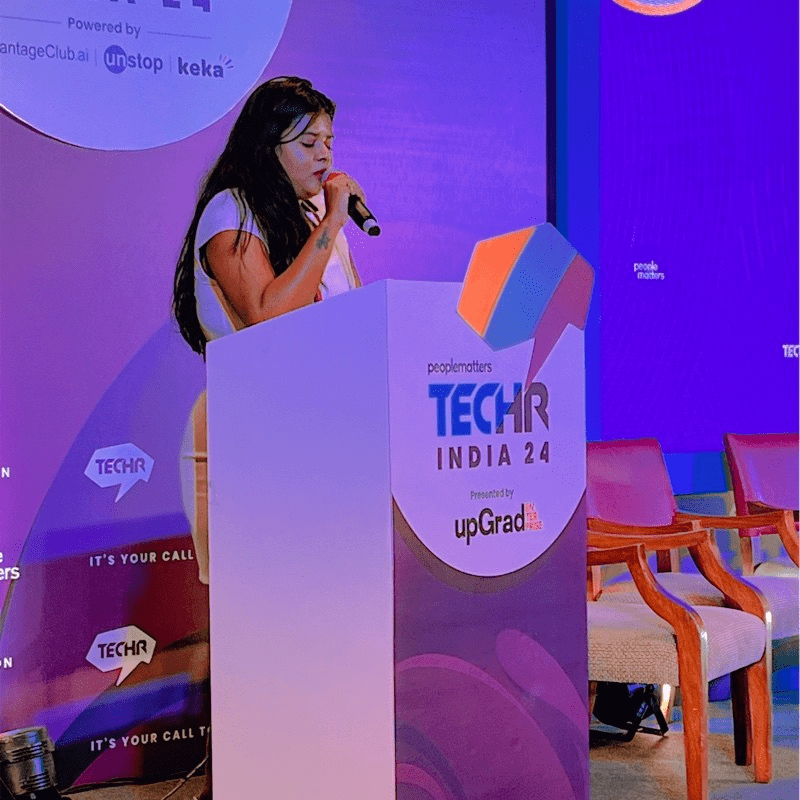






The company plans to recruit 500 entry-level professionals through campuses and specialised pathways, alongside 500 lateral hires, as it expands its workforce for India's energy transition.
India's energy transition is driving demand for specialised talent across engineering, manufacturing and project execution, prompting companies to reassess how they build their workforce. Serentica, Resonia and Sterlite Electric plan to hire over 1,000 professionals collectively over the next year, with recruitment split equally between entry-level and experienced candidates.
The hiring plan includes 500 entry-level professionals through campus recruitment and specialised pathways, alongside 500 lateral industry hires, according to Ruhie Pande, Group CHRO & CMO, Serentica, Resonia, and Sterlite Electric, in an interaction with People Matters.
The proposed expansion comes as the energy sector faces growing requirements across grid operations, renewable energy infrastructure, manufacturing and project execution. Pande said organisations will need to develop stronger internal talent pipelines while reducing their dependence on experienced external hires.
Entry-level hiring becomes a larger part of workforce strategy
Serentica has already increased its annual campus recruitment as its operational requirements expand. Pande said the company previously hired around 20-30 campus graduates annually, a figure that has now increased to 150-200 graduates.
The hiring approach also includes early exposure to operational environments, rather than limiting graduate development to classroom learning.
"Our focus is ensuring these young engineers move rapidly from classroom theory to the ground realities of solar parks, wind farms, and transmission corridors," Pande said.
She added that the company mandates early-career immersions, requiring recruits to spend their first three months directly on project sites or plant floors before moving into their respective functions.
The broader requirement for industrial and energy companies extends beyond conventional engineering capabilities. Pande identified several areas expected to see greater demand:
Engineering and manufacturing
Project execution and grid operations
Land and stakeholder management
Battery storage and digital energy infrastructure
She said organisations would need professionals capable of combining technical knowledge with an understanding of field operations and complex execution environments.
Building technical talent through internal development
The proposed recruitment of 500 entry-level professionals also reflects the company's stated ambition to reduce its dependence on lateral hiring over time.
"Our long-term strategic ambition is to systematically eliminate over-reliance on expensive lateral hiring by building an unbeatable internal leadership pipeline," Pande said.
She emphasised the importance of skills-based hiring, industry-academia partnerships, structured apprenticeships and continuous technical reskilling in addressing the wider workforce challenge.
According to Pande, organisations must also establish transparent career pathways and strengthen the capabilities of frontline site managers. Policies designed at corporate offices need consistent implementation across remote project locations.
Women remain underrepresented in technical and operational roles
The expansion of the talent pipeline also brings attention to women's participation in India's industrial and energy workforce.
A June 2026 study by CEEW and NRDC estimates that India's clean energy ambitions could generate over 44 lakh full-time-equivalent jobs by 2030. However, women account for just 11% of the solar and wind deployment and manufacturing workforce covered by the study, with around 62% employed in non-technical roles, according to the research cited by Pande.
At Serentica, Resonia and Sterlite Electric, women currently account for 15% of the on-roll workforce, compared with 9% in FY25. The group has set an ambition of achieving 30% overall gender diversity.
Pande said the challenge extends beyond recruitment to retention and access to technical assignments, site experience and leadership opportunities.
"Across Serentica, Resonia, and Sterlite Electric, we treat this as a core operational strategy. Women currently represent 15% of our on-roll workforce, up from 9% in FY25," she said.
The company is using initiatives such as Project Pragati and Project Shakti to develop women's participation in specialised manufacturing and infrastructure roles.
Training programmes target operational roles
At Sterlite Electric, Project Pragati is a year-long development programme combining technical training, mentorship and direct shopfloor experience.
Pande said internal workforce data showed that female apprentices recorded higher productivity, lower absenteeism and stronger process adherence compared with male cohorts.
At Resonia, Project Shakti prepares women for infrastructure and field execution responsibilities through a six-week programme. According to Pande, 17 women have completed the programme and been deployed across project sites.
The group has also expanded its female Right-of-Way team at Resonia from 25 to over 85 women. The team handles engagement with landowners, farmers, local authorities and rural communities during infrastructure development.
These initiatives form part of a wider approach to improving access to technical training and operational experience.
Workplace design remains central to retention
Pande said workplace infrastructure, shift arrangements and safety measures influence whether women can build long-term careers in industrial environments.
Across the group's manufacturing plants, women constitute 25% of the blue-collar night-shift workforce. More than 95 women use company-funded transport for late-evening travel, she said.
The organisation also provides an auto-approved menstrual work-from-home policy of up to three days monthly. Its Nurture maternity counselling programme offers three additional months of workplace flexibility following maternity leave.
Other measures include crèche reimbursement of up to ₹15,000 monthly, caregiver travel support for mothers travelling with infants under two, and the Momentum peer network for new mothers.
Pande said organisations need to evaluate workplace arrangements across individual operating environments, including manufacturing plants, remote transmission sites and corporate offices.
The next test is progression into leadership
Beyond recruitment and retention, Pande identified career progression as a central measure of workforce development.
The group's EmpowerHER initiative focuses on executive mentoring and leadership capability, while SheConnects provides field feedback. Avsar creates pathways for high-performing third-party employees to move onto permanent payroll, with five successful conversions completed so far.
The company has also established the Founders Club to develop its next generation of business leaders. The programme includes 15 high-potential senior leaders and combines capability assessments, executive coaching, site shadowing and exposure to business challenges.
Over the next five years, Pande said progress would need to be measured through women's participation in technical operations, mid-career retention and representation in senior P&L and board-level roles.
For the broader industrial workforce, the challenge will be to connect hiring with sustained technical development and leadership opportunities. The proposed recruitment of 1,000 professionals places early-career development alongside experienced hiring in the group's workforce plans.
Author
Loading...