







Talent Management
AI + human instinct: The future of talent acquisition





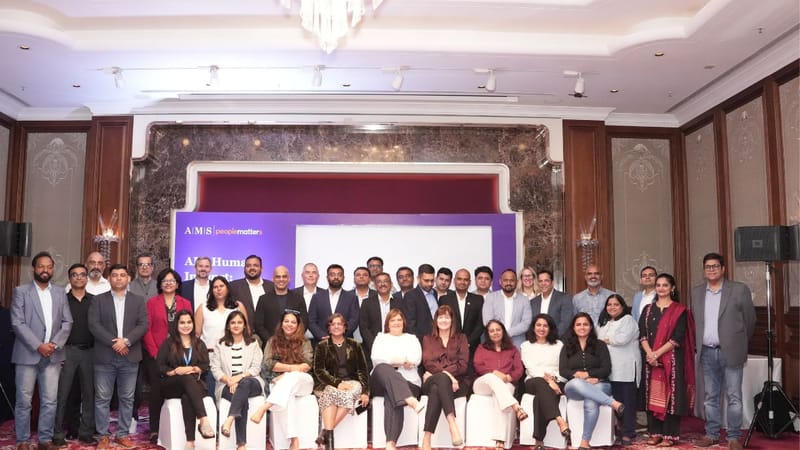
At the recent People Matters and AMS Roundtable in Pune, leaders explored how the future of talent hiring will be shaped by intelligent collaboration, where technology elevates human judgment to deliver speed, quality and a more engaging candidate experience.
As artificial intelligence increasingly transforms how organisations attract, hire and retain talent, one truth is emerging: recruitment remains, at its heart, a profoundly human process. This balance between AI’s analytical precision and human intuition was the central thread of the recent “AI + Human Instinct: The Future of Talent Acquisition” roundtable hosted by People Matters in partnership with AMS in Pune.
Opening the dialogue, the hosts captured the spirit of the discussion: that while AI can reshape every stage of hiring, from screening to onboarding, it will be human instinct that ensures decisions stay authentic, ethical and impactful. The consensus among talent leaders across industries was clear: the question is no longer whether to use AI but how to integrate it meaningfully.
AI: An enabler, not a replacement
Roop Kaistha, Regional Managing Director – APAC, AMS, started the conversation around responsibility, value and practicality. “The key,” she shared, “is to make AI practical. We must start by asking what problem we are trying to solve. Usually, it is about speed, scale or quality. AI should enable those outcomes ethically and transparently.”
Her words found resonance across leaders who agreed that the promise of AI lies not in replacing people but in amplifying their capacity. By automating repetitive tasks, recruiters gain the bandwidth to focus on strategic, relational and creative work that relies heavily on human insight.
From predictive analytics that refine sourcing to AI-driven virtual assistants that improve candidate engagement, organisations are experimenting with varied applications. Yet, the underlying principle remains constant: technology should magnify the human touch in hiring, not replace it. Across industries, leaders shared practical examples of how AI is already embedded in hiring workflows. Each underscored that the technology’s impact is strongest when it complements rather than controls the human process. Here are some key opportunity areas where experimentation is rife:
Task automation: AI tools increasingly manage job description creation, initial sourcing, preliminary screening and interview scheduling, giving recruiters precious time for high‑impact conversations.
Candidate personalisation: Intelligent systems curate individual interviewing and onboarding experiences based on behaviour and interaction patterns, helping candidates feel heard and valued.
Enhanced decision support: Predictive models assist recruiters in shortlisting better fits through data‑backed recommendations and stacked ranking models without overriding human judgment.
Leadership and skills planning: AI‑powered mapping of role evolutions and competency gaps supports long‑term workforce planning strategies.
These use cases highlight a growing realisation: when executed responsibly, AI not only accelerates processes but also improves fairness and quality. The challenge lies in using it judiciously and measuring its success through meaningful, human‑centred metrics.
Sharon Bagshaw, Chief Client Officer, UK&I, EMEA & APAC at AMS, says, "Agentic AI will redefine how talent acquisition operates: moving from human-managed workflows to systems that autonomously coordinate, source and manage pipelines. The real question is not just about automation, but about the evolving role of humans alongside these systems."
Building ethical foundations and governance for AI
Although there is a near-unanimous consensus on the benefits of using AI in talent acquisition, caution prevailed as leaders emphasised that governance, accountability and data integrity must evolve alongside innovation. With data volumes expanding exponentially, clear frameworks are essential to define what can be analysed and how outcomes should be verified. The group noted several considerations critical to ethical adoption:
Transparent data boundaries: Establish policies on data ownership, processing depth and retention periods.
Bias mitigation: Regular audits and algorithm reviews to identify discrimination in sourcing and screening candidates.
Training and fluency: Upskilling HR professionals to understand how AI operates and how to question its outputs responsibly.
Human intervention: Keeping people in the loop for validation, particularly in high‑impact or sensitive hiring decisions.
Cultural alignment: Ensuring that AI models learn from company values, not just datasets, to preserve organisational identity.
The evolution of technology must mirror the evolution of humanity. Machines can process logic; humans provide context, and without human oversight, even the most advanced systems risk undermining inclusion and trust. Ritesh Jha, the moderator, captured a key point in the conversation: “AI adoption must extend beyond the traditional matrix of speed, cost and efficiency. Its real impact lies in redefining the quality of how we hire, what we value and how the workforce of the future takes shape.”
Participants collectively agreed that the recruitment industry’s most elusive metric, quality of hire, stands to gain dramatically from responsible AI application. Historically, this measure has depended on incomplete indicators: attrition rates, hiring‑manager satisfaction or early performance data. AI enables broader, real‑time analysis by linking hiring patterns with long‑term outcomes such as team performance, innovation contribution and retention stability.
Yet, a crucial insight emerged: quality cannot be defined by machines alone. It must be a symbiosis of what data reveals and what humans interpret. AI can surface trends; recruiters must decode what those trends mean within cultural and business contexts. Jim Sykes, Chief Operating Officer at AMS, added, “Before we rush to automate, we need to check our foundations and make sure we’re not automating existing biases and roadblocks. Brilliant basics, strong data and AI fluency across teams must come first.”
AI from the lens of candidate experience and organisational readiness
While efficiency continues to drive AI implementation, leaders agreed that candidate experience will eventually define long‑term success. In a market where talent has choices, engagement and authenticity matter more than speed alone. AI now assists in maintaining communication, providing instant updates and resolving queries, yet the emotional thread of recruitment still relies on the human element.
Some participants discussed early‑career hiring, where automation is practical at scale, contrasted with critical leadership or niche hiring where personalisation remains non‑negotiable. The nuanced view was that AI should manage transactions, while humans manage transformation. By allowing recruiters to spend time where human connection is essential, technology becomes the silent partner that creates space for empathy, storytelling and persuasion. Jim observed, “Talent acquisition is, at its heart, a people-driven craft. If we focus only on speed and cost, and forget quality and impact, we risk losing the very purpose that makes this work meaningful.”
It’s also important to note that AI readiness is not universal. Industry, size and maturity shape adoption patterns. Banking and financial institutions, operating under strict regulations, view AI as a gradual evolution built on compliance and evidence. On the other hand, technology and service firms emphasise experimentation, integrating AI with existing ATS platforms and talent analytics. Similarly, manufacturing and legacy sectors focus on cost‑benefit validations before scaling.
The discussion underscored that for adoption to be business‑driven, organisations should:
Start with pilot programmes addressing defined pain points.
Balance in‑house development with partnerships to accelerate scale.
Embrace transparent change management to ease perceived threats.
Measure ROI not just in saved hours but in improved decision quality and stakeholder satisfaction.
AI in TA: Managing data, fluency and future skills
Recruiters will now not merely source candidates, they will also design prompts, interpret analytics and drive insights into workforce strategy. A recurring insight from the discussion was the need for AI fluency across recruitment teams. Too often, technology adoption is hindered by discomfort or a lack of understanding and trust in the tools they use. The leaders discussed initiatives where recruiters undergo certification and hands‑on training to engage confidently with agentic AI bots. In essence, recruitment expertise will evolve into talent intelligence, powered by human curiosity and machine capability.
Roop articulated this vision vividly: “Imagine a recruiter working alongside their digital twin, who handles operational tasks ethically and efficiently, while the recruiter focuses on connection and impact. That’s how AI liberates human potential in talent hiring.” The next era of talent acquisition will hinge on mastering coexistence. AI will deliver velocity and precision; human intelligence will provide judgment and adaptability.
The most progressive organisations will be those that see AI as a learning partner, one that expands reach without shrinking empathy. The ultimate aim is not faster hiring alone, but fairer, smarter and more human hiring because true transformation occurs when AI becomes a trusted co‑pilot rather than a tool imposed from above. Sharon summarised, "AI itself won’t be the differentiator, but the uniqueness of data and how organisations integrate it with AI will be. Building true competitive advantage will depend on AI fluency and how businesses align their people and data to unlock new forms of value."
The final takeaway from the roundtable was both practical and grounded in today’s realities. Talent leaders must treat AI not as a destination but as an evolving journey guided by clarity, ethics and intent. The success of AI in hiring will not be measured by the number of bots deployed but by the depth of trust built among candidates, recruiters and businesses.
Author
Loading...