







Talent Management
Employees today know exactly what they won't accept: Edelweiss MF CHRO





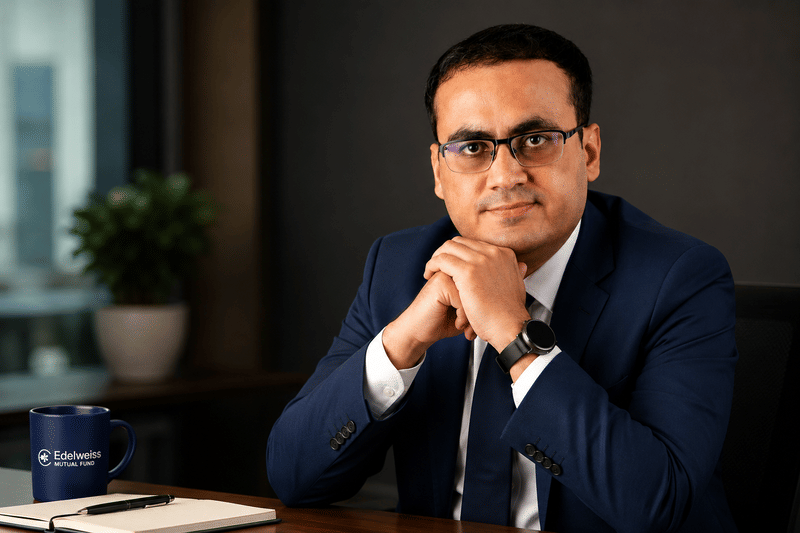
Employees haven't fundamentally changed what they want from work. What has changed is their ability to spot the gap between what employers promise and what they actually deliver, says Edelweiss Mutual Fund CHRO Manoj Chaudhary.
A decade ago, organisations had far greater control over the workplace narrative.
An employee unhappy with their manager, frustrated about career growth or questioning company culture had limited visibility into how things worked elsewhere. Today, that information is a few clicks away.
Employees can compare salaries, read reviews, speak to peers across industries, track leadership decisions on social media and evaluate workplace cultures long before they decide whether to stay or leave.
The very shift, according to Manoj Chaudhary, Chief Human Resources Officer at Edelweiss Mutual Fund, is reshaping the employer-employee relationship in a fundamental way.
"The increase in visibility hasn’t changed what employees want, it has changed what they won’t accept," he tells People Matters.
The workplace promise is under scrutiny
The modern employee is not merely evaluating compensation. They are evaluating consistency.
- Does leadership say one thing and do another?
- Does the culture described during recruitment exist six months later?
- Are growth opportunities real or simply part of employer branding?
Those are the questions increasingly influencing employee decisions.
According to Chaudhary, employees have always wanted three things: purpose, growth and strong workplace relationships. The difference today is that organisations can no longer rely on narratives alone.
Employees expect evidence.
In an industry such as asset management, where trust and long-term thinking are central to business success, he believes employees increasingly apply those same standards internally.
"They are not just benchmarking compensation, but they are assessing credibility of leadership, authenticity of culture, and clarity of growth paths."
That shift has moved workplace expectations away from policies and towards lived experiences.
Why culture initiatives often miss the point
Organisations have spent years investing in engagement programmes, wellness campaigns, recognition platforms and culture-building initiatives.
Yet retention remains a challenge across industries.
For Chaudhary, the explanation is surprisingly simple. "The challenge is often not intent but connection."
Many organisations genuinely want to create better workplaces. The problem arises when culture becomes something employees hear about rather than something they experience.
Trust, he says, sits at the centre of that equation.
"Employees stay where they feel heard, valued, and trusted." That trust is often built through ordinary interactions rather than headline-grabbing programmes.
At Edelweiss Mutual Fund, one example is the company's Daily Pulse mechanism.
When employees provide a low rating, someone reaches out. Not next quarter. Not after a review cycle. Immediately.
Chaudhary recalls a senior employee telling him he had submitted similar feedback in four previous organisations without receiving a single follow-up conversation.
At Edelweiss, someone called. That interaction mattered.
And it highlights a broader lesson many organisations continue to overlook: employees remember responses far longer than surveys.
The hidden retention drivers employers underestimate
Ask employees why they stay, and compensation will almost certainly feature in the conversation.
But according to Chaudhary, long-term commitment is rarely built on compensation alone.
Instead, three factors consistently emerge:
• Meaning
• Growth
• Belonging
Employees want to understand how their work contributes to something larger than their job description.
They want visibility into where the organisation is heading. And they want clarity about where they fit within that future. Growth, meanwhile, is becoming increasingly personal.
Employees are no longer satisfied with generic development frameworks. They want opportunities that feel tangible and relevant to their own aspirations.
At Edelweiss Mutual Fund, Chaudhary points to the company's cluster-based structure, which allows employees to learn from adjacent teams and roles while gaining exposure beyond their immediate responsibilities.
Yet growth alone is not enough. People also stay because of people. "Relationships anchor people," he says.
Employees who feel connected to colleagues, supported by managers and part of a broader community often develop a stronger sense of commitment to an organisation.
The manager effect
If there is one theme that runs consistently through Chaudhary's thinking, it is the outsized influence managers have on employee experience.
Policies do not create culture. People do. "Culture is experienced through managers and daily interactions."
Employees judge organisations through thousands of micro-moments. A conversation after a difficult project. The way feedback is delivered. How decisions are explained. Whether concerns are acknowledged or ignored.
Managers sit at the centre of all those moments.
According to Chaudhary, employees are constantly observing what gets recognised, what gets tolerated and whether organisational values show up in everyday behaviour.
His assessment of culture is refreshingly straightforward. "Culture is built in moments, not mandates."
It is a reminder that employees rarely experience culture through presentations or leadership decks.
They experience it through the people they work with every day.
The new definition of a good workplace
The phrase "good workplace" means something very different today than it did a decade ago.
Earlier, employees often prioritised brand reputation, stability and benefits.
Those factors still matter. But they are no longer enough. Today's workforce increasingly expects workplaces to feel more human. Employees want openness. They want transparency. They want leaders who communicate honestly.
And they want organisations that care about them beyond their employee ID numbers.
For Chaudhary, the strongest shift has been the growing importance of human connection.
"What has shifted most strongly is the expectation that organisations genuinely care about well-being, about personal moments that matter, and about individuals beyond their roles."
That expectation is becoming increasingly difficult for employers to ignore.
What will separate talent winners from everyone else?
As organisations compete for talent in an increasingly transparent world, Chaudhary believes the differentiator will not be flashy initiatives or trendy workplace perks.
It will be commitment. Specifically, leadership commitment. "Long-term employee commitment cannot be built in organisations where leadership itself is transient."
Employees pay attention to consistency.
They watch decisions. They assess behaviour. They notice whether leaders remain committed when circumstances become difficult.
Alongside leadership stability, Chaudhary highlights another factor: maintaining a strong talent bar.
Employees want to work alongside capable, collaborative colleagues.
The quality of talent surrounding them shapes how they experience work every day. Ultimately, the message running through Chaudhary's observations is remarkably clear.
Employees are not demanding perfection. They are demanding authenticity.
And in a workplace where information travels faster than ever before, authenticity may be the hardest thing for organisations to fake and the most valuable thing they can offer.
Topics
Author
Loading...