







Talent Management
Global giants land in India — but skills may prove the bottleneck






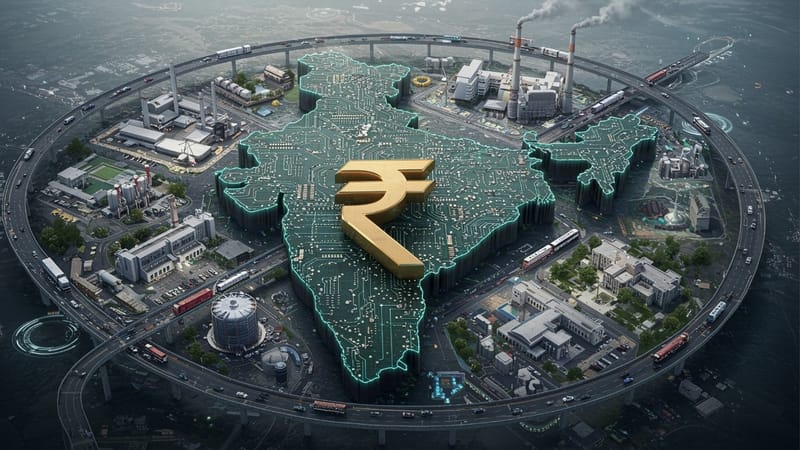
Apple to Micron are building factories in India. The real test: whether apprenticeships, ITIs and industry can deliver millions of production-ready workers.
When global buyers decide to move factories, they pay for steel, tooling and incentives. What they cannot buy easily is a trained, reliable army of shop-floor operators, process engineers and digitally fluent supervisors. That gulf — between investment commitments and human capability — will determine whether friendshoring becomes a genuine industrial shift for India or a short-lived re-routing of supply chains.
The capital arrival is concrete. Apple’s expanded iPhone assembly in southern India and a second plant coming on line are reshaping volumes: Reuters reported a new Tata-run plant beginning production and flagged Foxconn sites that could each reach employment of around 50,000 at full capacity as India seeks to supply most U.S.-bound iPhones by 2026.
Micron’s Sanand facility in Gujarat — an assembly, testing and packaging project backed by central and state incentives — has moved from memorandum to construction and is targeted to produce “Made-in-India” packaged chips in staged phases after 2023 approvals. Google and its contract manufacturers have quietly localised Pixel assembly to Tamil Nadu, and listed suppliers such as Dixon report revenue trajectories that reflect the manufacturing boom.
Those moves are the clearest evidence that friendshoring is no longer a policy talking-point but a programme of capital allocation: PLI and import-curb signals have helped tilt corporate site selection. In September 2024 the government had approved incentive packages for multiple IT-hardware manufacturers — including Dell, HP, Acer and Lenovo — under PLI structures designed to spur local device manufacturing, indicating policy levers are aligned to complement private investment.
Yet the arrival of factories is only the first act. Successful long-run manufacturing requires millions of mid-skilled and semi-skilled workers performing with predictable quality, and a steady supply of mechanics, electricians, test engineers and process technicians who understand yield, traceability and automated inspection systems. This is where India’s current trajectory shows tension.
Numbers and mismatch
Official labour statistics complicate the narrative: India’s Periodic Labour Force Survey reported a low headline unemployment rate of 3.2% for 2023–24 and rising labour participation, data that superficially suggest abundant labour supply. But those aggregates mask structural mismatches — regional skill gaps, under-employment among youth, and a skew towards informal, low-productivity work.
Independent skill-surveys and industry trackers present a different picture for manufacturing. The India Skills Report 2025 and sector studies underline that employability is improving but remains spotty for factory-centric competencies; many engineering graduates lack hands-on training on reflow ovens, pick-and-place, AOI (automated optical inspection) and SPC (statistical process control), the staples of modern electronics lines.
Wheebox, The Economic Times and other trade coverage warn of a widening electronics talent gap, with some industry estimates projecting shortages in the millions for mid-level roles by 2027–28 if scaling does not happen.
That gap explains why factories report recruitment bottlenecks even as city unemployment metrics look benign: the problem is not worker quantity but worker quality for specific, repeatable manufacturing tasks.
What friendshoring actually needs
Friends-on-shoring factories demand a different skill mix from India’s dominant services model. The priority roles are:
SMT and assembly operators who can run multi-station lines, interpret first-pass yield metrics and perform inline quality checks.
Test and failure-analysis technicians with experience in ICT (in-circuit test), functional test and thermal/EMI constraints.
Process engineers skilled in SPC, DOE and root-cause analysis to drive continuous yield improvements.
Maintenance and robotics technicians capable of uptime-centred preventive strategies for sophisticated pick-and-place and conveyor systems.
Supervisors who are digitally fluent, able to read MES dashboards, trigger corrective actions and manage shift handovers with traceability.
These are not exotic roles; they are mid-career, mid-skill positions that stabilise a factory’s throughput. Without them, ramp-ups suffer rework, audit failures and missed delivery windows — outcomes that quickly push global buyers to diversify across multiple low-risk geographies rather than concentrate volumes in one country.
Supply-side programmes — progress, not panacea
India’s skilling architecture has expanded. PMKVY 4.0, Skill India digital platforms and renewed emphasis on apprenticeships have raised enrolment and training throughput; the Ministry of Skill Development reports millions trained under central schemes in recent fiscal cycles. States such as Tamil Nadu and Gujarat — where major manufacturing clusters are growing — are upgrading ITIs and proposing public-private centres of excellence targeted at electronics, semiconductors and EV components.
Yet industry engagement remains inconsistent. Many training programmes track seats filled rather than post-placement productivity or retention. Manufacturers, in interviews reported widely across trade press, cite high attrition, weak mid-career candidate pools and insufficient workplace-integrated learning as persistent headaches during ramp-up.
There are instructive precedents inside India: the solar and renewables push showed how a strong incentive design combined with employer-led training can scale technicians — but also how quality variation (and regional skew) undermined outcomes when the emphasis was on enrolment over job readiness. These cautionary parallels underline that skilling must be outcome-centred rather than activity-centred.
The geopolitical time-clock
The danger for India is not that volumes won’t arrive at all, but that global firms will split capacity across multiple friend-shoring destinations if India cannot provide predictable quality at scale. Vietnam, Mexico and parts of Southeast Asia are all competing on labour readiness, incentives and supplier ecosystems. Reuters and other outlets have documented how buyers hedge volumes across geographies when production yields or labour reliability are uncertain.
That dynamic would convert a potential manufacturing leap into a scattering of lower-value assembly jobs, depriving India of the deeper ecosystem effects — supplier localisation, engineering development and higher value add — that come with concentrated scale.
Topics
Author

Loading...