







Talent Management
"India risks staying an assembly hub if it doesn't invest in specialised talent": Su Piow Ko
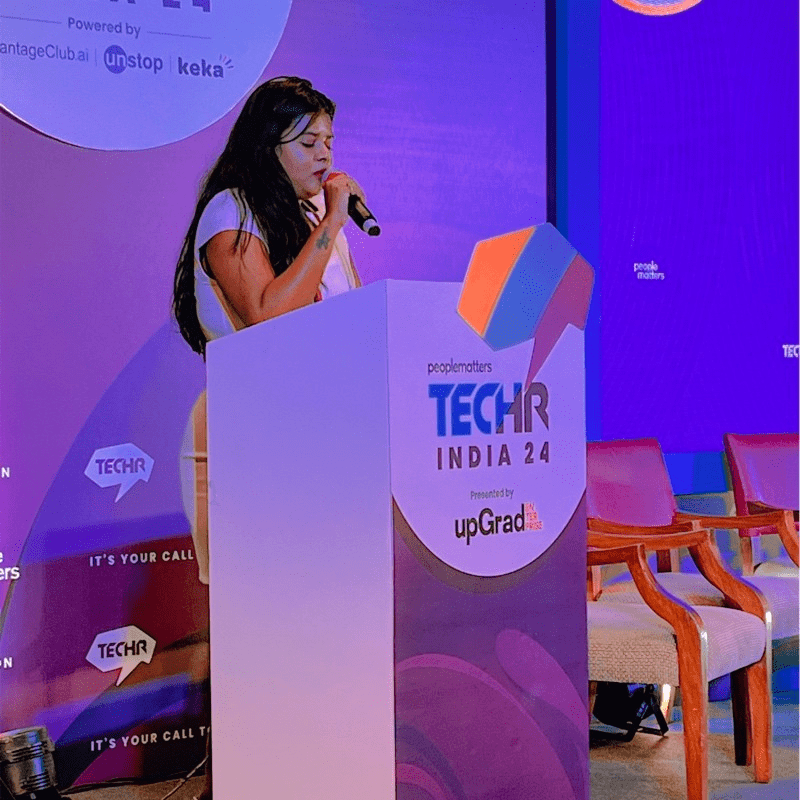






India's electronics manufacturing ambitions are gathering pace, but industry leaders warn that factories and assembly lines alone will not be enough. The bigger challenge may be developing the specialised talent needed to compete globally in advanced technologies.
India's ambition to become a global manufacturing powerhouse is no longer limited to smartphones, consumer electronics or semiconductors. As the country pushes deeper into advanced technology production, a new challenge is emerging: finding enough specialised talent to support that growth.
While investment announcements, new factories and government incentives often dominate headlines, industry leaders say the real test lies elsewhere. Building a sustainable high-tech manufacturing ecosystem requires engineers, technicians, installation specialists and service professionals with skills that cannot be developed overnight.
According to Su Piow Ko, Director at Titan Intech Ltd, presenting UltraLED Displays, India has built a strong foundation in engineering, but specialised fields such as advanced display technologies still face significant talent shortages.
"The gap is real, but it is also where the opportunity lies," he told People Matters during a discussion on workforce readiness in India's evolving electronics sector.
Beyond factories: the hidden skills challenge
For many people, display technology may appear straightforward. Screens are everywhere, from stadiums and airports to shopping malls, command centres and corporate offices.
Yet behind every large digital display sits a complex combination of engineering disciplines.
According to Ko, advanced display systems require expertise in:
• Optoelectronics
• Thermal management
• Materials science
• Manufacturing precision
• Large-scale deployment and integration
While India has developed strong capabilities in electronics design, embedded systems and software integration, specialised display engineering demands a broader and more complex skill set.
Ko believes India's growing investments in semiconductor and electronics manufacturing will create significant demand for highly skilled professionals over the coming years. However, he stresses that building manufacturing capacity alone will not create technology leadership.
Instead, he points to the need for:
• Industry-led training programmes
• Global technical collaboration
• Practical engineering exposure
• Long-term talent development
The talent gap extends far beyond design
One of the more surprising insights from the discussion is that the biggest challenge is not necessarily product design.
According to Ko, the most significant capability gaps often appear across the entire lifecycle of a technology project, from engineering and installation to maintenance and customer support.
Advanced display deployments require teams capable of managing:
• Optical integration
• Power management
• Calibration and testing
• Thermal control systems
• Site-specific installation requirements
Even a well-designed system can underperform if deployment standards are inconsistent or after-sales support is inadequate.
For customers, display quality is judged not at the factory but during daily use. That places increasing importance on maintenance, responsiveness and long-term technical support.
"Customers need continuity, not just hardware," Ko said.
Why imported expertise remains common
India's technology ecosystem has matured rapidly over the past decade, yet many companies continue to rely on overseas expertise for highly specialised projects.
Ko says this dependence remains particularly visible in complex environments such as:
• Ultra-fine pixel pitch display installations
• Command and control centres
• Immersive digital experiences
• Large-scale outdoor display networks
Historically, businesses relied heavily on imported technology, external consultants and overseas engineering teams because domestic capabilities were still developing.
This dependence often created practical challenges, including:
• Longer project timelines
• Slower service response
• Limited localisation for Indian operating conditions
However, Ko notes that the industry is gradually shifting. More companies are investing in local engineering capabilities, integration expertise and structured support networks.
The next stage, he says, is moving from local assembly to complete technical ownership.
The assembly trap
India's manufacturing story has often focused on assembly operations, which have helped attract investment and create employment opportunities.
Yet Ko believes assembly alone cannot deliver long-term competitiveness.
"Assembly is an important first step because it creates manufacturing activity and market participation, but long term competitiveness comes from owning deeper capabilities," he explained.
Those capabilities include:
• Research and development
• Thermal engineering
• Driver technologies
• Calibration systems
• Software integration
• Service infrastructure
Advanced display systems are not simply products assembled from components. They require continuous innovation, precision manufacturing and specialised expertise across the value chain.
To move beyond assembly, Ko says India needs stronger collaboration between academia, industry and engineering environments, along with investment in testing facilities, component ecosystems and specialist workforce development.
Finding talent is only half the battle
Recruitment remains a major challenge across advanced manufacturing sectors.
According to Ko, the difficulty is not merely finding engineers but finding professionals who combine technical knowledge with practical execution skills.
Large-scale LED deployments demand expertise in areas such as:
• Structural coordination
• Thermal management
• Power optimisation
• Calibration accuracy
• On-site problem solving
These capabilities are typically developed through years of project experience rather than classroom education alone.
Retention presents another challenge.
Because specialised technical expertise takes time to develop, companies must invest in:
• Mentorship programmes
• Hands-on project exposure
• Long-term career pathways
• Continuous professional development
Without those investments, organisations risk losing critical expertise and repeating the cycle of skills shortages.
Why reactive hiring may not be enough
One of Ko's strongest observations concerns how organisations approach workforce planning.
He believes many businesses still recruit only when new projects arise rather than building capabilities in advance.
While that approach may satisfy immediate operational needs, it can create longer-term constraints in industries where quality depends heavily on specialised expertise.
"Execution quality depends on trained people, not just available people," he said.
According to Ko, organisations that build internal talent pipelines early tend to benefit from:
• Stronger retention rates
• More consistent project delivery
• Better workforce stability
• Greater organisational capability
Although progress is being made, he believes the industry's transition from reactive hiring to strategic talent development remains incomplete.
A defining moment for India's manufacturing ambitions
India's electronics sector is entering a critical phase.
The country has attracted significant investment, built manufacturing capacity and established itself as an increasingly important player in global supply chains.
Yet Ko believes technology leadership ultimately depends on people.
"Machines can be imported and factories can be built, but skilled talent takes time to develop," he said.
If investment in specialised workforce development does not keep pace with industrial growth, India risks remaining dependent on external expertise in critical areas.
At the same time, Ko sees considerable opportunity.
He points to India's young engineering workforce, growing industrial base and willingness to learn as advantages that could help the country build not only manufacturing scale but also engineering excellence.
The next chapter of India's manufacturing story may therefore be defined less by the factories it builds and more by the specialised talent it develops to run them.
Topics
Author
Loading...