







Talent Management
Manufacturing in 2026 will need more than manpower: Lava on skills, trust and people-centric resilience
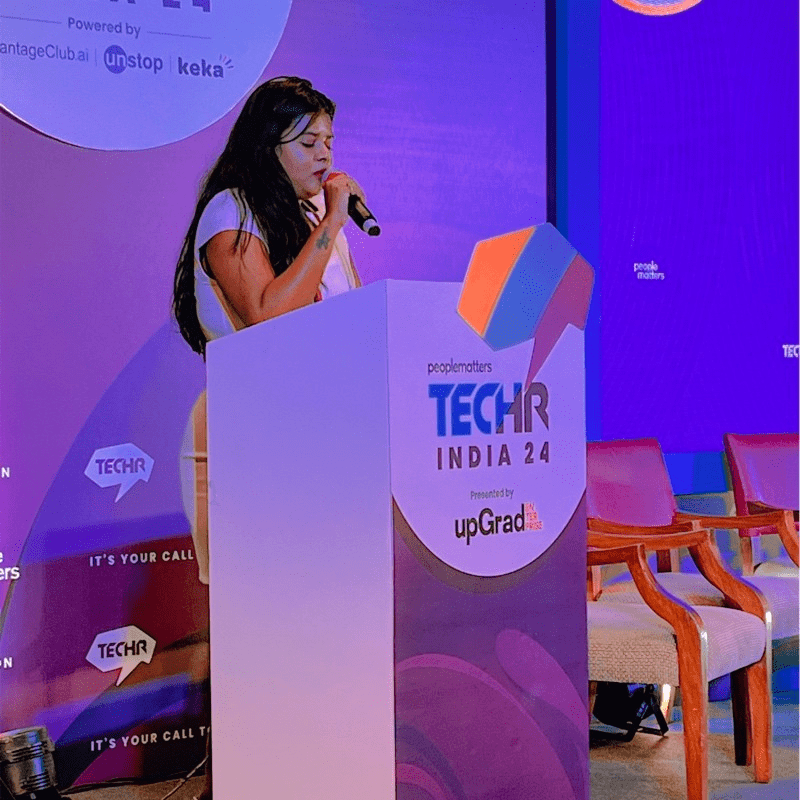






Lava’s Pranjal Yadav on why skills, frontline trust and people-first resilience will matter more than headcount in 2026.
Factories don’t usually get described as emotional spaces. They are built for speed, precision, and output — not reflection.
But as manufacturing heads into 2026, it’s becoming clear that the real pressure points aren’t only mechanical. They’re human.\
Because right now, the biggest challenge isn’t simply how many workers you have. It’s whether you have the right skills, the right trust, and the kind of workplace resilience that doesn’t collapse the moment things get tight.
Pranjal Yadav, General Manager – Human Resources at Lava International Limited, puts it bluntly: high-volume manufacturing is running into a skilled manpower wall.
When the talent pool starts moving elsewhere
Looking back at 2025, Yadav says the most significant workforce challenge was “the shortage of skilled manpower.”
And the reasons are telling.
“The market witnessed a growing shift of people towards gig work and self-employment, taking opportunity near home which reduced availability of shop-floor-ready talent,” she notes.
At the same time, she points to limited skill development centres and fast-changing socio-economic conditions that have reshaped workforce expectations around wages, stability and growth.
Put together, these shifts have led to higher attrition, skill gaps, and operational pressure.
In other words: the shop floor is no longer competing only with other factories — it’s competing with the entire new world of work.
Resilience isn’t a poster
So what does an organisation do when operations are intense and talent is harder to hold?
At Lava, Yadav says the focus has been simple, but not easy: address concerns “quickly and transparently.”
The company, she explains, worked consistently on maintaining “a healthy, safe and respectful work culture,” with emphasis on employee involvement, regular communication, and leadership visibility on the shop floor.
And importantly, supervisors and middle managers were empowered to take faster decisions during high-pressure situations.
“Our responsibility towards employees’ skill enhancement and career growth helped teams perform effectively even under operational stress,” she adds.
Productivity matters
Manufacturing has always been built around productivity and continuity. But Yadav argues that sustaining output requires something more human than relentless targets.
“Balancing productivity with wellbeing requires realistic planning and empathetic leadership,” she says.
At Lava, performance expectations were supported through manpower planning, safety focus and engagement initiatives. Regular interaction with employees, attention to health and safety, and respect for work-life balance helped sustain output while ensuring employees remained motivated and mentally fit.
It’s a reminder that wellbeing is not a soft add-on — it’s operational infrastructure.
Cross-skilling: the factory’s hidden superpower
If manufacturing is going to scale in 2026, flexibility on the floor will be critical.
Yadav calls skill depth and cross-skilling “critical enablers of resilience.”
Cross-trained employees help manage absenteeism, reduce dependency on specific roles and maintain production continuity during peak demand. It also improves confidence, engagement and internal mobility, creating what she describes as a more flexible and future-ready workforce.
In plain terms: when more people can do more jobs, the system doesn’t wobble so easily.
The frontline manager is the real make-or-break factor
Culture in manufacturing doesn’t live in PowerPoint decks. It lives with supervisors.
Yadav says frontline supervisors and middle managers play a decisive role in high-volume environments.
Their capability directly impacts morale, safety compliance and daily productivity. Strong managers ensure communication, quick issue resolution and adherence to safety standards — while acting as the bridge between workforce expectations and business priorities.
In 2026, that bridge might be the most important piece of infrastructure on the shop floor.
The risks ahead: fatigue, attrition, shifting aspirations
As manufacturing scales further, Yadav warns employers to stay alert to risks such as skill shortages, rising attrition, changing workforce aspirations and fatigue from sustained operational pressure.
HR, she says, can mitigate these risks by investing in skill development, leadership capability building, structured career pathways, engagement and wellbeing programmes.
“Proactive workforce planning will be essential,” she adds.
The biggest lesson from 2025
Looking ahead, Yadav believes the most critical takeaway from last year is clear: people-centric practices are not optional.
“The key lesson from 2025 is that people-centric practices are essential for operational resilience,” she says.
Organisations must stay agile, strengthen frontline leadership, invest in skills, and respond quickly to employee concerns.
A resilient workforce, she concludes, is built on trust, growth opportunities, strong culture and shared accountability — and those foundations will remain critical for success in 2026 and beyond.
Because in the end, manufacturing may always be about output.
But the future of manufacturing?
That will depend on whether organisations treat people as manpower — or as the reason resilience exists at all.
Topics
Author
Loading...