







Business
‘I fired my company’s HR department – and all problems disappeared’: Bolt CEO






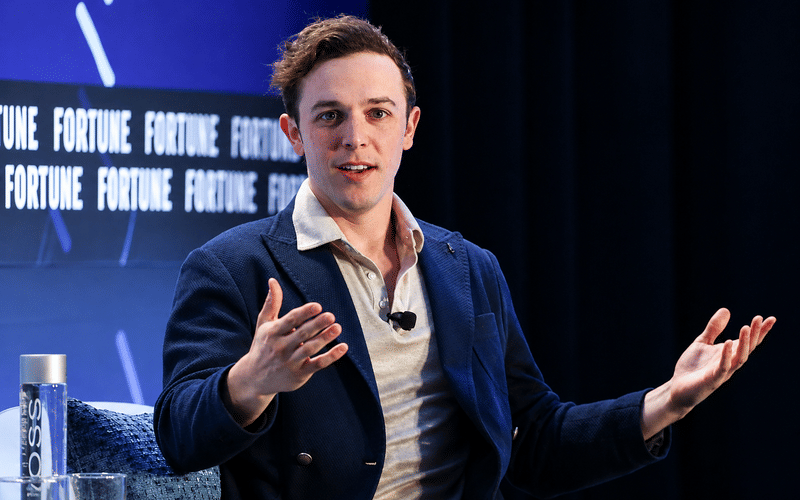
Ryan Breslow’s remarks on eliminating Bolt’s HR department have triggered a wider discussion on workplace culture, accountability and the future role of HR.
Bolt CEO Ryan Breslow has doubled down on his controversial decision to eliminate his company's HR department, claiming the move removed organisational problems and helped refocus the business on execution and performance.
Speaking in a recent interview with The Telegraph, the Bolt founder and chief executive defended comments he first made at Fortune’s Workplace Innovation Summit in May, where he revealed he had dismissed the fintech firm's entire HR team.
According to Breslow, the department had been "creating problems that didn't exist" and those issues disappeared after the team was let go.
His remarks have drawn strong reactions across the business community, with supporters viewing them as a challenge to bureaucratic workplace structures and critics warning of the risks of removing employee oversight functions.
Comments at Fortune summit sparked global reaction
Breslow told The Telegraph that he left the Fortune event believing his comments had been received well. By the time he landed in Los Angeles, however, his phone was flooded with reactions as the story spread across global business media.
At the summit, Breslow told an audience of executives and HR leaders that Bolt's HR department had become a source of unnecessary friction.
He said the company needed people focused on delivering results rather than creating internal obstacles.
The comments quickly divided opinion:
- Some commentators praised Breslow for challenging conventional corporate structures.
- Many HR professionals criticised the remarks and questioned whether workplace issues had genuinely disappeared.
- Critics suggested removing HR could eliminate reporting mechanisms rather than the underlying problems themselves.
The debate continues to feature prominently in business publications, podcasts and workplace discussions months after the original comments were made.
Breslow links HR to 'work theatre' culture
In the interview, Breslow said his return to Bolt in 2025 exposed what he described as a culture of "work theatre", where employees appeared busy without delivering meaningful outcomes.
He said the company had developed excessive internal complaints and bureaucracy during his absence.
Breslow stepped away from Bolt in 2022 and returned three years later as the company worked to recover from operational and financial challenges.
According to reporting cited by The Telegraph, Bolt's valuation fell from approximately $11 billion to $300 million during that period before later rebounding.
Reflecting on his return, Breslow said he encountered a workplace culture characterised by excessive complaints and entitlement.
He described these issues as a bigger challenge than operational problems and suggested they had become embedded within the organisation.
CEO calls for smaller people teams
While defending his decision to remove Bolt's HR department, Breslow stopped short of recommending that every company follow the same approach.
Instead, he suggested businesses should rethink the traditional HR function and align people-related teams more closely with organisational goals.
Among his key observations:
- Companies should consider replacing traditional HR structures with "people operations" functions.
- People teams should be more directly connected to business outcomes.
- Organisations should focus on execution and performance rather than excessive internal processes.
- HR departments, in his view, have become disconnected from operational priorities.
Breslow also suggested many organisations could significantly reduce the size of their people functions, although he acknowledged implementation would vary depending on company size and industry.
Remote work reshaping HR responsibilities
Part of Breslow's criticism stems from Bolt's operating model.
The company operates as a fully remote organisation, leading him to question whether some traditional HR responsibilities remain relevant in distributed workplaces.
He told The Telegraph that while issues such as workplace harassment still require strict policies and compliance measures, he believes companies do not necessarily need large teams dedicated to managing such risks.
Breslow said Bolt continues to maintain mandatory harassment training and a zero-tolerance policy for misconduct.
His argument centres on reducing administrative layers rather than eliminating workplace standards altogether.
Wider questions emerge about workplace culture
Beyond HR, Breslow's comments touch on a broader debate around the relationship between employers and employees.
He criticised efforts to make workplaces function like social communities or families, maintaining that companies exist primarily to achieve business objectives.
The entrepreneur said leaders should focus on building successful organisations rather than acting as social coordinators.
His comments arrive at a time when employers continue to reassess workplace culture, employee engagement programmes, diversity initiatives and organisational structures amid ongoing economic uncertainty.
Debate over HR’s future likely to continue
Breslow's remarks have reignited longstanding questions about how organisations balance employee support with business performance.
While many companies continue to expand strategic HR functions focused on talent, culture and workforce planning, others are examining how technology, automation and leaner operating models could reshape people management.
For now, the Bolt CEO's comments remain one of the most high-profile challenges to traditional HR structures in recent years, ensuring the debate over the future role of HR is unlikely to fade anytime soon.
Topics
Author
Loading...