







Business
Noel Tata proposes Tata Sons split as alternative to RBI-mandated listing: Report





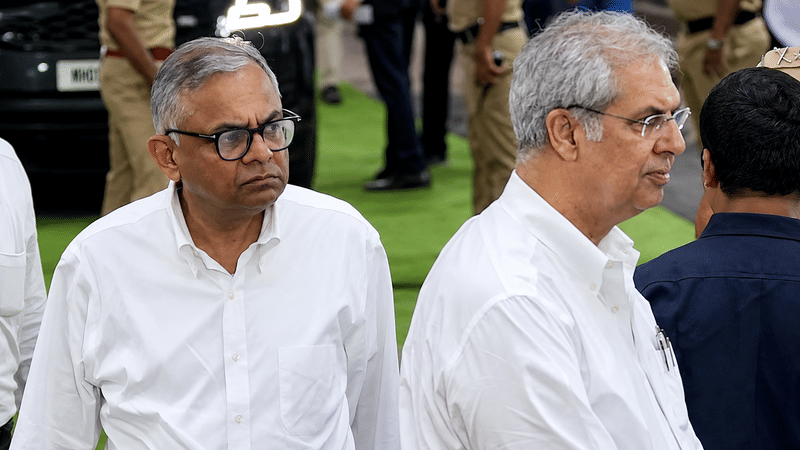
Tata Trusts is exploring structural alternatives to a public listing as governance and regulatory questions continue to shape the future of Tata Sons.
Noel Tata, Chairman of Tata Trusts, has proposed splitting Tata Sons into multiple entities as an alternative to a public listing required under Reserve Bank of India (RBI) regulations, according to a report by The Economic Times. The proposal was reportedly discussed during a Tata Sons board meeting held on September 17.
The reported move comes as Tata Sons continues to evaluate options following its classification by the RBI as an upper-layer non-banking financial company (NBFC), a designation that carries stricter regulatory requirements, including listing obligations.
According to The Economic Times, it remains unclear whether the Tata Sons board will formally consider the proposal.
Tata Trusts continues to oppose listing
Tata Trusts, which owns around 66% of Tata Sons, has consistently maintained that the holding company should remain unlisted.
The reported proposal reflects ongoing efforts by the Trusts to explore alternatives after the RBI's classification decision.
A restructuring of Tata Sons into multiple entities could potentially emerge as one of several options being examined as the group assesses compliance pathways under the regulatory framework.
Regulatory backdrop and governance debate
The issue has gained prominence amid broader discussions surrounding governance and board decision-making at Tata Sons.
On Sunday, Tata Trusts stated that the resolution to reappoint N Chandrasekaran as Chairman of Tata Sons had not been validly passed at the September 17 board meeting because it did not secure the required support from Tata Trusts' nominee directors.
According to the Trusts:
- Tata Sons' Articles of Association require affirmative support from a majority of Tata Trusts-nominated directors.
- Tata Trusts has two nominee directors on the Tata Sons board.
- One nominee director voted against the resolution.
- As a result, the required support was not obtained.
The Trusts also said the Chairman's casting vote could not be used to satisfy this specific requirement because such a vote applies only when overall board votes are evenly split.
In its statement, Tata Trusts said there was "no paralysis" or "deadlock" and that the Articles of Association had effectively resolved the matter.
Supreme Court ruling cited by Trusts
Tata Trusts also referred to the long-running legal dispute involving former Tata Sons chairman Cyrus Mistry.
According to the Trusts, Tata Sons had previously defended the voting rights of Tata Trusts' nominee directors under Articles 104B and 121 before the Supreme Court.
The Trusts noted:
- The National Company Law Appellate Tribunal (NCLAT) had earlier described those rights as oppressive.
- The Supreme Court later accepted Tata Sons' position and overturned that finding.
- Tata Sons therefore cannot disregard protections it had previously defended before the apex court, according to the Trusts.
Corporate governance remains central issue
Tata Trusts also rejected suggestions that a Tata Sons listing would be necessary to strengthen governance standards.
The Trusts said Tata Sons already follows governance mechanisms covering:
- Independent directors
- Audit committees
- Nomination committees
- Related-party transaction oversight
- Retirement of directors by rotation
- Insider trading controls
According to Tata Trusts, several of these governance practices were voluntarily adopted before the current regulatory issue emerged.
What comes next
The reported proposal to split Tata Sons adds a new dimension to the group's deliberations over its future structure. While no decision has been announced, the discussion underscores the significance of the RBI's upper-layer NBFC classification and its implications for one of India's most influential corporate holding companies.
For now, Tata Sons continues to evaluate its options as regulatory compliance, governance requirements and shareholder interests converge around a decision that could shape the group's future structure.
Topics
Author

Loading...