







Business
Oracle appoints Hilary Maxson CFO with $2.5 million bonus target as OpenAI deal fuels layoffs






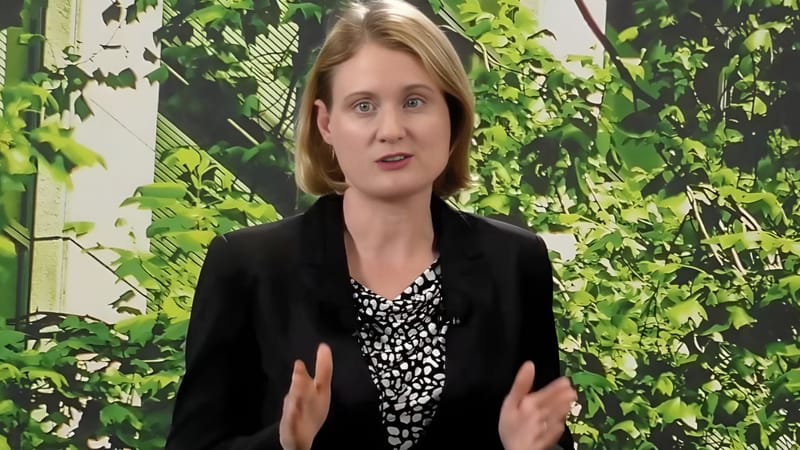
Hilary Maxson joins Oracle with a $2.5 million bonus target as layoffs deepen amid rising costs tied to its OpenAI cloud partnership.
Oracle has appointed Hilary Maxson as its new Chief Financial Officer, handing her a compensation package that includes a $950,000 base salary and a performance-linked bonus target of $2.5 million, even as the company pushes through one of the largest restructuring exercises in its recent history.
The appointment, effective immediately, lands at a moment of unusual pressure for the US technology giant. Oracle is accelerating spending on artificial intelligence infrastructure while carrying out broad layoffs across multiple business units, a move that several reports have linked to the financial demands of its cloud partnership with OpenAI.
CFO CHANGE COMES AT A CRITICAL MOMENT
Oracle said Maxson joins from Schneider Electric, where she served as Executive Vice President and Group CFO. She will report to co-CEO Clay Magouyrk, according to the company’s announcement.
Financial Express, citing a regulatory filing and Fox News, reported that Maxson, 48, will receive a base salary of $950,000 a year and will be eligible for a performance bonus with a target of $2.5 million. In a statement carried by Financial Express, Maxson said she was “excited to join at this pivotal moment” and that she looked forward to helping Oracle “continue to invest with discipline” and convert current momentum into “durable, long-term value for customers and shareholders.”
The company also confirmed that Doug Kehring will move out of his role as Oracle’s Principal Financial Officer, completing a top-level finance transition at a time when the business is under close investor scrutiny.
WHO IS HILARY MAXSON?
Maxson brings a long track record in finance leadership across industrial and infrastructure-heavy businesses, a profile that aligns with Oracle’s current priorities as it pivots from software-led growth to capital-intensive AI infrastructure.
Before joining Oracle, she spent nearly a decade at Schneider Electric and was part of the leadership team that steered the company’s shift from a traditional electrical equipment player to a digital energy and automation business. Schneider Electric generates more than $45 billion in annual revenue and has invested heavily in software-led systems for utilities, data centres and industrial customers.
Earlier in her career, Maxson spent 12 years at AES Corporation in senior finance, strategy and M&A roles, working on infrastructure projects across global markets. She holds a bachelor’s degree and an MBA from Cornell University, and also serves as a non-executive director and chair of the Audit Committee at Anglo American plc.
LAYOFFS CAST A SHADOW OVER THE APPOINTMENT
The leadership announcement came just days after reports of a major layoff round at Oracle. CNBC reported that thousands of employees were affected, citing people familiar with the matter, although Oracle has not publicly disclosed an exact number. Financial Express noted that Oracle had about 162,000 full-time employees as of May 2025, based on its latest 10-K filing.
Oracle has already cut more than 10,000 jobs globally, with some estimates putting the eventual figure closer to 30,000. The layoffs have reportedly affected teams across cloud, health, sales and NetSuite operations, making this one of the most extensive workforce reductions in the company’s history.
Employees were informed by email, with several reports saying many received notices without prior conversations with managers or HR teams. Internal communication reportedly framed the cuts as part of a restructuring effort driven by “organisational changes” and “evolving business needs”.
THE OPENAI DEAL AND THE COST OF SCALE
At the centre of the restructuring is Oracle’s cloud agreement with OpenAI, which Moneycontrol reported to be worth $300 billion and signed in 2025. Under the deal, Oracle committed to building large AI data centres to support OpenAI workloads, including ChatGPT training and deployment.
That commitment has changed Oracle’s cost structure. The company has moved aggressively to expand data-centre capacity across multiple US locations, but the buildout has required substantial borrowing. Moneycontrol reported that Oracle’s debt has crossed $100 billion, while free cash flow has turned negative under the weight of capital expenditure.
The layoffs could save Oracle between $8 billion and $10 billion, money that can be redirected to fund the infrastructure needed to meet OpenAI’s demand. In effect, Oracle appears to be reshaping its workforce and cost base to support a strategic bet on AI cloud capacity.
RESTRUCTURING COSTS AND FINANCIAL PRESSURE
Oracle’s own filings indicate the scale of the pressure. In March, the company said it expected the total cost of its restructuring plan in the 2026 financial year to rise to as much as $2.1 billion, with a large share allocated to severance and related employee expenses, according to Financial Express and CNBC.
At the same time, Oracle is dramatically increasing capital expenditure. Financial Express reported that the company has projected capex of up to $50 billion for the current fiscal year, which ends in May — more than double the previous year’s spend.
That level of spending is unusual even by Big Tech standards and underlines the scale of Oracle’s ambitions. The company is not simply adding AI features to software products; it is trying to become a core infrastructure provider in the global AI supply chain.
EXECUTION RISKS ARE STARTING TO SHOW
The strategy, however, is not without friction. Moneycontrol reported that one major data-centre expansion project in Texas was scaled back after shifts in hardware requirements and demand forecasts, with OpenAI reportedly preferring newer chipsets available at other locations.
Those changes point to a broader challenge for Oracle: AI demand is growing fast, but the underlying technology stack is evolving even faster. A facility designed around one generation of chips can become less attractive if customers move to newer hardware before deployment is complete.
For a CFO, that creates a difficult balancing act. Oracle must continue to invest at speed to remain relevant in AI infrastructure, while ensuring that capital is deployed into assets that will generate returns over time.
Oracle now enters a decisive period. If AI demand remains strong and the OpenAI partnership scales as expected, the company could emerge as a central infrastructure player in the next phase of enterprise computing. If execution slips, however, the combination of high debt, negative free cash flow and internal disruption could become a drag on performance.
That is the context in which Hilary Maxson takes over as CFO: not as a caretaker of a stable software business, but as the financial architect of a capital-heavy AI strategy.
Her mandate is clear, if unforgiving — fund growth, control costs, and make the numbers work.
Topics
Author
Loading...