







Economy Policy
Karnataka HC orders strict implementation of menstrual leave at workplaces






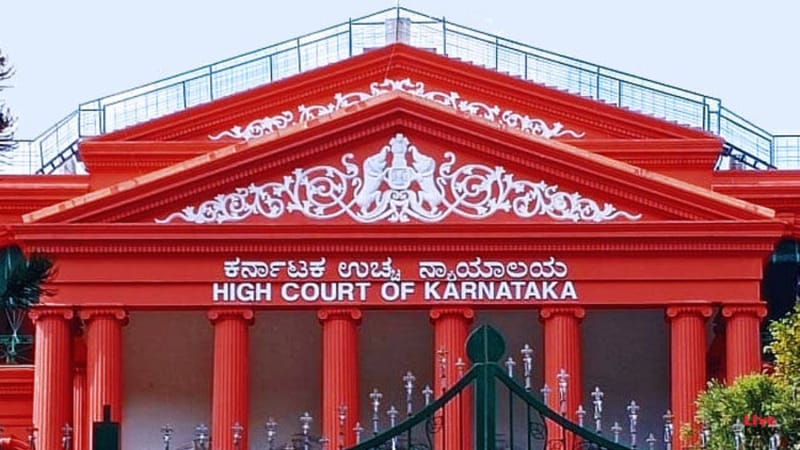
Court directs state and employers to ensure uniform rollout of menstrual leave policy across sectors pending formal legislation.
The Karnataka High Court has directed the state government to strictly enforce its existing menstrual leave policy across workplaces, pushing employers to move from policy awareness to actual compliance.
The order, delivered by Justice M Nagaprasanna, requires the state to ensure that the policy is implemented “uniformly, consistently and rigorously” across sectors until formal legislation is enacted, according to reporting by The New Indian Express.
The directive places immediate responsibility on both the government and employers to operationalise the policy through guidelines, circulars and administrative instructions, rather than waiting for the law to be formally codified.
Court shifts focus to implementation
At the centre of the ruling is a clear message: the policy already exists, and execution cannot be deferred.
The court noted that once the proposed Karnataka Menstrual Leave and Hygiene Bill, 2025 is enacted, the state must frame rules without delay to give full effect to the law. Until then, it must ensure that the current framework is actively enforced.
“Effective operationalisation” is now the operative phrase. That includes ensuring that registered establishments grant one day of leave per month to eligible women employees, as outlined in the state’s notification.
The case arose from a petition filed by Chandravva Hanamant Gokavi, a hotel worker from Belagavi district, who sought directions for proper implementation of the policy, The New Indian Express reported.
What the policy mandates for employers
The menstrual leave policy, notified in 2025, entitles women employees aged 18 to 52 to one day of paid leave per month, amounting to 12 days annually.
According to reporting by The Hindu, the policy applies to establishments registered under multiple labour laws, including the Factories Act, the Karnataka Shops and Establishments Act, and the Plantation Workers Act. It covers permanent, contractual and outsourced employees in the formal sector.
The leave cannot be carried forward, and employees are not required to provide medical certificates to avail it.
However, the policy excludes government employees, Anganwadi workers and ASHAs, leaving a significant portion of the workforce outside its scope.
Inclusion gaps remain under scrutiny
The High Court acknowledged these gaps, particularly in the unorganised sector, where enforcement remains structurally complex.
Justice Nagaprasanna observed that unorganised work falls broadly into two categories: small enterprises employing fewer than ten workers, and daily wage labourers who often fall outside formal regulatory frameworks.
The court emphasised that while organised sectors can be regulated through legislation and administrative orders, the unorganised sector will require a more facilitative and inclusive approach.
Beyond rules, the court stressed the need for system-wide sensitisation, noting that awareness and cultural acceptance remain critical to effective implementation.
Equality argument addressed
The ruling also addressed concerns around the constitutional validity of menstrual leave, which is being challenged in separate petitions.
The court rejected arguments that such provisions violate equality under Article 14, stating that recognising biological differences does not undermine equality but strengthens it in practical terms.
“Men and women stand equal in the eyes of the law; yet, they are biologically distinct,” the court observed, adding that acknowledging such differences in matters of health and dignity gives substantive meaning to equality, according to The New Indian Express.
Policy meets workplace reality
For employers, the directive effectively raises the compliance bar. What was earlier a notified policy with uneven uptake now carries judicial backing.
Workplace experts have long pointed to enforcement as the weak link in such policies. While Karnataka’s framework was seen as progressive when introduced, its impact has depended largely on how organisations interpret and implement it.
Labour groups have also pushed for stronger legal backing. As Divya Biradar of the Karnataka Domestic Workers’ Union told The Hindu earlier, formal legislation would provide greater enforceability and extend coverage to informal workers.
Topics
Author
Loading...