







Economy Policy
Union Budget 2026: Key takeaways for employees, employers and HR leaders






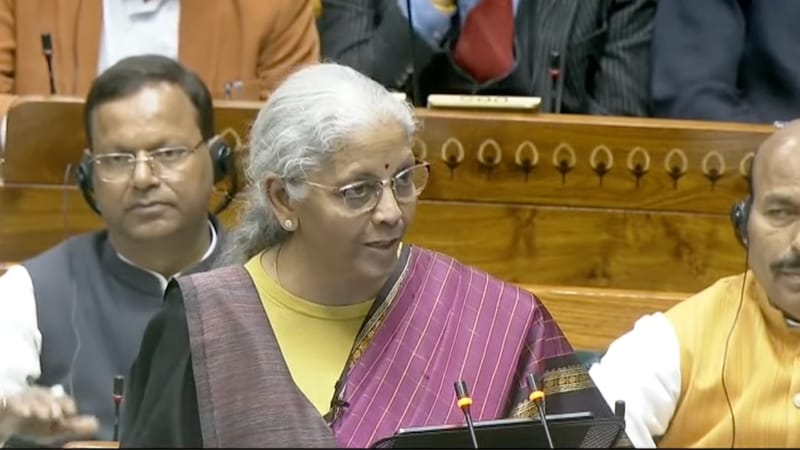
From manufacturing and tech to tax relief and compliance reform, Budget 2026 quietly reshapes the operating landscape for employers and employees.
Union Budget 2026 did not chase spectacle. Instead, it delivered a tightly argued case for jobs-led growth, compliance certainty and workforce readiness, positioning people—not subsidies—at the centre of India’s next growth phase.
As Finance Minister Nirmala Sitharaman presented her ninth consecutive Budget, the emphasis was unmistakable: execution over announcements, employability over optics, and trust over enforcement. Markets stayed cautious, but the policy signals were clear for employers planning capacity and for workers navigating income, mobility and skills.
Context: growth with guardrails
The Budget follows an Economic Survey that projects 7.4% growth in FY26, supported by reforms and private investment momentum, Reuters reported earlier this week. Against a volatile global backdrop—disrupted supply chains, tighter capital and rapid technological shifts—the government framed the Budget as a bridge between stability and scale.
Sitharaman anchored her approach in a three-part framework: accelerating growth, building people’s capacity, and widening access. The throughline was the workforce.
Manufacturing and services: jobs at the core
The strongest employment signal came from a renewed manufacturing push across seven strategic sectors, including biopharma, semiconductors, electronics, chemicals, capital goods, textiles and sports goods. The intent is to deepen domestic value chains and generate large-scale, multi-skill employment, from shopfloor roles to advanced engineering.
MSMEs were recast as “champion enterprises”, with 200 legacy industrial clusters slated for revival through technology and infrastructure upgrades. For employers, this lowers operational friction; for workers, it stabilises local labour markets beyond metros.
Services—India’s largest employer—also moved up the agenda. The Budget reiterated support for IT services, healthcare, tourism and the creative economy, signalling that services will remain a core pathway to jobs, exports and aspiration.
Tech and GCCs: certainty over conflict
For technology employers, the Budget delivered one of its clearest wins. All IT and IT-enabled services were clubbed into a single category with a fixed Safe Harbour margin of 15.5%, a sharply higher eligibility threshold, automated approvals and five-year validity.
The government also fast-tracked unilateral advance pricing agreements and signalled continued backing for AI, quantum and R&D missions—reinforcing demand for STEM and deep-tech talent.
Direct taxes: easing anxiety, not rates
Rather than reshaping tax slabs, the Budget focused on reducing compliance stress. The new Income Tax Act, effective April 2026, promises simplified rules and redesigned forms aimed at ordinary taxpayers.
Key measures include a cut in TCS under the Liberalised Remittance Scheme—from 5% to 2%—for overseas education, medical treatment and tour packages, improving cash flow for families. Filing timelines were eased for non-audit cases, and TDS rules for manpower services were clarified, reducing ambiguity for HR and finance teams.
A one-time six-month foreign asset disclosure window targets small overseas holdings, offering immunity from prosecution—particularly relevant for students, young professionals and returning NRIs.
Compliance reform: fewer penalties, more trust
Perhaps the most consequential shift lay in governance. Minor procedural lapses were decriminalised, assessment and penalty proceedings integrated, and appeal-related pre-deposits reduced. Courts were empowered to convert minor offences into fines.
For employers, this marks a move towards a less adversarial compliance regime.
Inclusion and skills: widening participation
The Budget embedded inclusion into its workforce strategy. Women-led enterprises will scale from livelihoods to ownership through community-run retail models. Skilling received a push across AVGC, healthcare, tourism and allied services, strengthening early talent pipelines. Continued investment in AI and research underlined the need for future-ready skills.
What it means going forward
Budget 2026 does not promise quick fixes. It offers something more durable: policy stability, compliance clarity and sectoral direction. For employers, it rewards long-term workforce planning and formalisation. For employees, it lowers friction on taxes and mobility while expanding opportunity across manufacturing, services and technology.
In closing her speech, Sitharaman commended the Budget to Parliament. The message beyond the House was quieter but firm: India’s next phase of growth will be built not just on capital and infrastructure, but on people who can work, comply and grow with confidence.
Topics
Author
Loading...