







Organisational Culture
Air India joins Lenskart in row over grooming rules on bindi and sindoor






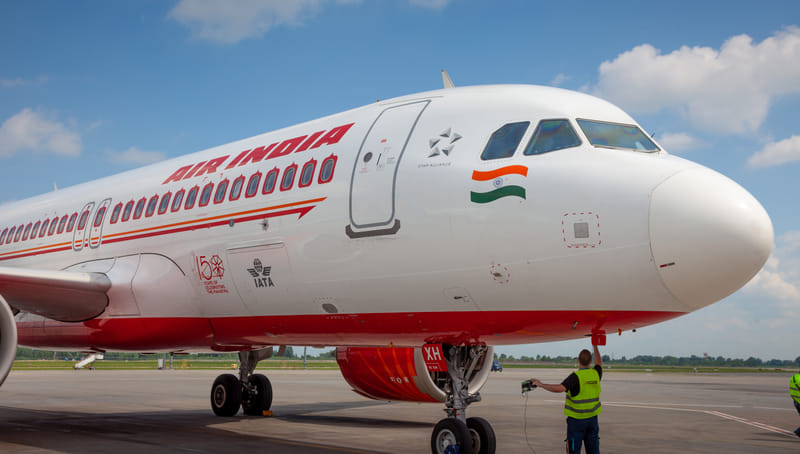
Air India says viral cabin crew guidelines are outdated after backlash similar to Lenskart controversy.
Air India has issued a clarification after internal grooming guidelines triggered a backlash over restrictions on religious symbols, placing the airline alongside eyewear retailer Lenskart in a widening debate on workplace expression.
According to reporting by Hindustan Times, the controversy emerged after excerpts from a cabin crew handbook circulated online, appearing to prohibit the use of certain religious markers. The document stated that “tikkas, sindoor of any colour on the forehead is not permitted”, while allowing a limited use of bindis under specific conditions.
The guidelines indicated that a 5mm bindi could be worn optionally with a saree, but not with the airline’s IndoWestern uniform, prompting criticism over perceived inconsistency.
Airline distances itself from circulating document
In response, Air India said the material being shared online does not reflect its current policy.
An airline spokesperson told Hindustan Times that employees are permitted to wear bindis and that the document in question is from an earlier manual. “Air India would like to clarify that its employees have the choice to wear bindi. The images being circulated online are from an older manual that is no longer in use,” the spokesperson said.
The clarification seeks to contain reputational fallout as the airline faces scrutiny over workplace norms and inclusivity.
Echoes of recent Lenskart controversy
The episode closely follows a similar controversy involving Lenskart, where a purported grooming policy triggered accusations of religious discrimination.
Lenskart founder Peyush Bansal said the document circulating online was outdated and did not represent the company’s current stance. He added that the company has “no restrictions on any form of religious expression, including bindi and tilak”, and acknowledged that the earlier wording should not have been included.
The company later issued an updated style guide explicitly permitting religious and cultural symbols.
Wider scrutiny on workplace policies
The back to back incidents highlight how internal corporate guidelines can quickly escalate into public controversies, particularly when circulated without context on social media.
Both companies have framed the issue as one of outdated documentation rather than current policy, but the backlash underscores rising sensitivity around religious expression, uniform codes and workplace inclusivity.
For Air India, the focus now shifts to reinforcing clarity in employee guidelines as it navigates public perception and internal policy alignment in a high visibility service environment.
Topics
Author
Loading...