







Talent Management
TCS confirms 12,000 layoff; mid and senior roles to be impacted






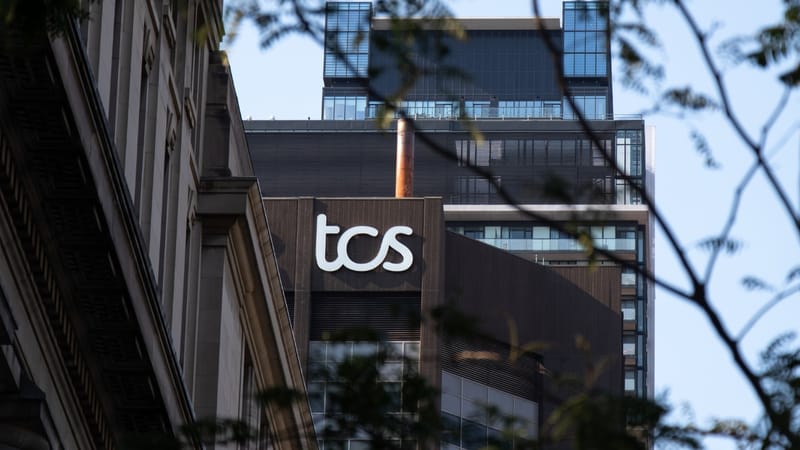
TCS confirms to People Matters it will release 12,000 staff—primarily mid and senior managers—amid a shift to AI-led, future-ready operating models.
Tata Consultancy Services (TCS) will release around 12,000 employees—or 2% of its global workforce—over the course of fiscal year 2026, as part of a strategic realignment toward a future-ready operating model.
The company confirmed the move in a statement to People Matters, clarifying that the exits will primarily affect mid- and senior-level employees whose roles are no longer aligned with emerging technologies and new ways of working.
“TCS is on a journey to become a Future-Ready organisation,” the company said in its official statement. “This includes strategic initiatives on multiple fronts including investing in new-tech areas, entering new markets, deploying AI at scale for our clients and ourselves, deepening our partnerships, creating next-gen infrastructure and realigning our workforce model.”
While the company is continuing to invest in upskilling and redeployment efforts, it acknowledged that not all roles can be transitioned. “As part of this journey, we will also be releasing associates from the organisation whose deployment may not be feasible. This will impact about 2% of our global workforce, primarily in the middle and the senior grades, over the course of the year,” TCS added.
The company said the transition will be carefully planned to avoid disruption to client delivery, and that affected employees will receive severance benefits, counselling, outplacement assistance, and insurance support.
A deliberate, skills-driven decision
TCS CEO and Managing Director K Krithivasan had first disclosed the scale and reasoning behind the move in an interview with Moneycontrol published on 21 July 2025.
“Still, we find that there are roles where redeployment has not been effective,” Krithivasan said. “This will impact roughly 2 percent of our global workforce… It has not been an easy decision and one of the toughest I have had to take as CEO.”
The company had a global headcount of 613,000 as of the June 2025 quarter, meaning the planned exits will affect approximately 12,260 employees.
Krithivasan emphasised that the decision is not a response to AI replacing jobs or short-term business pressures.
“This is not because of AI but to address skills for the future. This is about feasibility in deployment, not because we need less people,” he clarified.
Bench time and billability come under scrutiny
The layoffs coincide with a significant shift in how the company manages bench time and project allocation. In June 2025, TCS’s Resource Management Group (RMG) introduced new rules requiring employees to maintain at least 225 billable days annually and restricting bench time to no more than 35 days per year.
Krithivasan had described the policy as a motivational tool rather than a downsizing mechanism.
“This is not an efficiency drive. We just want to ensure associates are able to seek projects and ensure that they remain productive through the year,” he told Moneycontrol.
However, employees impacted by the policy described a more abrupt experience. One employee who had been on the bench for more than two months told Moneycontrol they were asked to resign in exchange for a three-month severance package. If they refused, they were allegedly warned of termination without benefits. Moneycontrol also reviewed an internal email corroborating an immediate release upon resignation.
TCS has not issued a public statement on specific employee cases but reaffirmed to People Matters that the process is being handled with “care and support.”
A signal for the industry?
While TCS maintains that the move is internally driven and based on future skills planning, industry experts believe it signals a larger shift in how Indian IT firms are responding to the rapid rise of AI and automation.
Two analysts cited by Moneycontrol pointed to declining demand for traditional mid-level roles—especially in manual testing, infrastructure support, and project coordination—as clients increasingly seek AI-enabled delivery, outcome-based pricing, and smaller, specialised project teams.
Further adding to the internal shake-up, the All India IT and ITeS Employees’ Union (AIITEU) said that TCS has delayed onboarding over 500 lateral hires originally scheduled to join between June and July this year.
Navigating a changing future
As one of India’s largest private employers, TCS’s restructuring is likely to reverberate across the IT services ecosystem. The company’s own framing of the move—as part of a broader evolution into a “future-ready” enterprise—highlights the tension between workforce legacy and technological transformation.
While the loss of 12,000 jobs will undoubtedly affect employee sentiment and industry morale, the company has stressed that this is a planned shift—not a reactive measure—and that its long-term strategy hinges on agility, AI-readiness, and skills transformation.
“We thank [the affected employees] for their service,” TCS told People Matters. “We will be making all efforts to provide appropriate benefits, outplacement, counselling, and support as they transition to new opportunities.”
The decision underscores a hard truth in the digital era: transformation at scale requires not just new tools and markets—but also new mindsets, structures, and roles to match.
Topics
Author

Loading...