







Talent Management
“Talent stays when opportunity stays”: Shruthi Sudhanva on building tech careers beyond metros
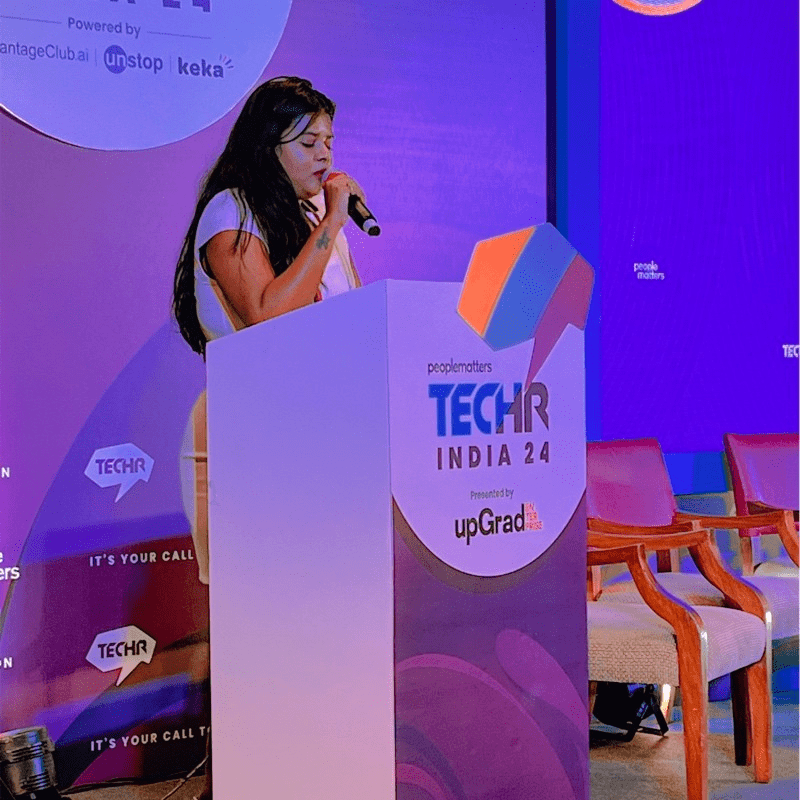






Shruthi Sudhanva of Excelsoft Technologies on why emerging technology hubs need meaningful work, local leadership and visible career progression to retain talent.
India’s technology workforce may be spreading beyond its traditional metropolitan centres, but sustainable talent hubs require more than lower operating costs. Shruthi Sudhanva, Chief People Officer and Executive Director at Excelsoft Technologies, says career growth, meaningful work and local leadership will determine whether emerging cities become long-term technology destinations.
In an interview with People Matters, Sudhanva points to Mysuru as an example of how technology careers outside major metros are becoming more viable. Connectivity and hybrid work have contributed to this shift, alongside the growth of companies and startups beyond established technology centres.
“The metros will continue to matter, but serious technology careers are now possible in many more places,” she says.
Moving beyond the cost advantage
For organisations considering locations outside major metropolitan markets, Sudhanva draws a distinction between establishing a delivery centre and building a genuine talent hub. Lower costs may influence location decisions, but they cannot sustain an ecosystem on their own.
A technology hub needs core product development, customer-facing projects and local decision-making authority. Employees must also have access to educational institutions, meaningful responsibilities and opportunities to progress into leadership roles.
“The test is whether someone can build an entire career there,” Sudhanva says.
Her assessment places career continuity at the centre of location strategy. Organisations that restrict emerging-city teams to support functions risk limiting employees’ professional development, even when those locations offer operational advantages.
The ability to develop skills, take on greater responsibility and progress into leadership roles is central to building a sustainable technology workforce beyond metros.
Why local opportunity matters for retention
Employee retention remains closely linked to the opportunities available within an organisation, rather than the size of the city in which someone works. Sudhanva cautions against assuming that professionals in smaller cities are inherently more loyal.
“I don't think people in smaller cities are inherently more loyal. Retention is stronger when people do not have to leave the city in order to grow,” she says.
For employers, this means looking beyond compensation when designing their talent strategies. Trust, mentoring, responsibility, customer exposure and clear career pathways also influence whether employees see a future with an organisation.
Sudhanva notes that access to talent extends beyond the city itself, including professionals from surrounding towns. This can broaden the available talent pool while creating opportunities for young employees to assume responsibilities early in their careers.
She cites international customer exposure as one example of how professional development can happen outside traditional metropolitan centres.
“A capable engineer here can be handling an international customer directly within a few years of joining, and that builds judgement faster than any training programme,” she says.
Equal access to work and leadership
Career progression remains an important test of whether organisations treat their non-metro operations as strategic centres or secondary locations. Sudhanva acknowledges that concerns about unequal opportunities are not always misplaced.
“The perception exists because in many cases it has been accurate,” she says.
When execution teams operate outside major cities while leadership positions remain concentrated at headquarters, employees can see a clear difference in their potential career trajectories.
Addressing this requires more than offering comparable job titles or training programmes. Organisations must provide employees across locations with meaningful assignments, mentoring, customer exposure and opportunities to lead teams and functions.
Sudhanva says Excelsoft has employees who joined early in their careers and now lead functions, manage global accounts and run large teams. She presents these career paths as evidence of the opportunities available within the organisation, rather than relying on assurances about future progression.
Visible leadership pathways can help employees assess whether location affects their long-term prospects. For employers, the challenge is to ensure that geography does not determine access to consequential work or advancement.
Technology can reduce distance, but not replace local ecosystems
Artificial intelligence and increasingly sophisticated remote collaboration tools may reduce some disadvantages associated with working outside major cities. However, Sudhanva believes location will continue to matter because talent ecosystems depend on relationships and institutions that develop locally.
“Less important, yes. Irrelevant, no,” she says of geography’s role in determining where organisations build talent.
Universities, peer companies, professional communities and local talent networks contribute to the strength of a technology hub. These relationships require investment and sustained participation from employers operating in the region.
Hybrid working can also make opportunities in nearby metropolitan markets more accessible. Sudhanva points to Bengaluru’s proximity to Mysuru as an example of how professionals can access roles without necessarily relocating.
“Distance protects no one,” she says, emphasising the importance of growth, mentoring, meaningful work and visible career pathways in retaining employees.
The implication for employers is that location alone offers no reliable protection against attrition. Technology can widen access to opportunities, but organisations must still create compelling reasons for employees to build their careers locally.
The mistakes that can undermine emerging hubs
Sudhanva identifies several approaches that can weaken an organisation’s efforts to establish technology teams beyond traditional urban centres.
Overdependence on cost savings: A location chosen primarily for lower costs may lose its advantage as operating conditions change.
Assuming limited competition guarantees retention: Employees may still pursue opportunities elsewhere if career progression stalls.
Importing leadership instead of developing it locally: Keeping senior roles out of reach can signal limited prospects to existing employees.
Creating second-tier delivery centres: Teams with weaker assignments and fewer advancement opportunities may struggle to attract and retain talent.
Neglecting local institutions: Limited engagement with universities and industry peers can weaken the broader ecosystem needed for long-term growth.
These risks highlight the difference between establishing a physical presence and developing a location’s capabilities. A satellite office can provide additional capacity, but a durable talent hub requires investment in people, leadership and the surrounding professional community.
The next phase of India’s distributed technology workforce
Looking ahead five years, Sudhanva expects India’s technology workforce to become more distributed, while acknowledging that metropolitan centres will remain important.
She believes organisations that succeed will focus on building ecosystems rather than simply opening offices. This includes hiring locally, developing leaders internally, collaborating with academic institutions and peer organisations, investing in future skills and providing globally relevant work.
“The organisations that succeed will be those that build ecosystems rather than offices,” she says.
For India’s emerging technology centres, the question is therefore not simply whether companies can move work beyond metros. It is whether they can create environments where employees have the opportunity to develop expertise, take on leadership responsibilities and build long-term careers.
As Sudhanva puts it, organisations that continue to treat these locations as sources of capacity risk overlooking their potential to develop capability. The long-term test for distributed technology growth will be whether opportunity expands alongside the workforce.
Topics
Author
Loading...