

Organisations invest in culture programmes, leadership development and training to drive change, but getting employees to consistently adopt new behaviours remains a challenge. For Manish Sinha, CHRO, Mahindra Finance, the real test of transformation lies in what happens after an initiative is introduced.
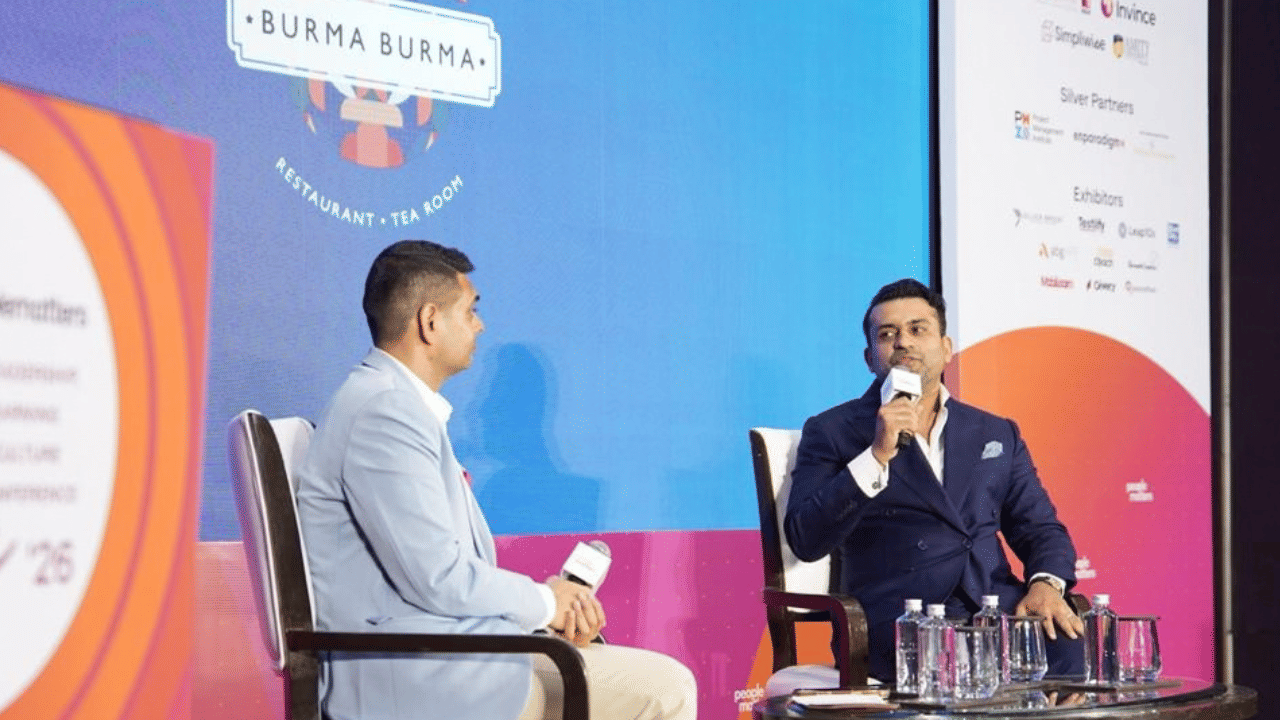
In a conversation with People Matters, Sinha explains why awareness does not automatically translate into adoption, how managers influence behavioural change, and why organisational systems must reinforce the behaviours businesses want to see.
For organisations operating across multiple locations and workforce segments, the challenge also involves balancing common expectations with the realities of different roles and markets.
Why the same change is experienced differently across teams
Behavioural change becomes more complex when organisations operate across diverse teams, functions and locations. Employees bring different experiences, motivations and working realities, influencing how they interpret and adopt new practices.
Sinha sees this challenge in Mahindra Finance's field-led financial services business, where colleagues work across rural and semi-urban markets. He believes employees are more likely to adopt new ways of working when they understand their relevance to customers and receive consistent support from leaders.
He cites the introduction of a central verification checkpoint for documents uploaded by field teams. Each document must meet a defined match standard, making the process an additional quality check.
While teams needed time to adapt, Sinha says they gradually began recognising its value rather than viewing it as another procedural step.
"The encouraging reality is that people are generally willing to embrace change when they understand its purpose, see its relevance to their work and experience consistent support from their leaders," he says.
Communication creates awareness, but adoption needs more
One misconception in organisational transformation is the assumption that communicating a change will automatically lead employees to embrace it.
Sinha distinguishes between understanding a new process and consistently applying it. Employees may recognise the purpose of a change but still need clarity, support and confidence before altering established working habits.
He points to Mahindra Finance's transition from paper-based processes to a digital application. The shift took time to settle in, but employees adapted as they experienced practical benefits, including access to schemes in one place, shorter turnaround times and ease of use.
For Sinha, communication remains essential, but it cannot work independently of the systems and leadership practices employees encounter daily.
"People pay close attention to what is rewarded, what is measured and how leaders behave," he says.
He believes organisations need communication, systems, leadership actions and recognition mechanisms to reinforce the same expectations. When these elements send conflicting signals, employees can struggle to sustain new behaviours.
The work begins after the training programme
Training can build awareness and capability, but employees often return to familiar routines once they resume their regular responsibilities. Competing priorities and business demands can make new behaviours difficult to sustain.
Sinha says learning interventions need continued reinforcement through coaching, peer learning, leadership engagement and opportunities to practise new skills.
At Mahindra Finance, a functional development programme for identified employees includes tracking efficiency across required processes after training. Regional training managers also stay connected with participants' managers to arrange refresher sessions wherever necessary.
The approach reflects his view that learning should extend beyond the training room and become part of everyday work.
"Training can spark change, but reinforcement, practice and experience are what make it lasting," he says.
Managers translate organisational intent into everyday behaviour
Middle managers play a critical role in determining how employees experience organisational change. They connect business priorities with the practical realities of teams and influence whether new expectations become routine.
Sinha describes immediate managers as among the most influential drivers of organisational behaviour. Their understanding of a change, confidence in its value and willingness to demonstrate new practices can shape employee adoption.
At Mahindra Finance, branch and regional leaders play this role across a distributed workforce. Sinha says organisations need to involve managers early and equip them with the clarity and capabilities required to guide employees through uncertainty.
"When managers become advocates of change, they create the conditions for sustainable adoption across the organisation," he says.
Organisational systems must support the behaviour leaders expect
Employee behaviour is also shaped by performance metrics, decision-making processes and accountability mechanisms. Sinha believes individual commitment and leadership intent can initiate change, but organisational structures determine whether it can be sustained.
He illustrates the point through customer-centricity. If an organisation expects employees to prioritise customers but measures performance only through volumes, employees are likely to follow the metric.
Slow decision-making and unclear accountability can create similar barriers, even when employees are willing to work differently.
"The most effective transformations are those where behavioural expectations and organisational structures evolve together, creating an environment where people can successfully adopt new ways of working," he says.
This makes transformation a wider organisational exercise rather than a standalone HR programme. Performance conversations, recognition mechanisms, review forums and leadership expectations must reflect the behaviours businesses seek to embed.
Everyday conversations can reveal whether change is working
Traditional engagement surveys and culture metrics may not immediately capture whether employees are adopting new behaviours. Sinha believes organisations should also pay attention to everyday interactions across teams.
He identifies the quality of conversations between managers and employees as an early indicator. Questions, feedback and examples of employees applying new practices can reveal whether a transformation is gaining traction.
At Mahindra Finance, field feedback plays an important role in identifying issues. Employees share inputs through internal channels, while business leaders engage with colleagues through field visits, state-level leadership programmes and regular townhalls.
"Culture surveys provide valuable hindsight, but everyday conversations often provide the earliest insight into future progress," Sinha says.
Such feedback can help leaders identify where employees need additional clarity or support before formal organisational metrics reflect the impact.
Consistency does not have to mean uniformity
Large organisations must maintain shared behavioural expectations while recognising that different teams operate in different circumstances.
Sinha believes the distinction lies between common principles and practices that can adapt to local needs. Shared values provide a foundation, but their application should reflect the realities of individual functions and locations.
A rural branch, for instance, operates differently from a corporate office, while collections teams face different working conditions from technology teams.
Giving local leaders flexibility within a defined framework, he says, can encourage ownership without compromising organisational consistency.
Adaptability, judgement and integrity will shape future workplaces
Looking ahead, Sinha identifies adaptability and continuous learning as important behaviours for organisations navigating changes in technology, customer expectations and business models.
He also expects sound judgement and integrity to become increasingly valuable as technology automates routine activities. Employees will need to interpret complex situations, weigh trade-offs and make responsible decisions.
Collaboration, empathy and resilience will remain important as organisations work across interconnected environments and depend on diverse perspectives.
For financial services businesses, Sinha places particular emphasis on trust as the foundation of customer relationships. He says Mahindra Finance's values are grounded in care, integrity and quality, reflecting its commitment to customer-centricity.
His broader message is that behavioural transformation cannot be measured only by the launch of a programme or completion of training. It depends on whether employees experience consistent expectations, supportive leadership and systems that make new ways of working possible.