Climate action has moved well beyond the sustainability department.
For many organisations, the challenge is no longer setting climate targets. It is turning those commitments into everyday business decisions. As climate risks become more visible and regulatory expectations continue to evolve, leadership teams are being pushed to treat environmental performance with the same seriousness as financial outcomes.
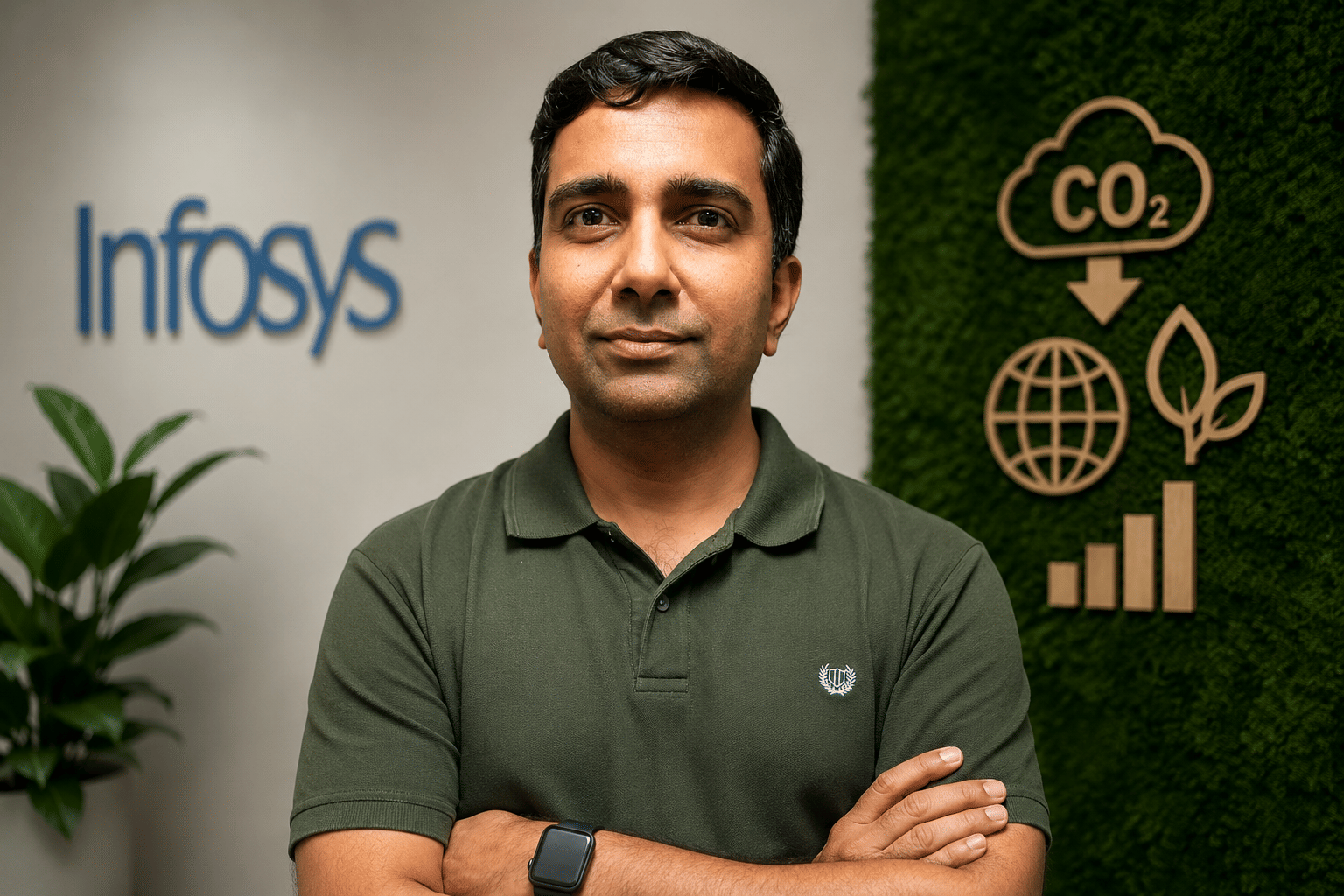
According to Guruprakash Sastry, AVP and Head of Climate Action at Infosys, the organisations that will succeed in the transition to a low-carbon economy will be those that embed climate thinking into strategy, governance, operations and culture.
In conversation with People Matters, Sastry discusses what defines a climate-ready organisation, why leadership commitment matters more than declarations, and how technology is helping businesses move from reporting to action.
Climate readiness begins at the top
For Sastry, climate readiness starts with leadership conviction.
A climate-ready organisation is one where climate action is "championed and sponsored at the highest levels of leadership", supported by a belief that climate resilience and business success are closely connected.
He believes climate goals cannot sit on the sidelines of business strategy.
Instead, they must be embedded across functions, integrated into decision-making processes, and supported by every stakeholder involved in the organisation's growth.
According to Sastry, organisations that are prepared for a changing climate typically share several characteristics:
- Science-based climate targets
- Strong accountability mechanisms
- Proactive climate risk management
- Collaboration across the value chain
- Data-driven decision-making
- Transparent reporting and measurement
Ultimately, climate readiness is reflected in an organisation's ability to align leaders, employees, suppliers, customers and partners around a common climate ambition.
Why climate commitments often fail to translate into action
Many companies have announced ambitious climate goals. Fewer have successfully integrated them into daily business operations.
Sastry believes the gap often comes down to organisational capability.
"Visible leadership commitment and sponsorship" remain critical, he says. When climate priorities are consistently reinforced from the top, they create a clear signal across the organisation that climate action is a business priority rather than a peripheral initiative.
Governance also plays a central role.
Sastry emphasises the importance of integrating climate goals into business planning, risk management, capital allocation and performance management systems, with clear ownership assigned across functions and leadership levels.
His most notable observation is perhaps the simplest.
"Progress should be reviewed with the same rigor as financial and operational performance."
Alongside governance, organisations also need reliable data, innovation capabilities and employee engagement to move from ambition to execution.
For Sastry, successful organisations no longer treat climate as a sustainability programme. They treat it as a strategic business imperative.
Making climate everyone's responsibility
One of the recurring themes in Sastry's approach is shared ownership.
He is clear that climate action cannot be left solely to sustainability teams.
"Climate action needs to be a shared responsibility across the organisation, and not the mandate of a single team."
Creating that ownership requires leaders to make climate goals relevant to every function and every employee. Climate objectives need to be reflected in business strategy, performance metrics and decision-making processes rather than operating as standalone initiatives.
Awareness and capability-building are equally important.
Employees need access to the knowledge, data and tools required to contribute meaningfully within their own roles.
For Sastry, climate progress depends on a combination of governance, accountability and enablement working together.
From reporting to real-time decisions
Technology is becoming one of the most important accelerators of climate action.
Sastry sees the next phase of climate management being driven by AI, analytics and digital platforms that allow organisations to move beyond periodic reporting cycles.
"Technology will be a powerful enabler, helping organisations move from periodic reporting to real-time, data-driven decision-making."
Digital platforms can bring together data from operations, supply chains, energy systems and business functions to create a more comprehensive view of environmental performance.
This visibility allows leaders to make faster and more informed decisions.
Sastry also points to the growing role of AI and advanced analytics in simplifying complex decarbonisation challenges. These technologies can help organisations model potential pathways, identify high-impact interventions and prioritise actions more effectively.
The result is greater transparency, faster execution and a stronger ability to embed climate considerations into everyday business decisions.
The case for ecosystem-wide collaboration
Climate goals are increasingly influenced by factors that sit beyond organisational boundaries.
As a result, Sastry believes businesses need to rethink how they engage with partners across their ecosystems.
He argues that organisations must move beyond transactional relationships and instead build partnerships based on shared goals and mutual accountability.
This includes collaboration with:
- Customers
- Suppliers
- Industry peers
- Governments
- Communities
Knowledge-sharing and capacity-building are particularly important.
Providing partners with tools, expertise and data can help improve environmental performance across the value chain and accelerate progress collectively.
For Sastry, meaningful climate action comes from shared responsibility rather than isolated efforts.
The leadership traits that will matter most
Looking ahead, Sastry expects climate leadership to become an increasingly important differentiator.
The leaders who succeed, he says, will view climate action not as a compliance requirement but as a source of long-term value creation.
These leaders will prioritise resilience and competitiveness over short-term gains. They will embed climate considerations into strategy, innovation and operations while working closely with partners across the value chain.
Climate readiness, in this context, becomes as much a leadership capability as a sustainability capability.
Building resilience for the decade ahead
As organisations navigate the transition to a lower-carbon future, Sastry's advice is straightforward: approach climate readiness with optimism, urgency and discipline.
He sees climate action as more than a risk-management exercise. It is also an opportunity to strengthen resilience, unlock innovation and create lasting competitive advantage.
Success, however, depends on execution.
Organisations need reliable data, science-based targets, transparent measurement and clear accountability. They also need to recognise that no single organisation can solve climate challenges alone.
"The power of collective action across businesses, governments, suppliers, customers, and communities will be critical to accelerating solutions at scale."
For Sastry, the organisations best positioned for the future will combine ambition with evidence, innovation with accountability, and leadership with ecosystem collaboration.
In an era where climate performance increasingly influences business performance, the message is clear: what gets measured, managed and reviewed consistently is far more likely to drive meaningful results.