







HR Effectiveness
TechHR India workforce predictions that became leadership imperatives in 2026


 ||
||

A year ago, TechHR India challenged organisations to pivot amidst unprecedented disruption. Today, many of the questions raised around AI, skills, leadership, sustainability and workforce transformation have become business realities. As TechHR India 2026 approaches, these are the ideas orchestrating the next growth chapter.
The world of work rarely changes in a straight line. Yet over the past few years, the pace of disruption has been anything but gradual.
Artificial intelligence has moved from experimentation to enterprise deployment whereas skills shortages have become a boardroom concern. And workforce expectations continue to evolve faster than organisational structures because of economic uncertainty, geopolitical volatility and shifting business models.
When more than 5,000 business leaders, CHROs, technology innovators and workforce strategists gathered at Yashobhoomi Convention Centre in New Delhi for People Matters TechHR India 2025, the dominant question was how organisations could navigate this new reality. The event's theme, Pivoting to Ace the Next Curve of Change, reflected a growing recognition that incremental change would no longer suffice.
A year later, many of those conversations feel remarkably prescient.
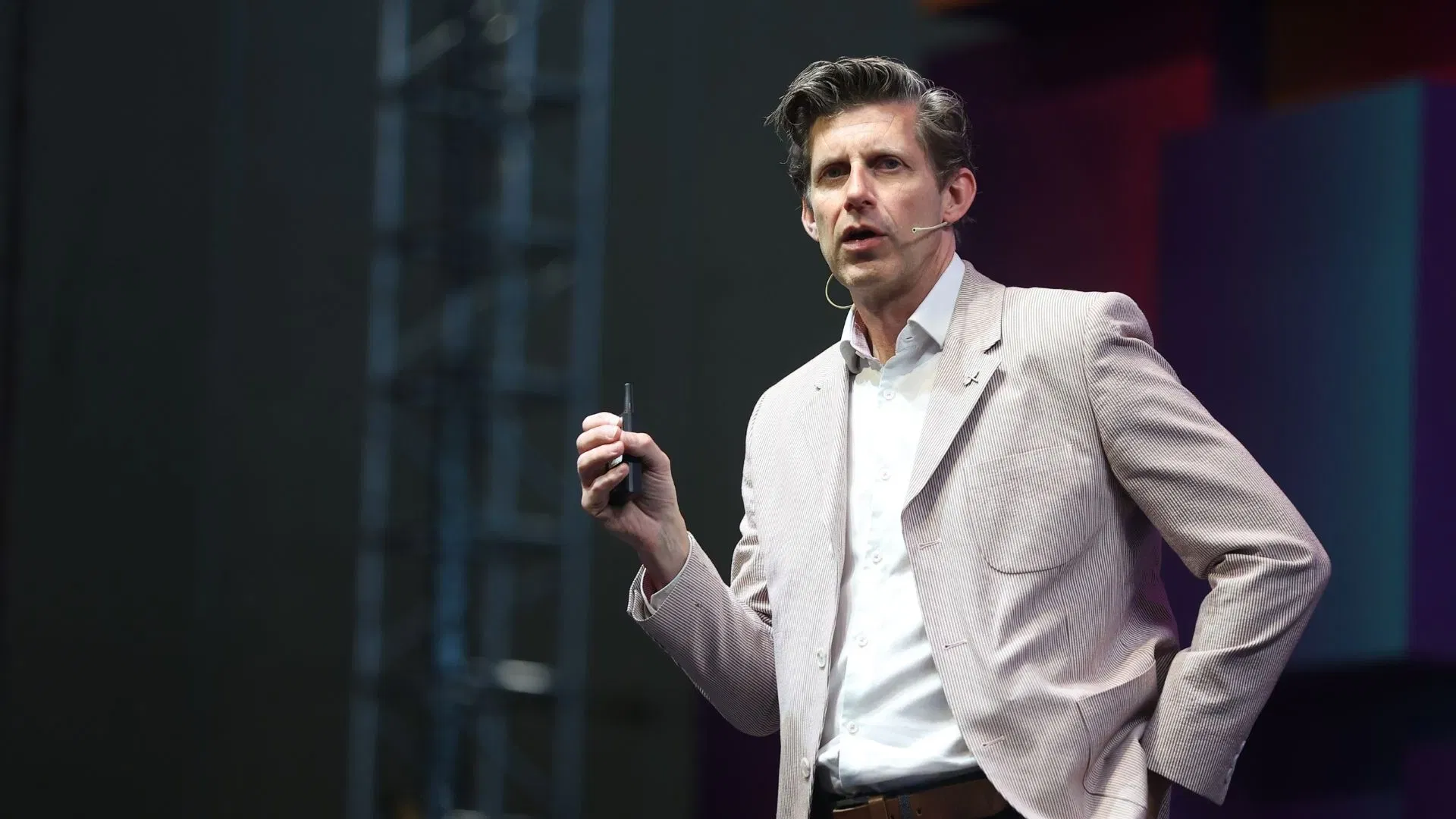
The urgency of the challenge was captured by HR transformation expert Jason Averbook, who warned that nearly 70 per cent of companies may not survive the next decade if they fail to reinvent themselves for an AI-driven economy. Whether taken literally or not, the message reflected a broader consensus: transformation is no longer optional. The question is no longer whether organisations need to change, but whether they can change fast enough.
As TechHR India 2026 convenes under the theme Lead the Legacy: Orchestrating Growth With a Human Edge, the conversation has shifted decisively from recognising disruption to creating advantage from it.
HR will be measured by transformation outcomes
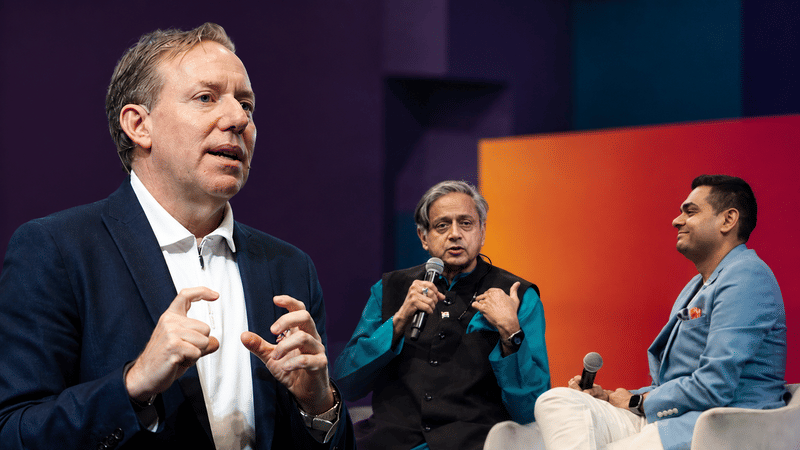
One of the clearest signals from TechHR India 2025 came from David Green, who positioned HR as a driver of workforce transformation rather than a function that merely supports it. What feels different in 2026 is not the idea that HR is strategic; that debate has been around for years. What has changed is the standard against which HR is being judged. CEOs are expecting HR to influence enterprise reinvention, AI adoption, workforce redesign and capability creation at the same time.
The SHRPA 2025 report gives that shift hard edges. The top talent challenges with the highest business impact are leadership development at 44 per cent, talent excellence at 42 per cent, AI and emerging technology at 41 per cent, and both total workforce planning and culture at 40 per cent. Yet HR’s current effectiveness trails those demands, with effectiveness scores at 34 per cent for leadership development, 32 per cent for talent excellence, 32 per cent for AI and emerging technology, 36 per cent for workforce planning and 34 per cent for culture.
That gap is the real prediction: HR teams that translate people strategy into measurable transformation outcomes will gain influence; those that remain programme managers will struggle to match the scale of business expectation.
Adaptive organisations will outgrow playbook-led ones
One of the defining observations from TechHR India 2025 came from People Matters CEO Pushkar Bidwai, who said:
"Every headline reminds us that the old playbooks don't work anymore."
The stronger prediction beneath that statement is that organisations still relying on fixed operating assumptions, linear planning cycles and inherited leadership models will find themselves outpaced by events.
The forces reshaping business are arriving simultaneously rather than sequentially. AI disruption, economic volatility, demographic shifts, geopolitical uncertainty and changing workforce expectations are colliding in ways few leadership models were designed to handle.
Averbook’s view of transformation as an always-on capability, not a one-time intervention, sits at the heart of this shift. His distinction between digital as a vision and technology as a tool set is especially relevant here. The organisations that thrive will be the ones that redesign how they operate, not simply layer new technology onto old assumptions.
The challenge is not merely organisational. It is increasingly a leadership one.
The organisations that succeed over the next decade are unlikely to be those with the most detailed playbooks. They will be those capable of learning, adapting and responding faster than the environment around them changes.
AI moving from experimentation to governed execution
For much of the past two years, organisational discussions around AI have focused on adoption. Today, the conversation has evolved.
One of the most useful frameworks offered during the 2025’s conference described generative AI as a "high-performing intern".
The analogy resonated because it balanced excitement with realism. AI can process information, automate tasks and generate insights at remarkable speed. What it cannot do is exercise judgement, navigate ambiguity or assume accountability.
As organisations move beyond pilots and proofs of concept, those distinctions are becoming increasingly important.
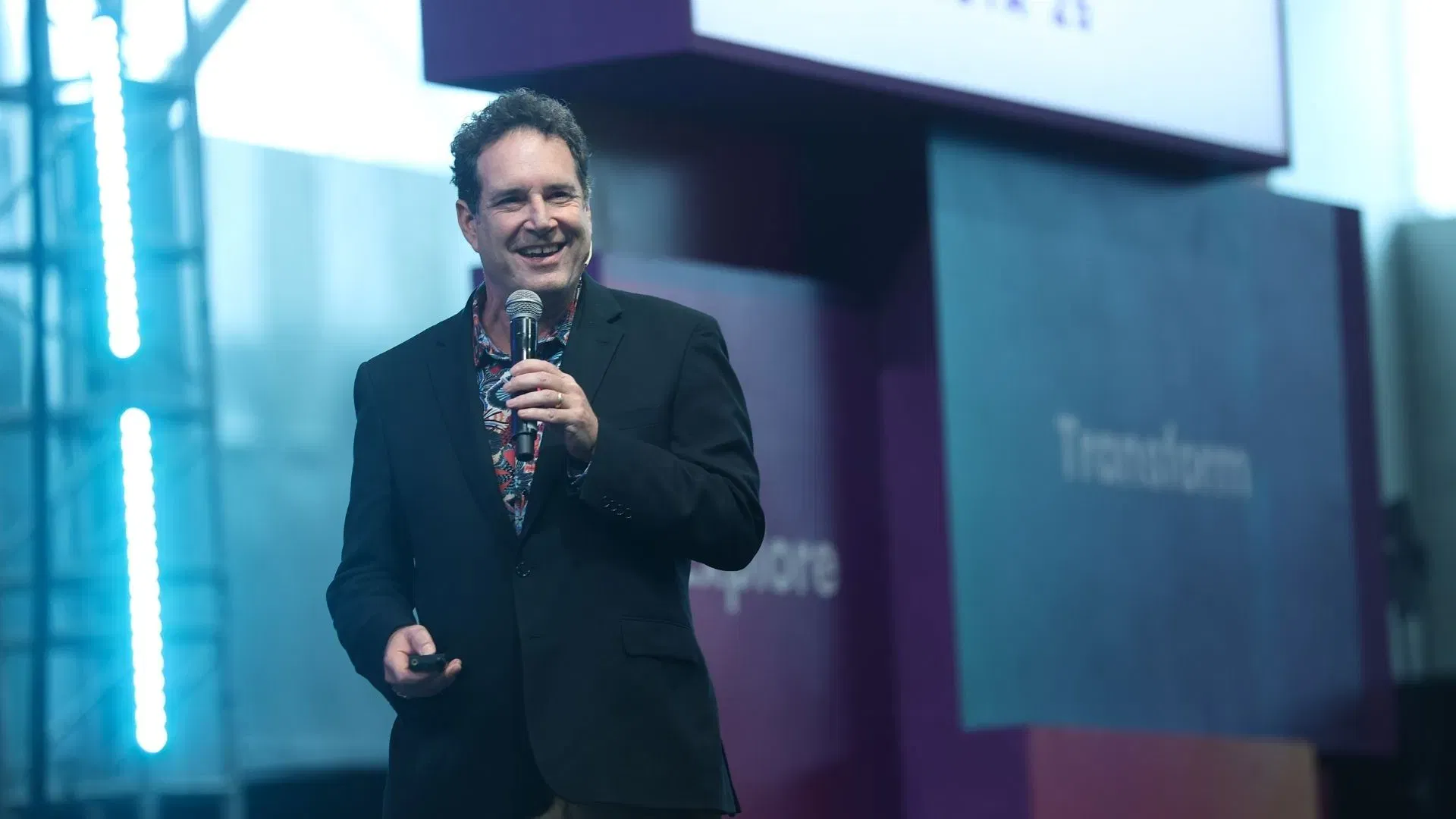
AI researcher and roboticist Hod Lipson reinforced this perspective, arguing that the real opportunity lies not in building more capable machines but in ensuring AI is directed towards empowering people and improving business outcomes. The challenge is not technological capability; it is organisational stewardship.
At the same time, the rise of agentic AI is accelerating the conversation. Autonomous systems are increasingly capable of managing workflows, supporting decision-making, personalising employee experiences and executing tasks that once required significant human intervention.
The resulting questions are no longer theoretical. How should autonomous systems be governed? Where should human oversight remain non-negotiable? How should organisations balance automation with accountability?
As enterprises industrialise AI, these questions are rapidly becoming leadership imperatives.
Skills have become the growth agenda
If there is one workforce challenge that cuts across industries, geographies and business models, it is skills.
According to the World Economic Forum's Future of Jobs Report, 63 per cent of organisations identify skills shortages as the biggest barrier to business transformation. At the same time, nearly two-fifths of today's workforce skills are expected to become obsolete within the decade.
The implications extend far beyond learning and development.
Skills are increasingly determining organisational agility, innovation capacity and growth potential. Businesses can no longer rely solely on external hiring to access critical capabilities. They must build systems that continuously identify, develop and redeploy talent across the enterprise.
This is why conversations around skills intelligence, workforce architecture and internal talent marketplaces have moved from HR innovation to business necessity.
The organisations best positioned for the future are not those with the largest workforces. They are those capable of understanding the skills they possess, anticipating the skills they will need and creating pathways between the two.
The winners will redesign work, not just deploy technology
Another reality becoming increasingly clear is that technology adoption and value creation are not the same thing.
Many organisations have invested heavily in AI platforms, analytics capabilities and digital HR ecosystems. Yet investment alone does not guarantee transformation.
Averbook captured this well when he warned against putting digital lipstick on an analogue pig. The point was blunt but accurate: applying new technology to broken processes does not create value; it only modernises the appearance of inefficiency.
This is where the original prediction becomes sharper. The next phase of advantage will belong to organisations that redesign work, decision-making, and workforce models around technology, rather than merely deploy tools into existing systems.
The SHRPA findings support that shift. Tech maturity is up by 26 per cent, and the share of progressive companies with integrated HR systems rose from 36 per cent in 2024 to 62 per cent in 2025. HR tech budgets are also moving upward, with 52.7 per cent expecting investment growth of 10 to 25 per cent. Yet the biggest implementation challenge cited by HR tech leaders and investors is justifying ROI and value realisation, at 61 per cent.
The signal is hard to miss: spending will continue, but disproportionate value will go to organisations that combine platforms with redesign, adoption support and measurable business outcomes.
The human edge is becoming the ultimate differentiator
For all the advances in AI, one theme consistently surfaced across conversations on leadership, culture and organisational performance: technology may transform work, but human capability remains central to value creation.
The qualities organisations continue to prize most highly—judgement, empathy, creativity, trust-building, resilience and leadership—remain distinctly human.
As AI becomes more accessible and increasingly commoditised, these capabilities are becoming more valuable, not less.
In an engaging conversation, the idea is perhaps best captured by a simple but powerful observation by singer-composer Mohit Chauhan:
"You can't automate empathy. AI might mimic sounds, but it can't feel pain, joy, or love.”
The statement reflects a broader truth about the future of work. Competitive advantage will not be created solely through technological capability. It will emerge from an organisation's ability to combine innovation with trust, automation with accountability and efficiency with human connection.
The conversation around human-centred leadership also extended beyond employee experience.
Environmentalist Peepal Baba challenged leaders to think about sustainability not as a CSR initiative but as a people practice shaped by everyday behaviours, organisational culture and leadership choices.
That perspective feels increasingly relevant today. Employees, investors and customers alike expect organisations to create value responsibly. Growth, culture and sustainability are no longer separate conversations. They are becoming interconnected measures of long-term organisational health.
Ultimately, the organisations that thrive in an AI-enabled future will not be those that choose between technology and people. They will be those that use technology to amplify uniquely human strengths.
From pivoting to leading the legacy
The progression from Pivoting to Ace the Next Curve of Change to Lead the Legacy: Orchestrating Growth With a Human Edge reflects more than a change in theme. It reflects the evolution of the leadership agenda itself.
The conversations shaping TechHR India 2026 focus on questions that have moved from emerging trends to business imperatives. How do organisations industrialise AI whilst preserving trust and accountability? What does a skills-powered enterprise look like in practice? How should leaders govern increasingly autonomous systems? How can organisations create measurable value from technology investments whilst maintaining culture, purpose and human connection?
Across discussions on AI governance, agentic workplaces, skills intelligence, workforce transformation, leadership reinvention, sustainable growth and high-performance cultures, the emphasis has shifted decisively from awareness to execution.
The most enduring lesson from the past year is that technology alone will not define the future of work. Success will belong to organisations that can combine technological capability with human judgement, strategic ambition with workforce readiness, and transformation with trust.
That is no longer a future-facing aspiration.
It is rapidly becoming the defining leadership challenge of our time.
At People Matters TechHR India 2026, leaders will return to discover what it takes to turn those ideas into lasting advantage. Reserve your seat now.
Topics
Author
Loading...