







Leadership
Raksha Bandhan and the power of partnership: Sibling duos who built successful businesses







From software and stockbroking to fashion, food and healthcare, these sibling-led ventures show how trust, shared values and complementary strengths can become powerful business assets.
Raksha Bandhan is a celebration of one of the most enduring relationships in Indian culture. While the festival symbolises care, trust and support between siblings, those same qualities have also helped shape some remarkable business success stories.
Across industries, brothers and sisters have launched startups, transformed family enterprises and built globally recognised brands. Their journeys highlight how shared experiences, mutual trust and complementary skills can help businesses navigate uncertainty, scale growth and stand the test of time.
Here are some of the sibling duos whose partnerships extended beyond family and into entrepreneurship.
Technology leaders who built businesses together

Sridhar Vembu and Radha Vembu | Zoho Corporation
Few sibling partnerships have had a greater impact on India's technology sector than Sridhar Vembu and Radha Vembu. While Sridhar founded Zoho and became one of India's most recognised technology entrepreneurs, Radha has played a key role in the company's growth, including leading the development of Zoho Mail. Together, they helped build Zoho into a globally respected software company.
Amit Ranjan and Rashmi Sinha | SlideShare
Brother-sister duo Amit Ranjan and Rashmi Sinha founded SlideShare in 2006. The platform grew into one of the world's largest presentation-sharing communities before being acquired by LinkedIn in a deal reportedly valued at $119 million in cash and stock.
Bhavin Turakhia and Divyank Turakhia | The Turakhia Group
Serial entrepreneurs Bhavin and Divyank Turakhia started building businesses as teenagers and went on to launch multiple successful technology ventures. Their companies have included Directi, Media.net and several internet infrastructure businesses, with some attracting high-profile acquisitions.
Nikita Hari and Arjun Hari | WUDI
Siblings Nikita Hari and Arjun Hari combined expertise in engineering, technology and business to create WUDI, an artificial intelligence-driven analytics platform focused on behavioural insights and career intelligence.
Siblings reshaping consumer brands

Adwaita Nayar and Anchit Nayar | Nykaa
Twin siblings Adwaita Nayar and Anchit Nayar have played important leadership roles in the growth of Nykaa. Adwaita leads Nykaa Fashion, while Anchit heads Nykaa E-Retail. Together, they have helped expand one of India's most successful consumer internet companies across beauty, fashion and lifestyle segments.
Kainaz Messman Harchandrai and Tina Messman Wykes | Theobroma
The sisters behind Theobroma transformed a small Mumbai bakery into one of India's best-known dessert and bakery chains. Their partnership combined culinary expertise with operational leadership to build a brand recognised across multiple cities.
Almas Nanda and Amin Virji | Inc.5
In 1998, Almas Nanda launched footwear brand Inc.5 to address the gap between fashion and comfort. Her brother Amin Virji helped scale the venture into a national footwear brand with a growing retail footprint across India.
Sujata Biswas and Taniya Biswas | Suta
The founders of Suta left their corporate careers to create a fashion brand centred on Indian textiles and craftsmanship. Today, the sisters are recognised for building a contemporary label while supporting traditional weaving communities.
Shivang Sood and Shivika Sood | La Kheer Deli
Inspired by family recipes, siblings Shivang and Shivika Sood transformed a weekend dessert concept into La Kheer Deli, a growing food business known for modern interpretations of traditional kheer.
Entrepreneurs building new-age ventures

Rhea Karuturi and Yeshoda Karuturi | Hoovu Fresh
Drawing on their family's background in floriculture, sisters Rhea and Yeshoda Karuturi launched Hoovu Fresh to modernise India's flower supply chain through technology, packaging innovation and direct delivery.
Anjali Kundra and Nik Kundra | Partender
The sibling duo behind Partender developed a technology solution designed to simplify inventory management for bars and restaurants. Their venture emerged from identifying inefficiencies within the hospitality sector.
Stuti Gupta and Agnim Gupta | Amrutam
When the future of the family-run ayurvedic business appeared uncertain, siblings Stuti Gupta and Agnim Gupta stepped in to modernise operations. Through digital marketing, rebranding and direct-to-consumer sales, they helped revitalise the business.
Brothers and sisters solving real-world challenges
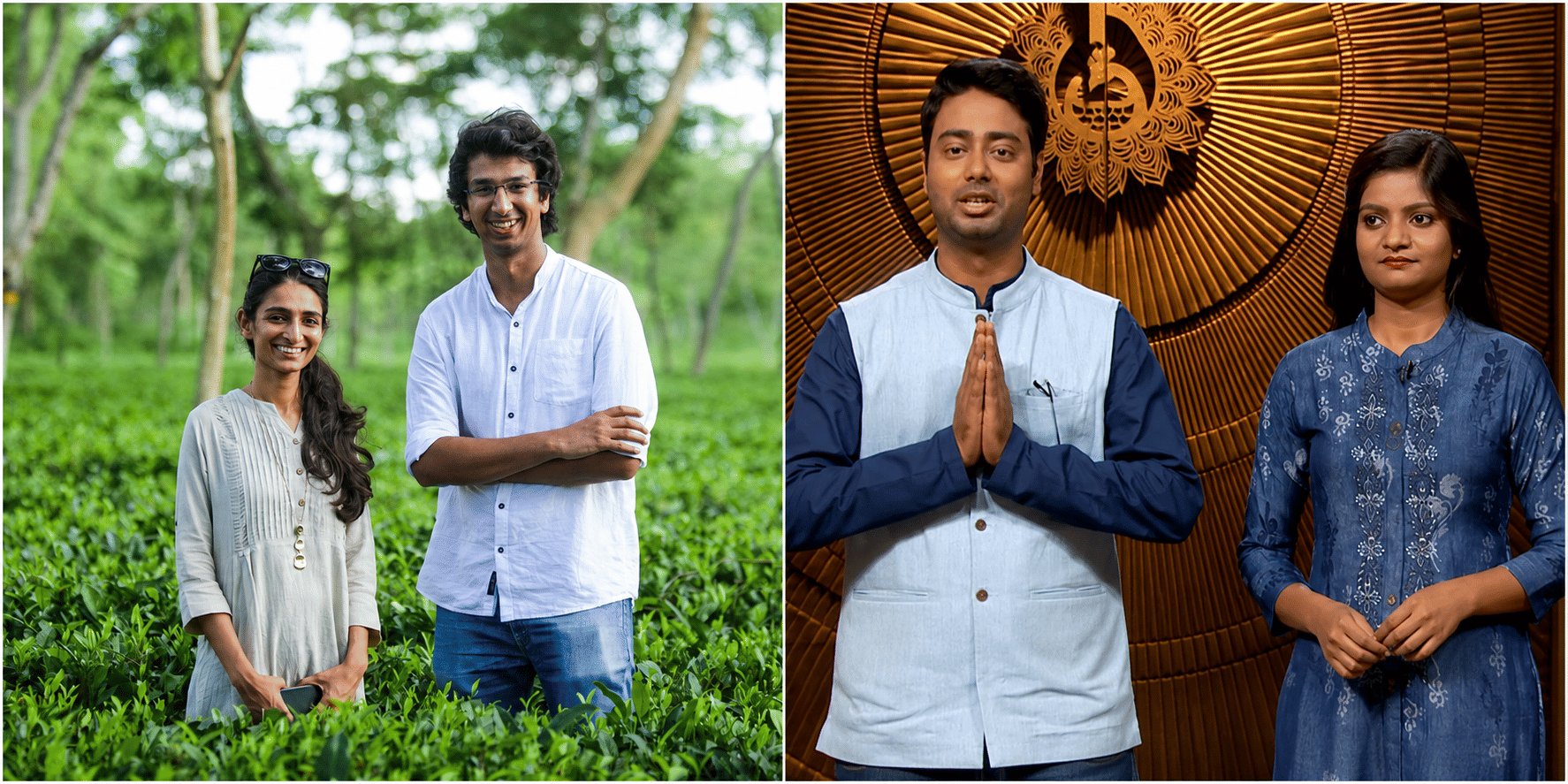
Avantika Jalan and Mrityunjay Jalan | Mana Organics
The siblings left city careers to focus on sustainable agriculture and organic tea cultivation in Assam. Through Mana Organics, they have worked to support rural communities while promoting environmentally responsible farming.
Nikki Kumar Jha and Rashmi Jha | Saptkrishi
Inspired by the challenges faced by farmers in Bihar, the brother-sister duo developed Sabjikothi, a low-cost storage solution designed to reduce post-harvest losses by extending the shelf life of fruits and vegetables.
Suresh Nanjan and Vijayalakshmi | Vijayalakshmi Natural Farms
The siblings worked together to address challenges faced by tea farmers in the Nilgiris. After Vijayalakshmi's passing, her vision continued to guide the enterprise, which focuses on tea cultivation and agricultural innovation.
Family-led businesses reaching new heights

Nithin Kamath and Nikhil Kamath | Zerodha
The Kamath brothers founded Zerodha in 2010 and transformed retail investing in India. Built without external funding, the brokerage has become one of the country's largest investment platforms and a major force in fintech.
Amit Jain and Anurag Jain | CarDekho
Brothers Amit Jain and Anurag Jain built CarDekho into one of India's leading automotive technology companies. Their journey included significant setbacks before the business emerged as a major digital marketplace.
Vinita Gupta and Nilesh Gupta | Lupin
As second-generation leaders at Lupin, siblings Vinita Gupta and Nilesh Gupta played an important role in strengthening the pharmaceutical company's international footprint and expanding its presence across global markets.
Gaurav Goenka and Sucheta Goenka | Citrus Hotels
The brother-sister team helped grow Citrus Hotels, with clearly defined responsibilities across investment, acquisitions and operational management. Their collaboration highlights how family businesses can balance professional governance with personal relationships.
Zubin Jagtiani and Shaina Jagtiani | Red Spokes Cycling
United by a passion for cycling and travel, the siblings founded Red Spokes Cycling, a company focused on experiential tourism and curated cycling journeys across destinations.
The next generation of business leadership

Isha Ambani, Akash Ambani and Anant Ambani | Reliance Industries
While not startup founders, the next generation of the Ambani family has assumed leadership responsibilities across Reliance's key businesses. Akash Ambani leads Reliance Jio, Isha Ambani plays a central role in Reliance Retail, and Anant Ambani is associated with the group's new energy initiatives.
What makes sibling partnerships work?
While every business journey is different, several common themes emerge across these examples:
- Deep trust built over years of shared experiences
- Complementary skills and leadership styles
- A long-term commitment to shared goals
- The ability to challenge and support one another
- Greater resilience during periods of uncertainty
Many founders have acknowledged that disagreements are inevitable when family and business intersect. Yet the same familiarity that can create friction often becomes a source of strength when difficult decisions need to be made.
A bond that goes beyond business
From software platforms and stockbroking firms to bakeries, fashion labels, hospitality brands and agricultural ventures, these sibling-led businesses span industries and generations.
Their stories offer a fitting reminder of what Raksha Bandhan represents. Beyond tradition and celebration, the festival recognises relationships built on trust, support and mutual respect. For these entrepreneurs, those values became the foundation not just of a family bond, but of successful businesses that continue to grow and inspire.
Author
Loading...