







Leadership
Air India to be run by interim management committee as CEO appointment faces delay






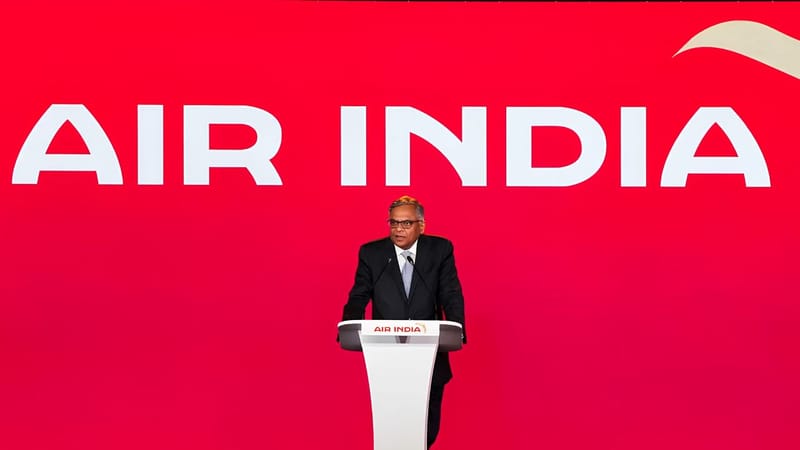
Tata Sons is setting up an interim management committee to oversee Air India as the search for a new chief executive continues, with the airline navigating leadership changes alongside mounting financial and operational challenges.
Air India is preparing for a temporary leadership structure as the appointment of its next chief executive is expected to take longer than anticipated.
According to reporting by The Economic Times, Tata Sons Chairman N Chandrasekaran is establishing an interim management committee to run the airline while the search for a successor to Campbell Wilson continues. Wilson is scheduled to step down in September.
The move comes at a time when the Tata Group-owned carrier is working to improve operational performance, contain losses and manage external pressures ranging from higher fuel costs to aircraft delivery delays.
Interim committee to oversee airline operations
According to people familiar with the matter, cited by The Economic Times, the interim management committee will include:
- N Chandrasekaran, Chairman, Tata Sons
- Pradeep Singh Kharola, former Chairman and Managing Director of Air India
- Other senior Air India executives
The report said an informal search for the airline's next chief executive will continue during the interim period.
CEO appointment expected to take longer
The delay follows internal opposition to the proposed appointment of Nipun Aggarwal.
The publication reported that opposition has come from several quarters, including Noel Tata, Chairman of Tata Trusts.
Despite this, Aggarwal remains a strong contender for the role.
He has served as Air India's Chief Commercial Officer since 2022, overseeing commercial operations including:
- Fleet expansion
- Sales
- Marketing
- Network planning
Before joining Air India, Aggarwal held leadership positions at Tata Sons, Bank of America Merrill Lynch, Standard Chartered Bank and BP.
Tata Sons did not comment on the development, according to the report.
Leadership focus shifts to execution
According to executives quoted by The Economic Times, the interim leadership structure has been designed to strengthen execution while the airline continues its transformation.
Kharola has been tasked with helping streamline operations and improve execution across the organisation.
Meanwhile, Chandrasekaran is expected to focus on:
- Strengthening operational discipline
- Tightening quality control
- Accelerating the airline's path towards profitability
Executives also told the publication that Kharola is expected to take a stricter approach to operational lapses linked to negligence and fleet quality.
Kharola joined Air India as Executive Adviser to Chandrasekaran in June, ahead of the planned leadership transition.
One executive cited by the publication said selecting the next chief executive is ultimately about capability rather than popularity.
Chairman increases oversight
Chandrasekaran has already increased his direct involvement in the airline's operations following Wilson's resignation announcement.
The report said he has introduced weekly operational reviews and asked key departments, including:
- Flight operations
- Commercial
- Finance
to submit weekly performance reports.
The objective is to improve coordination across business functions as Air India navigates a challenging operating environment.
Financial pressures remain in focus
Leadership changes come as Air India continues to face financial headwinds despite significant revenue growth.
According to Singapore Airlines' FY26 annual report, cited by The Economic Times:
- Revenue more than doubled to S$10.53 billion (Rs 77,800 crore) from S$4.55 billion (Rs 33,600 crore).
- The increase reflected the consolidation of Vistara following the completion of the merger in November 2024.
- Loss after tax widened to S$3.77 billion (Rs 27,800 crore) from S$288.4 million (Rs 2,130 crore) a year earlier.
The higher losses have required additional capital from the airline's shareholders.
Tata Group owns 74.9% of Air India, while Singapore Airlines holds the remaining 25.1% stake.
External challenges continue to weigh on the airline
Air India is also contending with several operational challenges beyond leadership changes.
According to the report:
- The airline has reduced more than 350 daily flights.
- Rising jet fuel prices following the conflict in West Asia have increased operating costs.
- Closure of Pakistani airspace has forced longer flight paths to Europe and North America, raising fuel consumption and crew expenses.
- Industry-wide supply chain disruptions continue to delay aircraft deliveries and cabin retrofit programmes.
- Constraints on services to key Gulf markets remain another challenge, according to Singapore Airlines' annual report.
The Tata Sons board is also reviewing Air India's aircraft delivery schedule. However, the report said any immediate deferment is unlikely because manufacturers could impose financial penalties.
The airline is expected to receive seven additional wide-body aircraft during FY27, while Air India Express is scheduled to induct around 10 Boeing 737 MAX aircraft.
Topics
Author
Loading...