As organisations navigate AI, evolving business models and accelerating technological change, the ability to continually reinvent while staying grounded in business priorities is becoming increasingly important. Transformation requires more than adopting new technologies. It calls for leaders who can distinguish meaningful value from hype, build the right foundations, and enable people and organisations to evolve alongside technology.
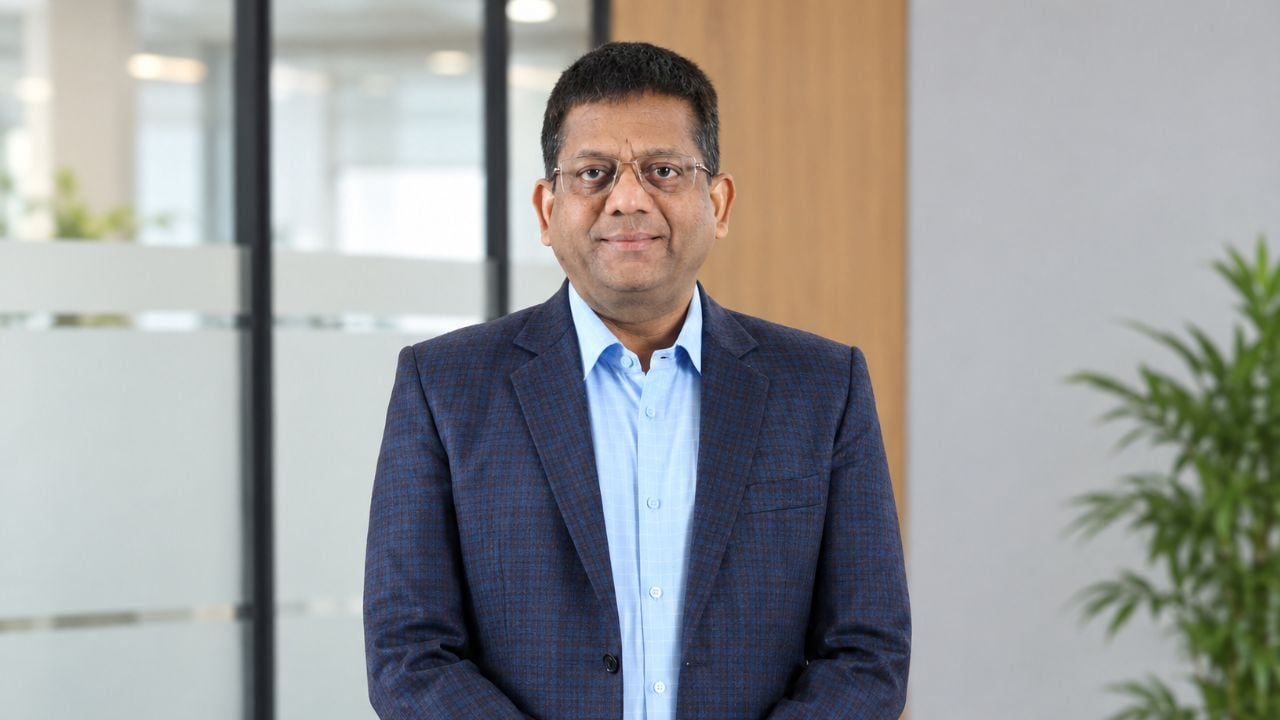
In this conversation, Jayanta Banerjee, Chief Information Officer, Tata Steel, shares his
perspective on what enables organisations to continually reinvent themselves, where AI can
create meaningful enterprise value, and what separates successful transformation from isolated
technology initiatives. He also discusses how Tata Steel is enabling its people to adapt to new
ways of working, how the CIO role is evolving into a business leadership role, and the
leadership principle he believes will remain timeless: credibility.
Edited excerpts:
Q. Tata Steel has been on a remarkable transformation
journey over the years. In your view, what enables some
organisations to continually reinvent themselves while
others struggle to keep pace?
It starts with an organisation’s culture, which is deep-rooted within any enterprise. The
fundamental aspects are humility, curiosity and eagerness to learn from others.
In enterprises that are performance-measured and high-performing, there may be an inclination
to become arrogant. As Tata Steel leadership, we keep practising and nudging each other. We
are reminded that as a leader, you cannot be arrogant. You need to stay humble, grounded and
continuously learn from others. That’s the culture we have built over decades.
We are a 119-year-old organisation in Jamshedpur, but if you look at Kalinganagar and our
other expansions in the Odisha belt, we are also pretty nimble. We are one year old, five years
old, 119 years old, and anything in between. So agility, humility and curiosity are very critical. We were also one of the very early implementers of SAP in 1999. Even for Western companies,
it was too early to adopt SAP. But Tata Steel did that pretty early, which was remarkable, and
thereafter we have gone through many versions.
As an organisation, we always want to stay ahead of the curve. That has been a direction set by
the leadership of the company. We have initiatives like reverse mentorship, where senior
leaders who are 55+, including our CEO & MD, have a reverse mentor who is 30 or younger.
They mentor us from a technology perspective. We learned digital that way, and now we are
doing the same thing with AI.
We also do exchange programmes where we host and visit other companies and learn from
them. We invite CEOs, MDs and senior leaders from other companies to come and continuously
coach us on a particular subject they are good at. We openly say, “We are not as good as you;
we want to learn this aspect from you.”
We also invite customers. The couple living in Bihar who just built a house and used our steel
are the end customers. When we sit with them and learn from them, that’s top leadership
engaging directly with the customer. We prompt them to tell us what is not so good and what
more we can do.
Maybe we have done a lot, but if we start thinking that way, we tend to become arrogant. We
will be nudged and told that professional arrogance should not creep in. That is where the whole
culture comes in, and I think that’s very important for an enterprise to keep in mind.
You also have to be agile. The technology world will not wait for you. There is a lot of
investment required, and I find that many companies would do a lot, but when it comes to
putting money behind it, there are reservations. We have to take bold steps and also hold
ourselves accountable.
There is no short answer. It is more of a cultural thing, and that is how the organisation has
been able to stay ahead and relevant to changing times.
Q. AI is changing the way businesses operate. Beyond
improving efficiency, where do you see it creating the
greatest value for enterprises over the next few years?
Whether it is AI, digital or any technology, it has done a lot for efficiency. But you have to think
about how this technology can create an intelligence layer in an enterprise. We call it the
enterprise intelligence layer, and that is where we have invested in our own platform.
There is a lot of tacit knowledge in an enterprise like ours. We have 119 years of existence, with
a 119-year-old part, a five-year-old part and a one-year-old part. We have businesses in
Europe, the UK and India. Over the years, this tacit knowledge just remains in people’s minds,
and as they superannuate or leave through natural attrition, the knowledge also goes away. AI has the potential to capture this tacit knowledge, but it’s much easier said than done. You
have to architect the platform in such a way that it cannot be done in an external ecosystem. It
has to be done within your own ecosystem, so that you can use the new-generation models and
create a context of your own business and data.
It’s very important to understand that AI only works when the data is very rich and correct.
In an enterprise, how you define your data, business context, elements and structural items is
not owned by any of the AI models. So you have to train the model. We have to create a lexicon
or an ontology as a translator from the English language to the technical language that the
computer will understand in the context of Tata Steel.
Once you do that, you create an enterprise intelligence layer where the more you use the
platform, the more your knowledge is transitioned into the machine, and the machine’s
understanding is also translated to the other colleagues of the Tata team who come in the
future. There is a lot of knowledge management happening.
In other words, if you have, say, 20,000 employees, you can also create 1,000 or 10,000
agents, and they become your co-employees. Over time, they become equally good. So you
have 20,000 employees, but you get the output of a 30,000-employee knowledge base. That is
the enterprise intelligence layer as a concept.
The other aspect is that AI will move the average intelligence quotient or knowledge quotient.
There is variance in the way people think or produce output. With AI, everybody becomes a
good average worker. Everybody’s output becomes more or less standardised.
AI is not going to replace the top-notch scientist, architect, designer or worker. Those are
outliers. AI is going to learn from that superlative employee, but most people will move up a
notch. That is how the enterprise intelligence quotient goes up.
In the context of Tata Steel, take safety. Steel is a hazardous operation by definition. We identify
risk areas and have processes to prevent fatalities and injuries, but today, a camera can look at
a picture and say, “This is a potential hazard.”
So, through vision AI and natural language, enterprises will become more and more intelligent,
individuals’ performance levels will go up, and it will also allow people to use higher levels of
faculty. I’m also on the board of MIT’s AI consortium, and I hear people talking about how we
use a very small percentage of our brains. Once AI takes over transactional work, we will be
able to leverage our brains for much more creative, design-oriented and architecture-oriented
work. That will push our boundaries, and that is how the enterprise will benefit.
In short, intelligent organisations will emerge that differentiate themselves by who genuinely
leverages AI. The average competency of the workforce will move up, while experts will
continue to push the boundaries. It will enable humans to think better and do more creative
work, and the nature of jobs will change. That is how every technology has come in. It never took away anybody’s job; it only changed the nature of the job. This is how I think the future
enterprise will look.
Q. Organisations are investing heavily in AI and digital
transformation, yet many struggle to see meaningful
outcomes. What separates successful transformation
from isolated technology initiatives?
It’s much more foundational. Build the road before building the car.
Technology should be used to solve problems.
The first step is: what are you trying to solve? You don’t need to automate just for the sake
of automation. If the process was inefficient to start with and you use technology to automate it,
it will become even more inefficient, and the cost will only go up. So don’t create exponential
problems. Identify your business problem and the magnitude of the benefit, and those have to
be measured and audited.
Then, from a technology perspective, build the road before building the car. AI does not work
without the right data. The most difficult and boring subject is to collect the data, curate it and
make meaningful sense out of it in a structured manner.
As a starting point, in 2018 we had six terabytes of data collected at a central console at Tata
Steel. Today, it has grown to 20 petabytes in a meaningful, sizeable way, and we are now able
to look at it from one console.
So you have to first invest in infrastructure. Once you have done the backbone IT stack, then
you focus on data engineering and data science.
Once the plumbing of data is well done, the enterprise intelligence layer is all about data
ontology: how to write the translator and make sure the machine understands your language.
You have to define the data first and then invest in AI.
That is the process we followed to earn three global lighthouses in the steel industry, as
recognised by the World Economic Forum. I am also on the jury and board of the WEF Advisory
Council, and we keep looking at the business impact enterprises are creating.
Whoever is doing it is getting value, and whoever is not taking that approach is misusing it.
There is mindless usage and misuse of AI today, which has environmental and social impact.
Q. Technology is evolving faster than ever. How can
organisations ensure their people, culture, and ways of
working evolve alongside it?
Every technology, every change for that matter, comes with apprehension and fear.
At Tata Steel, we too had a lot of hiccups initially. We created our own platform because we
cannot export our data. We use the same models, whether it’s GPT, DeepSeek, Claude or
Gemini, but the architecture is our own.
But then people will not go to that app. Why should they take on the additional burden of looking
at a dashboard or analytics?
This apprehension happens from the operator to the executive, whatever the role. So we had to
keep showing them the value.
For example, for an operator, we put a pre-qual [sensor/algorithm] between the furnace and the
operator. Earlier, operators had to assess the flare with the naked eye, which exposed them to
safety risks and injury. It was replaced by HD imaging and AI vision. As operators saw the
value, they began asking the IT, digital and AI teams for more such solutions. Today, adoption
has reached 77–80 per cent. That’s the level we have reached, and it’s not an easy task.
Initially, people blamed the technology and saw it as probabilistic. But adoption is ultimately a
mindset shift. Once people see the value, become comfortable with it and see others using it,
adoption starts to go up and value creation follows.
So it will be both push and pull. You cannot expect only pull; you have to push. But if you keep
pushing without creating value, it will not happen. That is how any cultural change goes through.
Q. The role of the CIO has evolved from leading
technology to shaping enterprise strategy. How do you
see the role changing over the next five years, and what
capabilities will define the next generation of technology
leaders?
Every role evolves because the environment changes. It is about adaptation, understanding the
context, reading the room and creating value in the new context.
Earlier, the CIO’s role was perceived to be a back-office one. Today, a lot of technology has
moved from the back end to the front end. The interfaces are changing.
But the foundational elements, from what goes into the cloud to enterprise workloads,
cybersecurity with increasing AI adoption, and the back-end IT systems, are becoming tougher.
The same computer science principles apply, but making them foolproof, watertight, as we call
it, becomes extremely difficult.
Then there is the whole data plumbing. The plumbing part becomes extremely important so that
we can give the right ontology and lexicon, so you can use the English language to talk to AI.
There’s a lot of back and forth.
I always considered myself a business guy. At TCS, I was a business leader, so I never looked
at myself as a technology leader. My job is to understand the context of the steel business, not
the domain part of it. Understand the priorities of the business, and within those priorities, make
technology enable that business priority.
For example, if Jamshedpur wants to buy a spare part, but it might be available only in
Kalinganagar or Meramandali. Why buy new when, across lakhs and lakhs of SKUs, the system
can take an intelligent decision on whether to buy or provide from another site? That’s an AI
model.
That is where technology comes in. The CIO’s role is to understand the business context,
understand the business challenges and the top priorities, and enable those so the
business can move to the next level. That is how CIOs are getting a seat at the table
today.
Q. As you look ahead, what leadership principle do you
believe will matter most for organisations seeking to
build the next era of intelligent enterprises?
There’s only one attribute a leader has to possess, and it is timeless. It should never change,
whatever the technology or the future brings. Your credibility as a leader is the only virtue
that you carry.
If your credibility goes down, nobody will accept you as a leader. Credibility is not just about
what you say or do. Once you make a decision, advise an enterprise, or decide what the
enterprise strategy should be to make the company future-ready, there has to be a lot of
responsibility behind that. A lot of selflessness is required in any leadership role, specifically
when you are dealing with so much noise in today’s hype-driven technology world.
The fear of missing out is real; the hype is unprecedented, and there will be a lot of pressure on
the CIO. Are we getting slowed down with AI? Are we not doing enough? Others are doing it.
You cannot ignore that, but at the same time, you have to make it real.
Sometimes you have to take the pain on yourself and say, “No, I will not do it now,” and there
will be a lot of criticism that comes your way as a leader. But you need to be confident that what
you are doing is good for the company and good for others, and make those tough decisions.
There is a lot of investment on the front end that you have to take responsibility for, but when
you say this is noise, and this is real, credibility comes in.
If one suddenly feels that his or her credibility is going down, one must avoid taking a decision
that is a shortcut, good for now, but will hurt the company in the long run. Sometimes, you have
to take a call 10 or 15 years in advance. You do something today that will not yield any result
now but will be better in the future. That is where credibility comes in. I think that’s the timeless
attribute.
The other things are that you have to be well-read, you have to read the ecosystem, learn from
others, keep your eyes open, be agile, and you have to give up your ego. That’s the most
difficult thing.
I keep learning from my reverse mentor, the youngest and brightest guy in the company, and I
have learned from my own children too. You have to appreciate that, and it will help you if you
are open. Those are the traits of leadership I would say we need to carry forward.
This story is part of The Futurists, a leadership series featuring bold ideas and perspectives from CXOs shaping the future of business across Asia.