







Wellness
Why employee healthcare needs to move beyond access to action: MediBuddy’s Anurag Bhatnagar
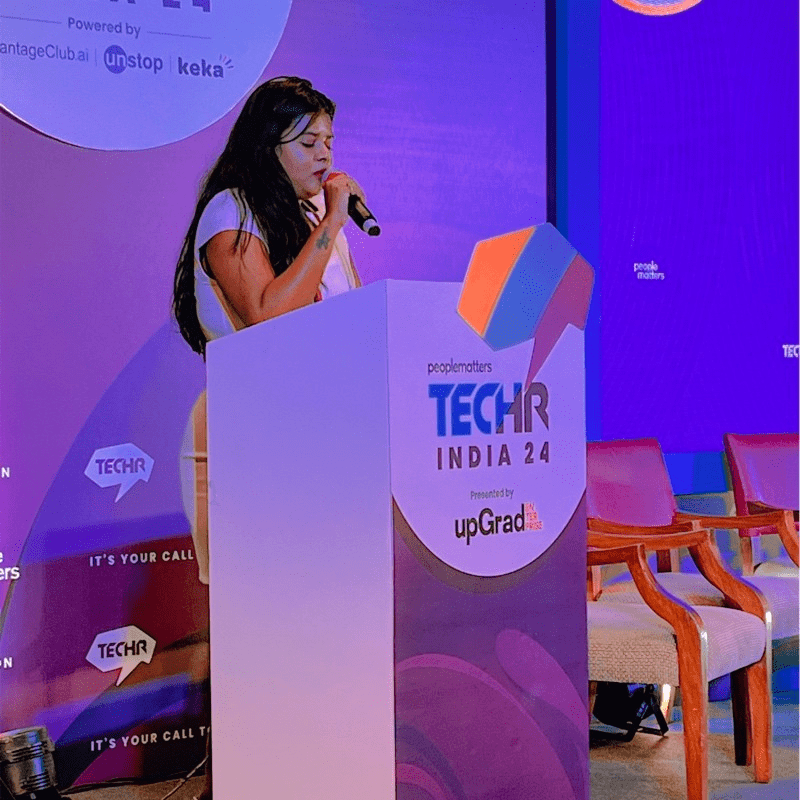






Employee healthcare programmes need personalised care, simpler access and sustained follow-up to translate preventive screenings into meaningful health outcomes, says MediBuddy’s Anurag Bhatnagar.
Organisations are expanding access to employee healthcare, but participation alone cannot establish whether these programmes are improving workforce health. For Anurag Bhatnagar, Chief of Institutional Business at MediBuddy, the priority is integrating healthcare into employees’ everyday lives through personalised interventions and consistent follow-up.
Speaking to People Matters as part of the TechHR India 2026 post-event interview series, Bhatnagar identified three barriers to effective workplace healthcare: programme relevance, convenience and continued engagement after an intervention.
“if you want sustained engagement into a wellness, then it has to be relevant,” Bhatnagar said, emphasising the limitations of generic wellness calendars.
The challenge, he explained, extends beyond communicating available benefits. Employers must ensure employees can discover, access and use relevant services, followed by interventions that encourage them to act on identified health risks.
Why access does not guarantee engagement
Corporate healthcare programmes increasingly include fitness initiatives, teleconsultations and employee assistance programmes. However, their availability does not necessarily translate into sustained employee participation or improved health outcomes.
Bhatnagar identified personalisation as a critical starting point, arguing that standardised offerings may attract initial participation without maintaining engagement over time.
He pointed to the conventional approach to annual health checks, which often differentiates packages primarily by age and gender. Such arrangements may overlook employees’ existing health conditions and individual requirements.
An employee who already knows they are pre-diabetic, for instance, could benefit from options tailored to diabetes management rather than relying exclusively on a standard health-check package.
Bhatnagar suggested retaining a common annual screening package while allowing employees to choose additional assessments based on their needs.
“There is a package for diabetic diabetes management. There is a cardiac package. There is a liver or kidney disorder or cancer markers,” he said.
Offering every intervention to every employee could increase costs unnecessarily. A base package complemented by voluntary options, however, could give employees greater flexibility while helping employers target their healthcare investments.
Convenience determines whether benefits get used
Even relevant healthcare programmes can struggle when employees encounter complicated booking processes or cannot easily locate available services.
Bhatnagar said organisations should make wellness benefits more visible instead of placing them among numerous policies on internal HR portals. Employees should also be able to book consultations and health checks without unnecessary administrative steps.
Drawing on his decade at MediBuddy, during which he said he had interacted with 600 to 700 HR leaders, Bhatnagar highlighted differences between organisations with strong participation and those struggling to generate engagement.
He outlined three practical priorities for employers:
Improve discoverability: Make healthcare benefits visible and accessible rather than burying them within extensive policy documents.
Reduce friction: Simplify booking processes and provide convenient access to consultations, screenings and other services.
Strengthen follow-up: Ensure employees receive appropriate guidance after using a healthcare benefit or completing a health check.
Bhatnagar cited MediBuddy’s teleconsultation service as an example of convenience, saying employees could connect with a practising doctor within 10 minutes. He also described automatically confirmed health-check appointments and single-click booking links designed to reduce the steps required for employees.
Communication, meanwhile, needs to be targeted rather than uniform across the workforce. Bhatnagar said organisations should reach employees most likely to benefit from specific services instead of relying exclusively on mass emails.
Managers can also influence participation by sharing their experiences of healthcare services and discussing mental health consultations where appropriate. Such conversations, he noted, require clear confidentiality safeguards and boundaries around personal medical information.
Prevention requires a follow-up mechanism
For Bhatnagar, screening represents the beginning of a healthcare journey rather than its conclusion. Health risk assessments can establish a baseline by capturing lifestyle factors, including eating habits, sleep patterns, occupational circumstances and smoking or alcohol consumption.
Combining these assessments with detailed health checks can help organisations identify employees across different risk categories and tailor subsequent interventions.
However, he stressed that consistency and follow-through determine whether screening becomes useful over time. Employees need appropriate consultations and guidance on managing identified conditions, rather than receiving reports without further support.
Citing the CII–MediBuddy workplace-health report discussed during the interview, Bhatnagar said 52% of employees drop off or do not take follow-up action after a health check.
The figure highlights a gap between detecting potential health risks and helping employees respond to them. Employers therefore need mechanisms for continued engagement, including condition-management programmes for employees with elevated risks.
Bhatnagar also emphasised that organisations should support such interventions without accessing employees’ personal medical information unnecessarily.
Where AI can improve the healthcare journey
Artificial intelligence is another component of MediBuddy’s approach, with applications spanning customer support, teleconsultations and healthcare claims analysis.
Bhatnagar said approximately 30% of the calls MediBuddy receives concern insurance coverage, eligible dependants and available services. The company uses an AI-driven chatbot to address these queries, helping employees navigate complex policy information.
He also described Clara, an AI intervention used during teleconsultations to gather information about employees’ symptoms and help direct them towards an appropriate doctor.
For instance, someone reporting persistent stomach pain could be directed towards a gastroenterologist rather than a general practitioner, depending on the information collected during the preliminary interaction.
A third application involves analysing reimbursement claims and identifying patterns in healthcare consumption. Bhatnagar said aggregated, age-based and gender-based insights can help employers understand workforce health trends without compromising personally identifiable information.
However, he maintained that healthcare decisions cannot rely entirely on automated outputs.
“AI also is not at all successful unless there is an human in the loop,” Bhatnagar said.
He cited MediBuddy’s in-house phlebotomists and on-site health clinics as examples of services where direct human interaction remains important. The company also uses an internal medical team to validate data and insights generated through AI tools.
Measuring outcomes beyond participation
Bhatnagar said employee healthcare programmes need stronger measures of effectiveness than participation rates alone. An increase in health-check completion may indicate greater uptake, but it does not establish whether health risks are being addressed successfully.
He identified several indicators HR leaders should consider:
Follow-through: Whether employees receive appropriate guidance and access to condition-management interventions after screening.
Clinical outcomes: Whether sustained preventive healthcare is associated with differences in health risks and hospitalisation.
Mental health support: Whether employee assistance programmes achieve meaningful participation and provide accessible support.
Business outcomes: Whether organisations track absenteeism, presenteeism, productivity and attrition alongside healthcare expenditure.
Bhatnagar cited the CII–MediBuddy report’s findings from approximately 10,500 employees. Employees who completed consecutive annual health checks for at least three years recorded a hospitalisation rate of 2.41%, compared with 7.27% among the remaining cohort.
The comparison highlights an association between consistent health-check participation and lower hospitalisation rates, although the figures alone do not establish causation.
He also referred to an estimated ₹1.1 lakh crore in annual costs associated with absenteeism and presenteeism among corporate employees in India, as cited in the report. Bhatnagar noted the estimate excluded additional costs associated with lower productivity and attrition.
Designing healthcare around different workforce needs
Bhatnagar’s recommendations ultimately return to three priorities: personalised programmes, convenient delivery and continued follow-up.
Different employee groups may require different forms of support, including mental health access for younger employees, burnout and non-communicable disease support for working professionals, and chronic condition management for older employees.
“don't have generic programs for your employees cater to the needs and the segments of employees we have,” he said.
Employers also need partners capable of delivering services efficiently while ensuring employees can move from screening to appropriate care. Programme effectiveness depends on the continuity of this journey, rather than the number of services offered.
As workplace healthcare becomes increasingly data-driven, HR leaders will need to connect technology-enabled access with sustained employee engagement and measurable outcomes. The central task is not simply making healthcare available, but ensuring employees can act on the insights and support they receive.
Author
Loading...