As organisations navigate AI, shifting business models and changing workforce expectations, the ability to evolve without losing sight of what defines the organisation is becoming increasingly important. Sustained transformation requires more than technology. It calls for a clear organisational ethos, leaders who can carry that ethos forward, and people who are equipped and motivated to evolve with the business.
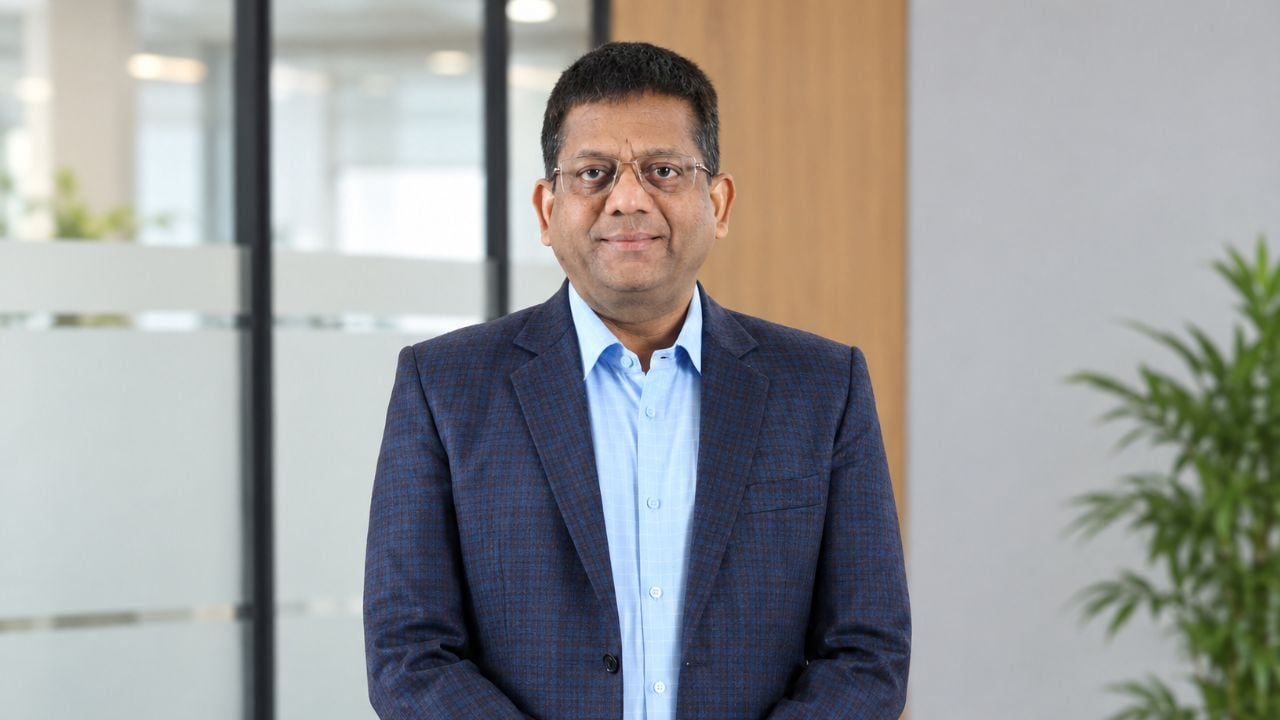
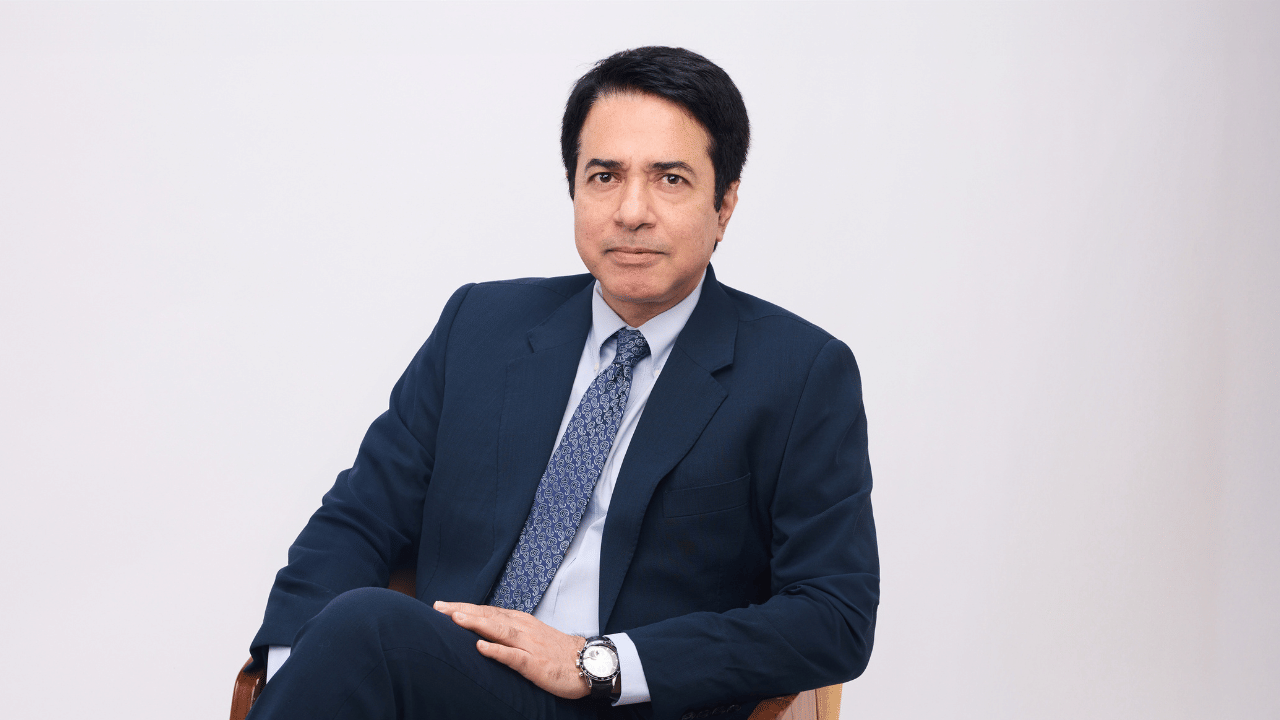
In this conversation, Rohit Thakur, Group Chief Human Resources Officer at Mahindra Group, shares his perspective on what enables organisations to reinvent themselves continually, how technology and human capability will work together, and what it takes to build a workforce that can continuously adapt. He also discusses Mahindra’s approach to mobility, capability building and culture, and why the CHRO of the future must increasingly operate as a business leader and a “leader of leaders”.
Q. Mahindra has undergone significant transformation over the years. What enables organisations to continually reinvent themselves in a changing world, while others struggle to keep pace?
Rohit Thakur: The core of it is the organisation’s ethos, in the sense of its values and beliefs. For Mahindra, this has been embodied in the philosophy of Rise, and it has been there since the company was formed. Our first advertisement, when the company was Mahindra & Mohammed, was not about jobs. It was about respect and diversity, at a time when diversity wasn't even a widely recognised concept.
With this set of values comes leadership. What sort of leaders have built the company over time? For us to be resilient, it's not about what happened in the last three, five or 10 years. It's about the character of the leaders in this company over the last 50 - 60 years. Who has come here? What have we looked for? How have we groomed our leaders? What do they believe in?
Then comes aspiration. What is an organisation’s aspiration? Is it to be content with what we have? Is it to focus on one particular domain that we are very strong at? Is it to diversify, in India or globally? That aspiration determines the altitude of what you want to do.
For Mahindra, our aspiration to contribute to India is very high. When you talk about Viksit Bharat and how India can become a hub for many things, we are positioned for that.
And finally, it comes down to people. Teams are not just about performance, but also about the drive to do things that could seem very difficult because they want to do them. The care with which we look at our teams, how we hire them and how we groom them is another parameter that is taking us forward.
Our values are at the core of what inspires us.The principle of Rise is not just about how well we do business, but what happens to society when we do it. How do we rise and help others rise? That value remains at the core of what inspires us.
Q. AI is changing how work gets done. How do you see the relationship between technology and human capability evolving in the coming years?
Rohit Thakur: AI is real and will definitely transform the way we work. I don't think it's going to be humans or machines, but humans plus machines. It's about how the two collaborate, complement each other, and, in some ways, coexist more intimately.
AI will augment what businesses do and how businesses are run. So it's going to be a partnership between humans and machines to take us forward. Besides giving time back, which is the most fundamental thing AI can do, it will start shaping and redesigning work. And that's why reskilling becomes so important.
No company or country can function in a vacuum. While China and the US are seen as being ahead of the curve in AI, the question for India is also how we focus on AI, how we build our own products and how we use products from outside to complement what we do. It's about having the right appetite and identifying the right avenues where we want to bring AI in and how we want to use it to augment work.
At Mahindra, we are already seeing this across businesses. In financial services, AI is helping us improve customer centricity, process loans faster and more accurately, and respond to customer queries more efficiently.
In the automotive business, AI is influencing the customer experience, from choosing and buying a car to dealership experiences. When a customer meets a dealer, the dealer can already have information about their preferences and what they are looking for, enabling a faster and more relevant response.
In our tractor business, we are looking at telematics and the large amounts of data available to help farmers understand soil, weather patterns and fertilisers. We are looking at how AI and telematics can support farmers not just in India, but globally.
We are also exploring AI in hospitality to make processes such as check-in smoother, including the use of cameras and biometrics to reduce cumbersome queues and documentation.
The thing the world has to be careful about is that we don't yet know the full extent of what AI can do on its own. We will see hallucinations and rogue agents in certain cases, and companies are still figuring this out. But AI is going to be real, and how work changes, how the workforce adapts and how the workplace changes to accommodate it are all things that will continue to evolve.
Within HR, we are also experimenting with AI quite a lot. Recruitment is a natural fit, whether it is sharpening the focus on the talent we need, shortlisting candidates or strengthening candidate experience. In capability building, we are looking at skills matrices and how we can personalise capability journeys across both technical and behavioural skills.
We are also exploring AI for background checks to accelerate the process and reduce the need for repeated documentation, and for employee engagement, including understanding employee sentiment at different stages of the employee journey.
Q. Capability gaps continue to persist despite investments in learning and upskilling. What needs to change to build a workforce that can continuously adapt and become future-ready?
Rohit Thakur: It starts with hiring. Who am I hiring? What qualities am I hiring for? Am I hiring for skill or for values? Is the person very clear about what they do, or are they adaptable? What mindset does the person have?
What you need, in my opinion, is not a “know-it-all” but a “learn-it-all”, because the world around you is changing and jobs are changing.
Then it's about assessing people inside the company who have that mindset as well. Then it comes down to whether the company is giving employees opportunities to do more with themselves.
At Mahindra, collaboration is important, and that means being able to empathise with what is happening around you. We are very supportive of employees moving across organisations, roles and cities. Mobility is important because, at certain points in your career, it gives you experiences and exposure that being in the same city, country or office cannot provide.
It's also about what the company offers and what employees choose to take. People naturally want vertical growth, but horizontal growth is equally important. If you look at HR, for example, someone can move across industrial relations, compensation and benefits, regional roles or business partner roles. They may remain at a similar level, but they gain different experiences, which strengthens their capabilities when they eventually move into more senior roles.
At Mahindra, when I hire somebody, I say: join us for a career, not for a job. If you're convinced about coming to us, think about the next 10 or 15 years. At leadership levels, I tell people that this is a starting job and that from here they can become a group resource.
That mindset makes people look at capabilities much more broadly than simply doing a job.
And finally, it's about what I measure. If I don't measure the aspects that make employees click, a lot of this could remain just good ideas. The real impact comes when we start measuring what employees are doing.
Q. As a diversified group with manufacturing at its core, how do you balance operational excellence with innovation, agility and evolving workforce expectations?
Rohit Thakur: So we are a federation of companies, and it's much broader than manufacturing.
I think we have to start with articulating our culture. For us, culture is a combination of our values and behaviours.
Our values are very simply articulated as IQC: Integrity, Quality and Care. Care for our customers, care for our employees and care for our communities. It's three letters, but there is a lot of meaning behind them. We spend a lot of time assessing people on values and communicating what those values are.
Our behaviours are CAB: Collaborative, Agile and Bold. How do you work? How do you think as one Mahindra? How do you think about speed? How do you stay in sync with what is constantly happening around us? That's what being bold means.
When we assess somebody for potential, it is not just about how the person has performed, but also how the person displays the values and behaviours. That is one of the big themes around cultivating a certain culture.
We are also a very caring company, but we are equally a meritocracy. We are performance-oriented. So we have coined the term “caring meritocracy”. It is not about hiring and firing, nor is it about allowing people to simply stay without delivering. It is about balancing both.
Ultimately, our rewards and recognition processes are strongly aligned to outcomes. Effort is important, but the outcome is equally important. The how is the culture and the values; the what is what I produce; and the outcome brings those things together. That is how we create a culture that delivers high performance along with long-term commitment.
Q. The CHRO has moved from enabling talent to becoming an important part of organisational transformation. How do you see the role changing over the next five years?
Rohit Thakur: Today's CHROs are spending a significant amount of time with senior stakeholders on C-suite succession, the future of work and transformation. That could be AI transformation, globalisation or workforce transformation.
What this implies is that one doesn't have to be a functional expert to be a future CHRO. One has to have the strategic element. You need very strong teams under the CHRO who are functional experts and can drive what the function needs to deliver, while the CHRO focuses on the larger strategic elements.
At the board level, more and more boards are speaking about culture, the workforce and risks, including talent risk and data risk. CHROs are getting into that space as well.
The third thing is that HR is a profit driver, not just an enabler. There are many ways in which HR can drive business outcomes. One part of that is understanding the financial metrics around productivity, cost and having the right person in the right job. But a bigger part is understanding how an effective HR function can enable the company to be successful.
And then there is the role of the CHRO as a “leader of leaders”. Different P&L heads and function heads have their own challenges. How do you create a team at the C-suite level which, working with the CEO and the entire group, harnesses the organisation to move forward?
The CHRO needs to operate as a peer, collaborate across the organisation and do so as selflessly as possible.
Q. Looking ahead, what leadership principle will matter most for organisations seeking to create the next era of work?
Rohit Thakur: For Mahindra, our core is the Rise philosophy, which says that when we enable others to rise, we will rise.
Within that construct, I would say four things matter.
First is performance. If I don't perform, I don't even sit on the table. But performance is not just about knowing my goals at the beginning of the year. It's about how a leader performs through adversity, a tough environment and an uncertain future. Different events will come your way, and the ability to perform through those environments is critical.
Second is behaviours. Am I collaborative? Am I agile? Am I bold? How do I think as one Mahindra and not operate in silos?
Third is nurturing talent. You can't do anything without your people. How do I build high-performance teams? One thing I've noticed in my career, in addition to teams being strong, is how self-secure the leader is. Is the person secure enough not to be shaky, nervous or insecure? That is fundamental to how a leader comes across in everything they do.
And finally, it comes down to living our values. Integrity, Quality and Care, in our construct, are what will continue to propel us into the future.