








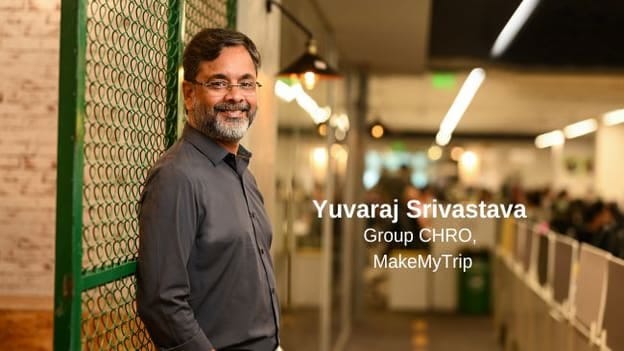
Yuvaraj Srivastava has been serving as the Group Chief Human Resources Officer at MakeMyTrip (MMT) for the past 10 years. In addition to his extensive role overseeing internal HR strategy in alignment with MMT's business strategy, Yuvaraj plays a pivotal role in employer branding, talent management, employee benefits, engagement initiatives, and fostering a productive work culture.
During an exclusive interaction with People Matters, Yuvaraj delved into talent management strategies extensively, covering topics such as shaping careers within the travel industry and enhancing employee relations through the promotion of equal skill sets and equal opportunities.
Here are the edited excerpts:
Attracting talent amidst challenges in travel industry
On shaping MMT’s hiring initiatives in alignment with the evolving preferences of the emerging workforce, Yuvaraj shares, “Over the past two decades, organisations have increasingly recognised the imperative to reassess their employee propositions. The abundance of talent in India is significant, yet the pool of employable talent remains comparatively smaller. Moreover, when considering employable talent from an organisational standpoint, the pool diminishes even further. As a result, the available opportunities become more competitive, and simply resorting to traditional recruitment methods, such as campus placements, proves inadequate unless organisations are unequivocally clear about what they offer prospective employees in terms of career advancement and workplace culture.”
The emergence of new-age technology companies has underscored this shift, adds Yuvaraj, “While mass recruiters persist in hiring large numbers from campuses, discerning young talent often opt for organisations that prioritise talent development and offer stimulating career prospects.
So, how does one distinguish their organisation during campus initiatives or initial recruitment efforts? Yuvaraj answers, “We realised that offering generic benefits that cater to the majority of employees might not suffice. Through surveys involving 5,000 students, candidates, and numerous consultants and partners, we evaluated ourselves on various aspects such as workplace satisfaction, career prospects, and benefits. Despite obtaining feedback indicating areas for improvement, we acknowledged the need to elevate our standards. Subsequently, we embarked on revamping our employee value proposition, enhancing our social media presence, and actively engaging with campuses. We recognised the importance of not only fostering relationships with select campuses but also continually nurturing them. This entailed establishing permanent recruitment channels while also cultivating relationships with other institutions to assess and groom prospective talent. In addition to campus recruitment strategies, we conducted surveys targeting experienced professionals in the lateral hiring market. The insights gleaned from over 6,000 to 7,000 respondents revealed a nuanced perspective. Contrary to conventional assumptions about priorities such as compensation and location, candidates emphasised the importance of ongoing learning and growth within an organisation. They sought opportunities where they could continuously develop their skills and evolve professionally, rather than remaining stagnant in a static role.”
Understanding the needs of young talent to shape their career path
Today, new talent differs from experienced workers in that they define their own career paths, knowing precisely what they desire in terms of roles, responsibilities, and rewards. How does MMT ensure they meet the needs of emerging talent? Yuvaraj says, “We realised that the timeframe individuals consider ideal for staying in a role typically spans one year to 18 months before seeking new opportunities. In addition to this, we discovered that prospective employees highly value organisations with access to cutting-edge technologies. In the tech realm, having access to top-notch software, tools, and equipment is paramount for attracting talent. And the third key aspect we identified: candidates are drawn to organisations offering robust technological resources, whether it's working with Microsoft or on an iOS platform. Furthermore, we found that individuals prioritise working alongside a high-calibre peer group. They seek environments where they can learn from others who bring valuable insights and expertise. Conversely, they expressed reluctance to work with peers who may not enhance their professional growth. These employees desire clarity regarding the impact of their work on the organisation's objectives. They expect regular feedback on the contributions they make to the business, emphasising the importance of recognition and acknowledgment.”
In response to these insights, Yuvaraj added, “we concluded two critical actions.
- Firstly, we recognised the necessity of periodically reassessing our Employee Value Proposition, typically every four to five years.
- Secondly, we acknowledged the importance of aligning our organisational structure and practices with the evolving expectations of the job market.”
Combining benefits with career framework to attract top-tier talent
Yuvaraj shares the significance of understanding the specific attributes that contribute to success within MMT. He says, “Analogous to cricket strategies varying based on playing conditions, we identified a distinct profile of successful employees tailored to our organisational culture and demands. This led us to create an Employee Persona and key success factors to guide our recruitment efforts. We implemented several initiatives to cater to the needs and aspirations of our workforce.
- For instance, we revised our relocation policies to accommodate parental involvement during the settling-in process for campus recruits.
- Additionally, we introduced employee stock options to instil pride and facilitate wealth creation among our employees. Recognising the penchant for travel among younger employees, we revamped our travel policies to offer discounted rates for personal and group travel bookings.
- Moreover, we initiated financial well-being sessions to equip our younger workforce with essential money management skills. Adjustments were made to our rewards and recognition policies, including quarterly and monthly incentives, as well as specific recognition for employees with less than one year of tenure. Overall, these initiatives reflect our commitment to continuously evolve and meet the changing needs of our workforce in an ever-evolving landscape.”
He added, “To attract talent from top-tier institutes, it's crucial to strategically select campuses where you can find the desired workforce. With numerous colleges across the country, it's impractical to visit each one. Therefore, the first step is to meticulously identify a set of 30-35 colleges, including senior institutions, tier 2 MBA colleges, premier colleges, and others, based on their performance and our past experiences. Once identified, we engage with these campuses through a structured process.
In addition to campus engagements, we launched an online Instagram-based competition nationwide, inviting students to create reels showcasing their travel experiences. This initiative garnered participation from thousands of students, with the best reels being rewarded with travel vouchers. Furthermore, we actively engage with tier 2 and tier 3 colleges, leveraging our presence in 12-15 offices across the country. Through sponsorships of relevant events and other initiatives, we enhance our employer brand and maintain a strong connection with these campuses. As a result, Our scores on various parameters have significantly improved since our last assessment in 2015-2016. We now secure prime slots during campus placements, witness a surge in website traffic and job applications, and have achieved a higher overall rank as an employer of choice among candidates. These outcomes underscore the substantial impact of our campus engagement strategies,”
Shaping talent through engaged culture and development initiatives
Sharing effective strategies to shape talent within the travel company, the Group CHRO explored key aspects as follows:
Nurturing internal talent: Without investing in the development of our existing workforce, integrating fresh talent from external sources becomes a time-consuming endeavour. Moreover, acclimatising newcomers to our organisational culture requires a significant transitional period. To address these challenges proactively,
- We have established a comprehensive immersion programme as the cornerstone of our employee development initiatives. The six-day long programme is not merely an onboarding exercise but an immersive experience designed to familiarise new hires with our company ethos. During the first month, all new employees have the opportunity to interact with top leaders through a series of hour-long sessions. These sessions provide insights into various aspects of our business, fostering a sense of pride and connection to the organisation. Additionally, participants visit market sites, hotels, suppliers, and transportation hubs to gain firsthand knowledge of our operational landscape and customer base.
- In addition to this, we have a robust mentorship and buddy support system, which ensures that employees receive ongoing guidance and assistance from seasoned colleagues. We also maintain an open feedback process accessible 24/7, allowing individuals to seek and provide feedback continuously throughout the year. This fosters a culture of development and improvement.”
Leadership development: We offer a range of leadership development programmes tailored to different career stages. Managers undergo a managerial effectiveness survey to receive feedback from their teams, leading to personalised development plans. As individuals progress in their careers, they participate in structured processes such as 360-degree feedback assessments for personal and professional growth. Functional training programmes, such as the Product Academy for online product managers, are also integral to our development framework. These programmes equip employees with the skills and knowledge needed to excel in their roles.
- Mid-level leaders are enrolled in the CXOs Academy to enhance their leadership capabilities. Every two to three years, senior leaders attend the CEO's Academy—a rigorous three-day programme focused on addressing leadership, business, and strategic challenges through structured case studies and simulations.
- Employees have access to online modules for self-directed learning, allowing them to enhance their skills at their own pace. Moreover, we encourage participation in international forums and programmes hosted by industry leaders like Google, Microsoft, and Focusrite to stay abreast of global trends and innovations.
- Top talent receives disproportionate attention through dedicated mentoring and guidance, ensuring their continued growth and success within the organisation.