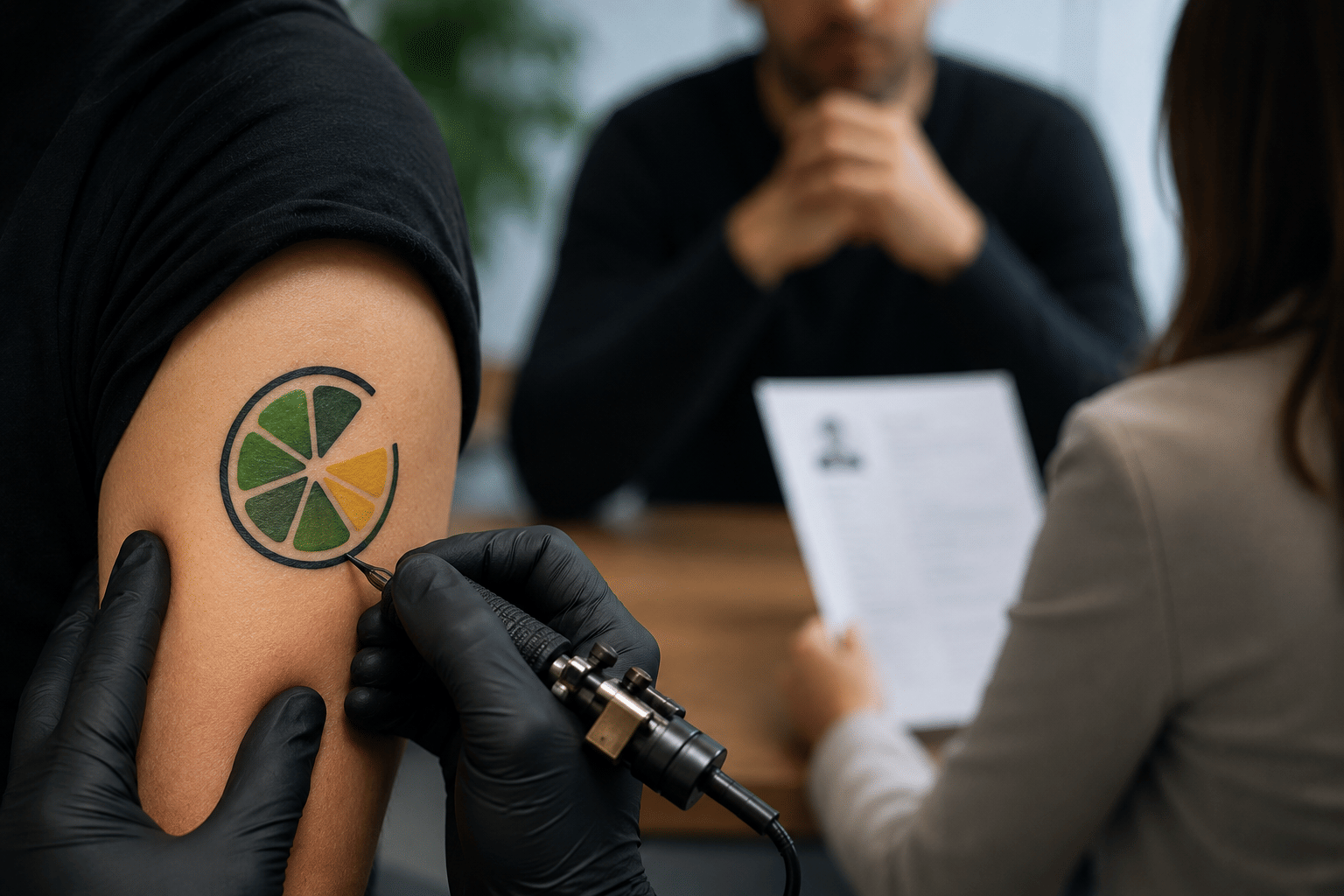
A hiring campaign by San Francisco-based AI startup LemonLime has sparked widespread criticism after its chief executive offered guaranteed job interviews to people who got tattoos during a company event.
Jordan Zietz, CEO of LemonLime, promised instant interviews to anyone who attended a company party and received a LemonLime tattoo. Seven people accepted the offer.
The campaign quickly attracted criticism on social media, with many users questioning the ethics of linking permanent body art to employment opportunities. Zietz later admitted the initiative showed poor judgement and apologised publicly.
Hiring campaign aimed to attract bold candidates
Zietz organised the event to identify candidates who shared the company's culture and appetite for risk.
In a LinkedIn post, he said the event was designed "to meet exceptional people and find out which one of them is just as crazy as we are."
He added: "We are bold, we take risks and we do things that haven't been done before. Being committed to our mission is paramount."
The company guaranteed interviews but did not promise employment to participants.
Criticism focused on hiring ethics
The recruitment campaign generated significant backlash online, with critics saying it blurred the line between employer branding and inappropriate hiring practices.
Several LinkedIn users questioned whether job seekers could genuinely make a free choice in a difficult employment market.
- "The job market cannot be this cooked that people are getting tattoos for an interview."
- "That's crazy and definitely not on my 2026 recruiting bingo card."
- One commenter described the campaign as "a textbook display of predatory corporate behaviour" and criticised linking permanent body modifications to recruitment.
The criticism centred on the perceived imbalance of power between employers and candidates rather than the tattoos themselves.
CEO admits the idea was 'reckless'
Following the backlash, Zietz issued a public apology on LinkedIn. "I messed up," he wrote.
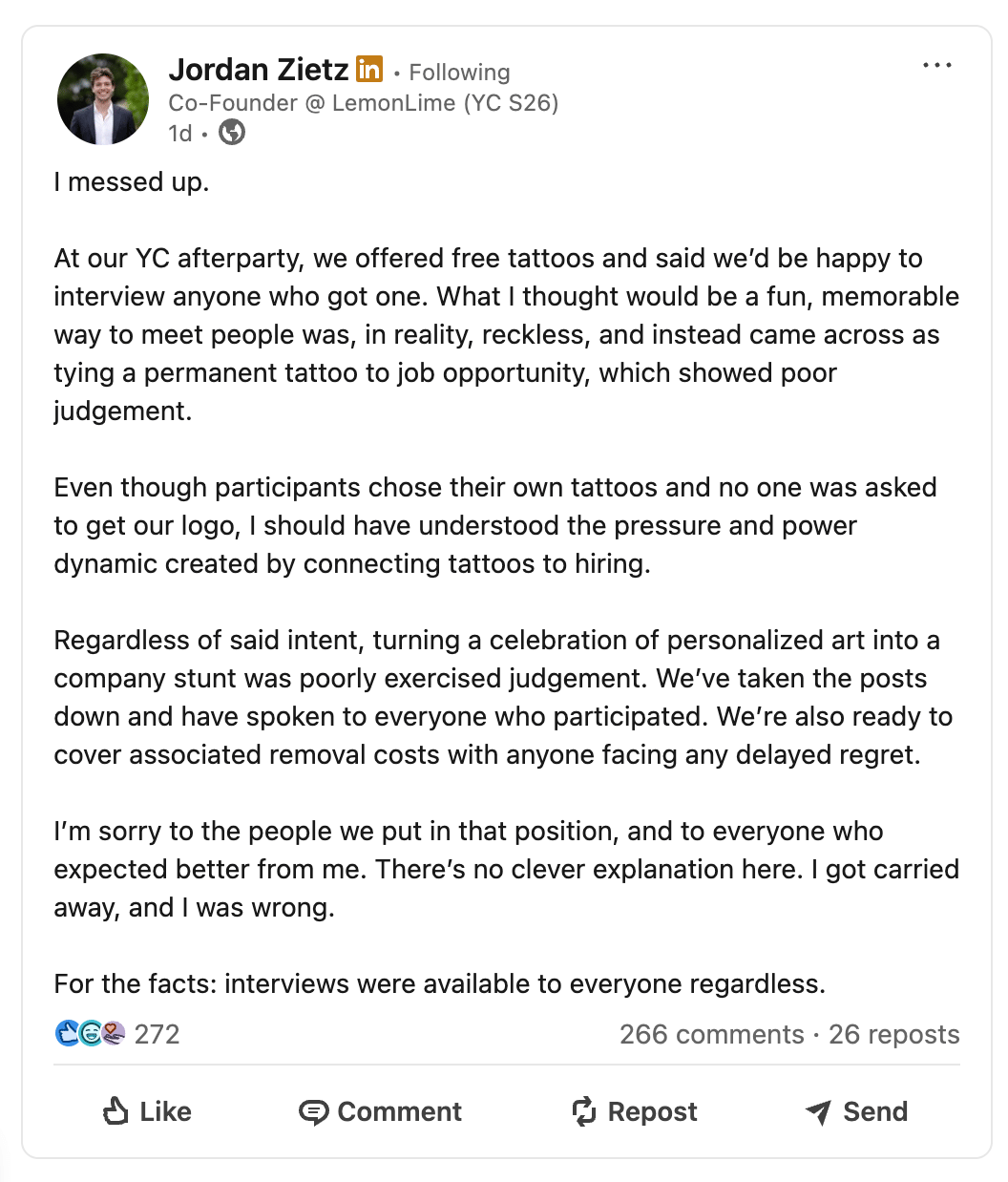
The company intended the event to be memorable but failed to recognise how connecting tattoos with recruitment could create pressure for job seekers.
"We offered free tattoos and said we'd be happy to interview anyone who got one. What I thought would be a fun, memorable way to meet people was, in reality, reckless, and instead came across as tying a permanent tattoo to job opportunity, which showed poor judgment," he said.
Zietz also clarified two points:
- Participants chose their own tattoos.
- No one was required to get the LemonLime logo to receive an interview.
He acknowledged he should have better understood the power dynamics created by linking tattoos to hiring.
Company offers tattoo removal support
LemonLime contacted everyone who participated in the event after the controversy.
Zietz said the company had offered to pay for tattoo removal for anyone experiencing "delayed regret."
He also clarified that tattoos at the party were not required for job interviews.
"I’m sorry to the people we put in that position, and to everyone who expected better from me," he wrote. "There's no clever explanation here. I got carried away, and I was wrong."
Recruitment tactics face greater scrutiny
Businesses have previously used tattoos as part of promotional campaigns, with some retail and food brands offering rewards to customers who tattooed company logos. A New York real estate brokerage once offered employees higher commission rates for getting the company's logo tattooed.
LemonLime's campaign, however, drew greater scrutiny because it connected tattoos with access to the hiring process rather than customer rewards.
The episode highlights the growing attention employers face over recruitment practices, particularly when unconventional branding initiatives intersect with hiring decisions and candidate welfare.