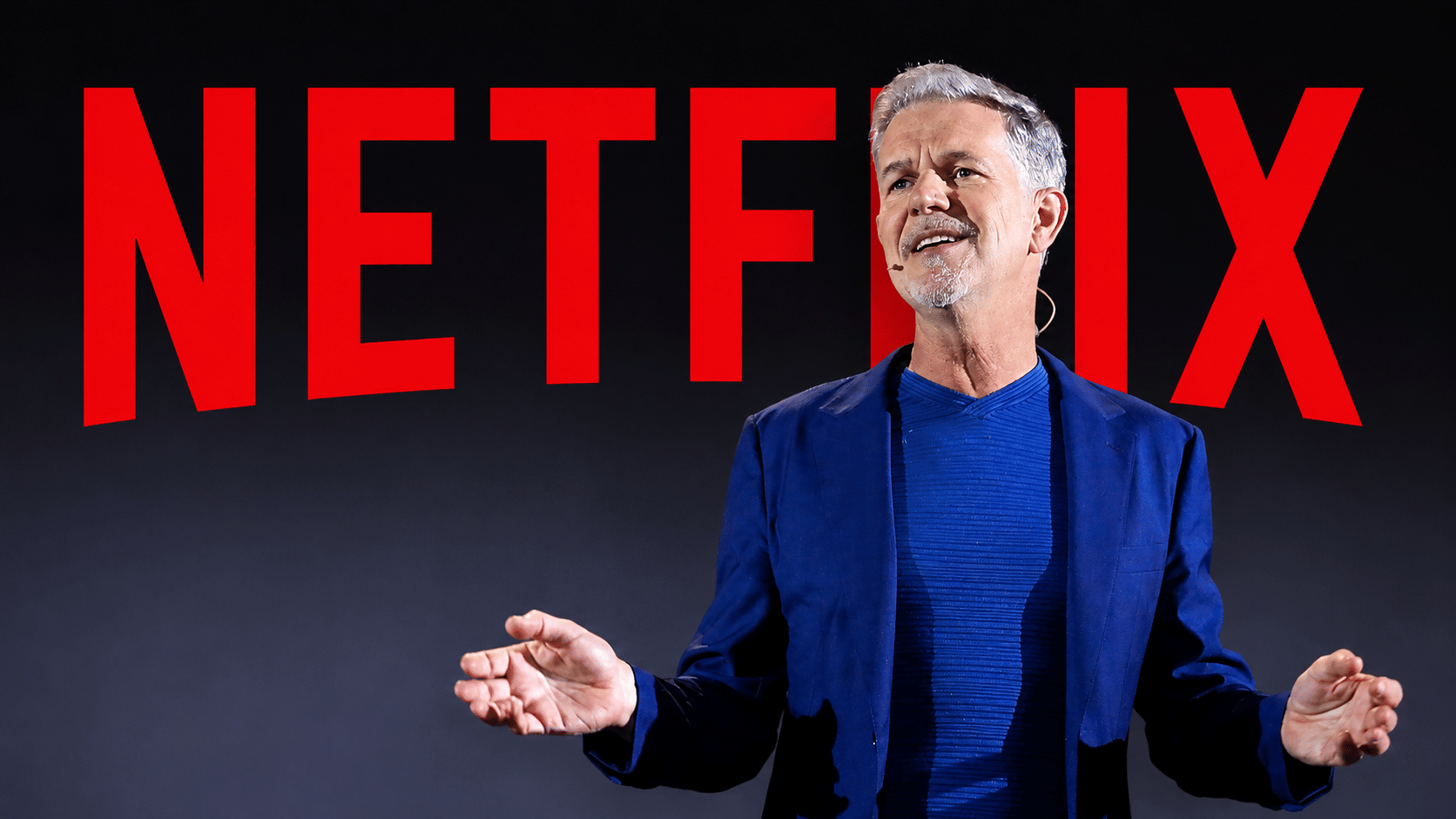
Long before Netflix became one of the world's most valuable media and entertainment companies, a painful round of layoffs reshaped how Reed Hastings thought about leadership, performance and workplace culture.
Speaking recently to Semafor, the Netflix co-founder said the company's first major workforce reduction in 2001 convinced him that businesses should stop describing themselves as families.
His reasoning was simple.
"If you describe yourself as a family at a company, you better not ever do a layoff," Hastings said. "You would never lay off two of your kids."
The comments revisit a philosophy that has become central to Netflix's culture over the past two decades and continue to influence wider debates around talent management, accountability and organisational performance.
A lesson born during Netflix's early struggles
According to Fortune, Netflix was still a DVD rental business when it faced severe pressure following the dotcom downturn.
In 2001, the company eliminated roughly one-third of its workforce, a move Hastings described as a defining moment for the organisation.
Rather than weakening the business, the experience prompted Netflix to rethink how it viewed talent and performance.
The company later transitioned to a subscription-based DVD delivery model and went public in 2002, beginning a growth journey that eventually transformed it into a global streaming giant with a market capitalisation exceeding $315 billion, according to Fortune.
For Hastings, the lesson from those layoffs remained clear.
Employees may form close relationships and work in highly collaborative environments, but organisations operate differently from families when difficult workforce decisions become necessary.
Why Netflix chose the sports team model
Following the layoffs, Netflix began framing itself less as a family and more as a high-performing sports team.
Hastings told Semafor the company concluded that maintaining consistently high standards required leaders to make difficult talent decisions when necessary.
"We said, how about if we keep the bar high and really think about us as a championship sports team rather than a family," he said.
The comparison has become one of the defining principles of Netflix's management philosophy.
According to Hastings, sports teams regularly adjust their line-ups to remain competitive. He believes organisations should approach workforce planning with a similar mindset.
The focus, he said, is not on headcount reduction but on ensuring the company has the right talent in the right roles.
The 'keeper test' remains central to Netflix culture
Netflix's talent philosophy is reflected in what the company calls the "keeper test".
According to Netflix's culture guidelines, managers are encouraged to regularly assess whether they would actively fight to retain a particular employee or rehire them knowing what they know today.
The framework asks leaders two key questions:
- If an employee wanted to leave, would the manager fight to keep them?
- Knowing everything they know today, would the manager hire that person again?
According to Netflix, if the answer is no, it is fairer for both the employee and the organisation to part ways quickly.
The company says leaders are expected to be strong developers of talent while also ensuring every position is filled by the right person.
The approach reflects Netflix's emphasis on performance rather than:
- Seniority
- Length of service
- Loyalty-based progression
Flexibility paired with accountability
While Netflix is known for demanding high performance, it also offers employees significant workplace flexibility.
According to the company's published culture principles, salaried employees are not bound by traditional working-hour structures and have access to unlimited paid time off and parental leave policies.
The organisation has long positioned freedom and responsibility as complementary elements of its operating model.
For Hastings, flexibility works best when paired with clear expectations around contribution and performance.
Other CEOs are questioning the family metaphor
Hastings is not the only business leader challenging the idea of companies as families.
According to Fortune, Airbnb CEO Brian Chesky reflected on a similar lesson after laying off approximately 25% of Airbnb's workforce during the pandemic.
Speaking on the ReThinking podcast in 2024, Chesky said Airbnb previously referred to itself as a family but later recognised the contradiction.
"We used to refer to ourselves as a family, and then we did have to fire people," he said.
Shopify CEO Tobi Lütke has also criticised the concept.
In a 2021 letter reported by Business Insider, Lütke said businesses should be viewed as teams rather than families because family-style thinking can make it harder to address performance issues.
He argued that family relationships are permanent, while workplace relationships are based on shared goals and organisational needs.
A culture debate that continues
Hastings served as Netflix's CEO from 1999 until 2023 before becoming chairman. He stepped down from that role earlier this year.
His latest comments arrive at a time when organisations are reassessing workforce strategies, performance expectations and leadership approaches amid economic uncertainty and rapid technological change.
As companies continue balancing employee engagement with business performance, the debate over whether workplaces should function like families or teams is unlikely to disappear.
For Hastings, the answer was settled more than two decades ago during one of Netflix's toughest periods. If layoffs remain a reality of business, he believes companies should be honest about what they are and what they are not.