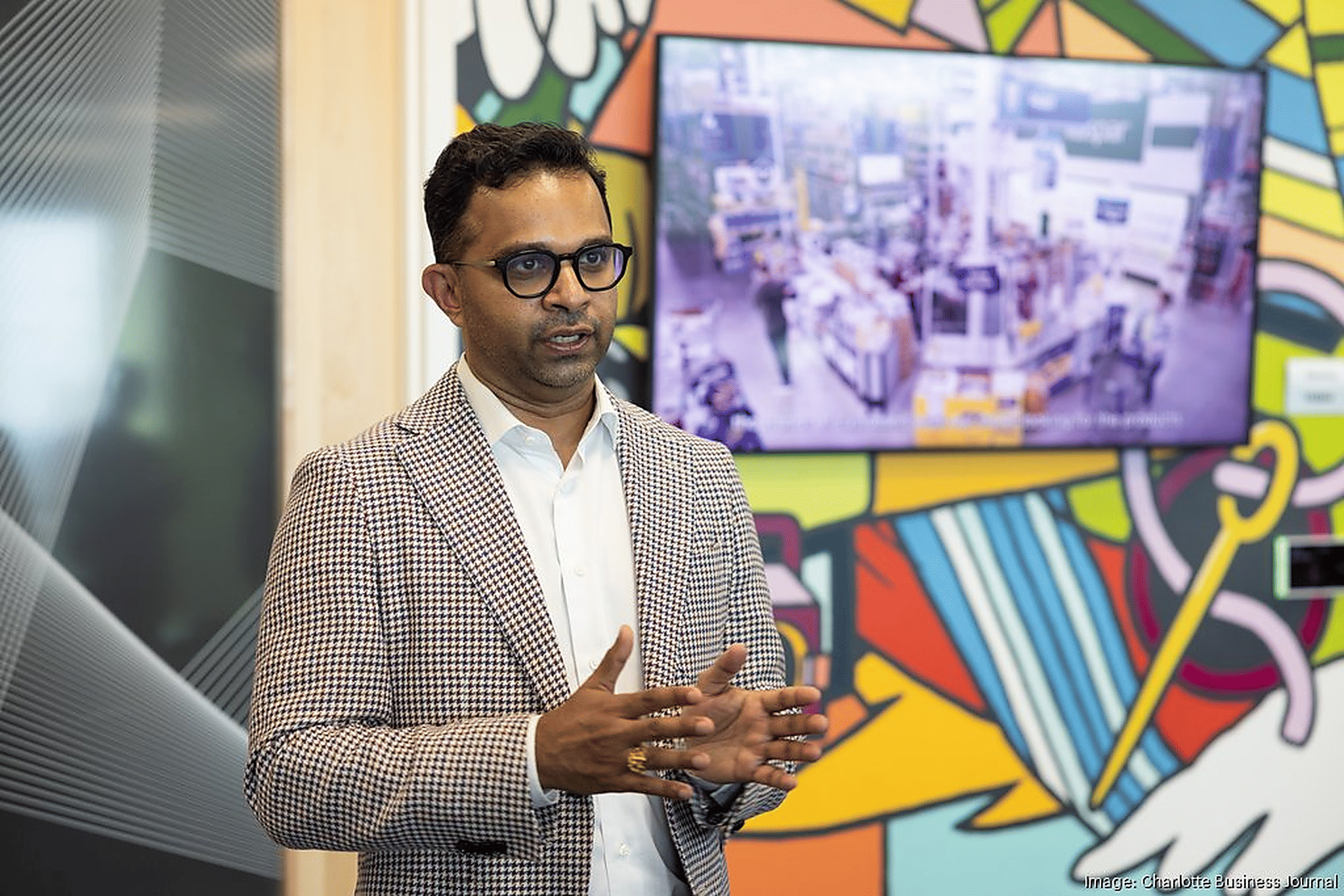
Target has appointed its first-ever Chief Artificial Intelligence Officer, signalling how rapidly AI is moving from a technology initiative to a boardroom priority for global retailers.
The US retail giant announced the appointment of Chandhu Nair as Chief AI Officer and Senior Vice President, alongside the promotion of Purvi Shah as Senior Vice President of User Experience. The move places AI leadership directly within Target’s executive structure as retailers race to integrate artificial intelligence across customer experiences, operations and decision-making.
The appointment reflects a broader shift across corporate America, where companies are increasingly creating dedicated AI leadership roles to coordinate technology adoption, governance and business transformation.
A new leadership role for an AI-first era
In a statement released by the company, Nair said the most important AI applications would emerge from day-to-day business operations rather than research laboratories.
He said the focus would be on making shopping easier for customers, improving tools for employees, enabling more confident business decisions and helping bring new ideas to market faster.
Nair joins Target after serving as Senior Vice President of Stores, Data, AI and Innovation at Lowe’s. During his career, he has also held leadership positions at Staples and Gap, giving him experience across retail operations, technology and customer engagement.
According to Target, Nair will help create a more coordinated approach to AI across the organisation, including improving inventory management and accelerating decision-making.
Retailers are moving AI from pilots to strategy
Target's leadership change comes as retailers increasingly embed AI into core business functions.
The company has already invested in several generative AI initiatives, including Target Trend Brain, a tool designed to identify emerging consumer trends and predict styles, colours and materials shoppers may seek in the future.
Last holiday season, Target also introduced a conversational AI shopping assistant aimed at helping customers find gifts based on recipient preferences and shopping needs.
Key developments highlighted by the company include:
- Creation of Target's first Chief AI Officer role
- Appointment of Chandhu Nair as Chief AI Officer and Senior Vice President
- Appointment of Purvi Shah as Senior Vice President of User Experience
- Expansion of AI capabilities across inventory management and business operations
- Continued investment in generative AI-powered customer tools
The appointments indicate AI is becoming a long-term business capability rather than a standalone technology project.
Competitive pressure is reshaping retail technology priorities
Target is not alone in accelerating AI investments.
Major retailers have been integrating AI into supply chains, customer service and workforce operations as competition intensifies.
Among recent developments:
- Walmart has deployed AI tools and agents across stores and supply chain operations to improve efficiency and customer experiences.
- Gap announced a partnership with Google Gemini earlier this year.
- Best Buy has established AI collaborations with OpenAI and Google.
Industry leaders have also begun discussing AI as a strategic leadership challenge rather than a purely technical one.
Earlier this year, former Walmart Chief Executive Douglas McMillon said AI-driven commerce influenced his decision to step down and hand leadership to John Furner, who became CEO in February. McMillon said he believed the next phase of retail would be shaped by agentic commerce and AI-powered shopping experiences.
Why the appointment matters
The creation of a dedicated AI leadership role highlights how companies are formalising responsibility for AI deployment.
Unlike earlier waves of digital transformation, AI adoption affects multiple functions simultaneously, including merchandising, marketing, customer service, supply chain management and workforce productivity.
For retailers, the challenge is no longer whether to use AI but how to integrate it consistently across the enterprise while delivering measurable business outcomes.
Target's decision to appoint a Chief AI Officer reflects this shift. The company is placing AI oversight alongside other executive responsibilities, giving the technology a dedicated voice in strategic planning and operational execution.