







HR Technology
The argument against automation’s impact on jobs





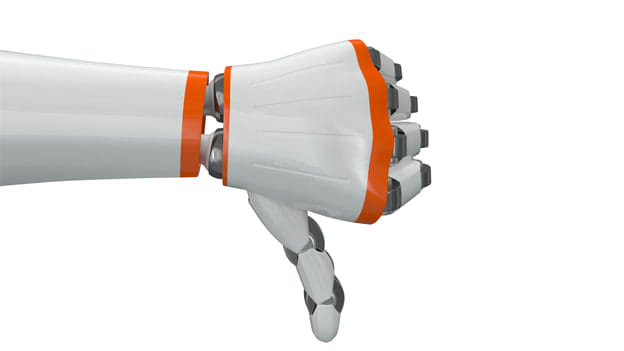
Automation may not be eliminating jobs, but does automation restrain job-creation? This section of the Cover Story reflects upon that.
The Cover Story has established that organizations are not at the level of maturity wherein automation can eliminate jobs . And going by the data, (and, considering Foxconn’s mass exodus of 60,000 people due to automation as an anomaly), even if it was to be concluded that automation hasn’t resulted in job losses (yet), it is still important to look at the potential argument – has automation slowed job creation?
The IT/BPO industry may have created 76,000 jobs in 2015, but it is equally important to note that this is less than half the number of the jobs created in the same sector in the year 2014. And this is just one sector. Job creation has significantly gone down, so much so, that job creation in 2015 in India was the lowest since the 2008 recession. While there is no data to establish a direct correlation between technological advancements and the slowdown in job creation, it has to be considered as an important cog in the wheel. For the first time in over two decades, Wipro and HCL witnessed a net decline in hiring this year. Data from Nasscom also highlights that the requirement of engineers to generate $1 billion of export revenue has come down from 31,846 engineers in 2009-10 to 16,055 engineers in 2015-16. A McKinsey-Kotak study notes that the industry will need 1 million engineers to generate the next USD 100 billion of revenue, whereas the first USD 100 billion were generated from 3 million engineers. It might lead to either more growth or lesser jobs created; or maybe a combination of both.
Seema Arora Nambiar of Hardcastle Restaurants attributes this slowdown in job creation to a more cautious approach that is being taken by employers. But technology’s role cannot be downplayed, forget getting disregarded. After all, for McDonald’s “it's cheaper to buy a $35,000 robotic arm than hiring an employee who's inefficient making $15 an hour bagging French fries,” as articulated by former McDonald’s USA CEO Ed Rensi in an interview to Fox Business. The plain economics of it suggests having a robot arm instead of a human. It may be argued that the individual bagging the fries may not lose the job and be redeployed to a new role, say customer service, but it just might shut an avenue for a prospective job-seeker who wants to work in customer service, thus accentuating the argument.
What does it entail for the workforce?
In the short and mid-term. As far as the history of technology adoption suggests, automation will not be able to immediately create ripples in the workplace. Vinnie Mirchandani, in his book, ‘Silicon Collar’ argues that both the evolution and absorption of technology is really slow and cites the example of how, despite the excessive use of e-mails, US Postal Service has thrived. At the introduction of emails, a technology-will-replace-humans argument would have been that the postal service would become redundant. But when one looks at the employee strength of India Post, it is found that the impact of e-mails, if any, has been snail-paced. In 2006-07, India Post employed 520,191 people, and the number has only dropped to 460,457 people in 2015-16, despite the debunking of telegram and money order services. This also does not factor the private courier services where people work. So clearly, the adoption of emails hasn’t been detrimental to millions of people working with postal and courier service in the country. Mirchandani says, “Societies conspire to stay analog. And in many ways, that's not too bad. It keeps humans employed far longer than the doomsayers predict.”
Before we talk of all-out automation and elimination of jobs, there are other aspects to also keep in mind. For instance - is the state infrastructure conducive to advanced technologies like driverless cars? Are warehouses architected in ways to support self-sufficient bots? Given the current readiness of the state, organizations, and the limited extent of dependence on technology by people, preempting an impact to the degree where everything becomes machine dependent and virtual can be stated as far-fetched.
In the long-term. “One cannot really predict,” says McKinsey’s Faridun. The truth remains that automation is a reality and organizations will have to embrace it. A McDonald’s may not hire an employee to bag those French fries and use a robot arm instead. It makes complete business sense. But it should also start working on creating new avenues for employees who will become redundant. An Amazon will have to reflect upon whether it has devised a workforce plan for its 90,000 full-time employees working in fulfillment centers in the US that it might displace in the future because of automation?
There are a plethora of arguments that can be made in favor and against automation’s impact on jobs when comparing today’s scenario to the second industrial revolution. It is not entirely justifiable to juxtapose the fourth industrial revolution (20xx) with the second industrial revolution (1870) simply because of the differences in the ability of machines to work in the two eras. Machines have never had such evolved cognitive abilities as they have today, and organizations must start thinking and take steps, even if small, to prepare for the age when the Deep Blues will replace human occupations; for now the Gary Kasparovs are well in control.
Topics
Author
Loading...

Loading...