







HR Technology
HR is moving towards value generation





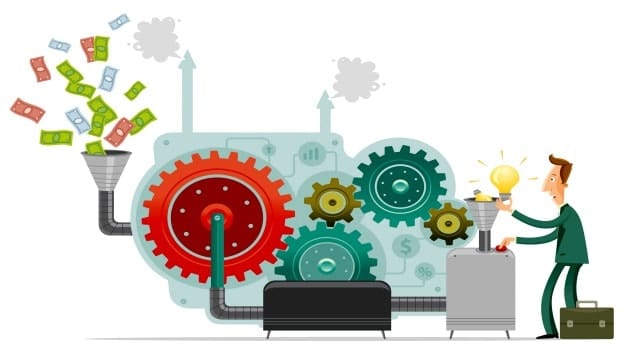
HR is moving towards value generation as its generalist functions are becoming more consultative and strategic in nature
With companies putting more & more focus and pressure on ROI, HR function is no exception. The focus of each support function, including HR, is increasingly moving towards value generation. HR function has tremendous potential to drive business improvements and with companies gaining scale across line of business’ and markets, the focus is moving towards creating sustainable solutions and measuring business impact through the same.
With the key people focus areas defined, it is imperative to organize HR, not just to partner through this change, but to lead ‘Enterprise Change’. This is resulting in a fundamental change in the model of HR as we know it. The COEs in HR (centres of excellence) are gaining depth, in providing solutions on not just the erstwhile well-established domains of Talent Acquisition and Compensation & Benefits but also on Employee Relations experience and HR Analytics and reporting.
The HR generalist functions of Performance Management, Learning & Development, Career Management etc. are becoming more consultative and strategic in nature. Some initiatives would need coverage at an enterprise level than LOB/function/employee level where scale will be the focus. A befitting example is that HR would continue to lead the creation of the performance management strategy/learning & development curriculum for all employees and develop and deploy tools for the same but now drive the implementation through people leaders. Some other initiatives might make sense for specific units only where detailed analysis of a business unit in need will be the focus. A classic example would be doing the attrition analysis for specific teams needing the same and provide relevant recommendations of retention drivers for that specific team. There might not necessarily be a need to conduct exit interviews for example (already being done by the immediate leader) additionally by HR at an organization level covering all employees, which firstly might not be the need and secondly not really add value.
HR Business Partners will continue to focus on strategic-level initiatives for a specific line of business that demands exclusivity. Example talent assessment/succession planning for critical senior jobs and related action planning will be an HRBP agenda item to ensure effective succession for the upcoming years.
I would re-emphasize that this shift is happening in tandem with the business partnership becoming stronger and with people leaders taking more accountability of their teams through effective collaboration. Even at American Express, we’ve seen this transformation journey over the last few years, enabling us to partner effectively with the business across all quadrants of HR, with business sponsoring our initiatives, partnering right from idea conceptualization to implementation for their teams. We also measure each of our program offerings, through HR metrics that get published to all employees, apart from business leaders.
Investment in HR technology platforms, tools and applications are making HRIS and reporting more intelligent & intuitive to support human capital capabilities. The focus of technology in HR in resulting in primarily:
- Integrating and improving operational performance and efficiency of our core processes for all employees. This involves making the HR tools’ user experience more interactive and self-servicing e.g. HR service center toll free numbers, servicing employee queries/policy clarifications are gaining popularity across most established organizations. SMS technology is more & more being used for providing key milestone related program notifications to employees & driving awareness of key initiatives.
- Enhancing visibility on our workforce to inform decision-making for Business Heads. e.g. with companies operating in multiple geographies, workforce analytics and dashboards can provide great insights to feed into investment decisions across different countries, different skill demographics etc.
- Enhancing people leader experience e.g. ready-to-use dashboards that link all tools from hiring to performance management on the backend to create insights that can help leaders become more pro-active and enable faster decision making.
- Technology enhancements are also making most of the employee life-cycle related interventions virtual, scalable and self- paced. Right from hiring using social media/apps to getting on-boarding formalities done online to learning & development solutions becoming self-paced for all employee populations (multiple shift/across locations), collaboration forums for all employees using external social media/in-house communities, sharepoint/other digital platforms for sharing ideas, frameworks are providing employees with unmatched flexibility leading to more productivity gains at each stage of the employee life-cycle. These platforms also provide all inclusive idea generation opportunities, across levels of the organization.
- HR M&A capability enhancements through data insights and state of the art tools are enabling greater integration of HR tools & systems and overall enabling an even stronger, strategic business partnership.
Topics
Author
Loading...