







Leadership
Time to kill hierarchies: We did it six decades ago - why not now?





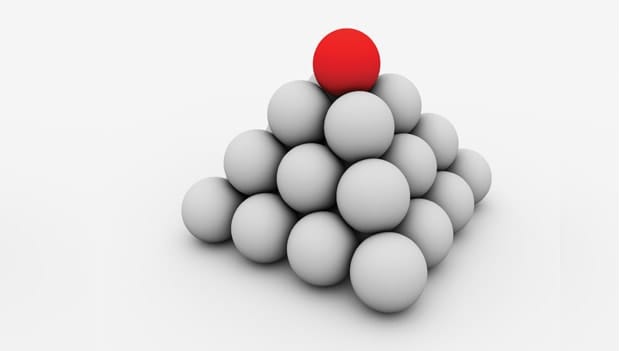
Why should organizations be hierarchical? Excellence can occur at any level and hierarchy has the power to kill excellence, especially of the young and talented.
I worked in early stages of my life in three different organizations besides the Indian Institute of Management at Ahmedabad (IIMA): Government of India Institution, University and a PSU. Of all the four organizations, the most productive, motivating and talent developing organization was IIMA. In Government organization, I joined it six months prior to my boss. A few days after he joined, my boss saw a paper published by me in a medical journal warned me not to publish without his written permission, though in my job, I was expected to disseminate knowledge in health administration practices. This was so demotivating that I preferred to leave the organization to join a University at a lower grade. In the University, there was a lot of academic freedom but always a limitation of posts of professors. In the hierarchy-driven PSU, I had to negotiate for the highest salary level and a designation of General Manager (at age 32) to introduce change in some of the systems I was supposed to create. The designation symbolized my expertise than my age and it is the designation that enabled me to get all GMs and other employees to participate in the change process. In all these places, hierarchy mattered and designation indicated the level in the hierarchy.
When I joined IIMA in 1973, I experienced altogether a new phenomenon. The culture and processes appeared to be out of this world. There were only two levels among professors and no hierarchy: Assistant Professor and Professor. The appointment letter indicated the designation and salary, but it did not matter for anything else. Dr. Vikram Sarabhai presumably felt in those days that hierarchies killed innovation and excellence, preferred flat structures and even resisted IIMs being established by an Act of Parliament. He believed that research and education establishments should be structured in a hierarchy-less way for promoting excellence. He created a system and a culture where all faculty were addressed as Professors though they may have different salary levels and had equal opportunity to teach, research, and manage administrative activities irrespective of their first assigned designations.
It was symbolized by all faculty having the same size office room, and shared secretarial assistance the same way and even have same size houses (with marginal variations to suit your family size). The culture was called as peer culture and a culture of equality, and the faculty reported to the Director. Deans and Area Chairs were coordinators with no additional powers. At IIMA, as Ravi Matthai, the first full-time Director puts it, the power is delegated upwards. The faculty as a community delegates power to the Area Coordinators, Executive Committees, and even the Director. Once joined as Assistant Professor, in three years an individual was evaluated for his/her work in teaching, research, publications, administration and consultancy and promoted, if found to excel. If one is not promoted in four to five years, it is understood that one is perhaps not at the right place and should search for alternatives —even the Institute helped in finding alternatives. Once an individual is a Professor at IIMA, the focus shifts to proving excellence continuously by work and contributions. There is a good system of planning, self-appraisal, and review by a committee and most of all, excellence is established by the nature of work one does in terms of teaching and publications.
This hierarchy less peer culture established nearly over five decades ago continues with minor changes like introduction of a third-level among professors but not affecting the basic notion of peer culture and flat structure.
I always wondered why this structure can’t be followed by all. Why should organizations be hierarchical in structure? The only function hierarchies serve is that they facilitate supervision and ensure accountability. Seniors or bosses in such a system a have a higher responsibility to ensure that they get work done by their juniors. Juniors always must spend their time finding out what pleases their seniors or bosses and sometimes end up spending even less time doing their work. In hierarchically structured organizations, there is normally a pyramid structure where there are fewer positions at the top and many at the bottom levels. Those at the bottom or junior levels are valued less and those at senior levels more, not by their competence but by the designation they carry and their span of control. This creates unhealthy competition and politics at workplace and also wastes talent and channelizes energies from productive to less productive activities.
I always wondered why organizations can’t be structured with less and less hierarchy especially when it is about promoting excellence. Excellence can occur at any level and hierarchy has the power to kill excellence, especially of the young and talented.
In all my work on Performance appraisals with corporations, I am always confronted with the question by many executives, “Why should I work hard or more as my senior does not have any vacancy above him and he is going to be there for next several years”. Even after he/she leaves there are a dozen people in the line”. The only way to break this thinking is to have matrix structured or project-based hierarchy-less organizations where the work you do is more important than the designation you carry.
Once I was visiting organizations in Hong Kong to study their performance-linked pay patterns for IL&FS. I came across organizations that had a very impressive system of designations or flat structures. Employees particularly the customer/supplier facing were given the freedom to choose the designations they like and get visiting cards printed with it. For example, they discovered when an Assistant Manager goes to negotiate a deal, the client often told that their competitor sent their Vice-President and they would prefer to deal with a VP than with an Assistant Manager. The new system gave freedom to have designations that suits their client system. They were only barred from using designations like the MD etc.
A lot of tensions get created due to hierarchies. The IT and financial services sectors have shown the way post liberalization in India. There are only four to five levels — a team member, a team lead, a project lead, a program lead or a vertical head. They follow flat structures that are indicative of the nature of work of the person than the level in hierarchy. This is possible even in manufacturing.
Hierarchy divides and equality integrates. Hierarchy in organizations creates new caste systems, gives rise to politics and distracts human attention from giving their best.
Many organizations have as many as fourteen to twenty levels: six or so among workmen and fourteen in officers level starting with a MT or a GET to CMD, MD, Joint MD, with in between junior Executive, Executive, Assistant Manager, Deputy Manager, Manager, Chief Manager, Assistant General Manager, Deputy General Manager, Senior Deputy General Manager, Additional General Manager, General Manager, Assistant Vice President, Vice President, President, and so on — these serve no purpose than satisfying the power and status needs of some individuals.
Hierarchies create more hierarchies, create position-based mindsets and give way to power dynamics and politics at the workplace.
With a good performance management system in place where the key tasks and activities are defined in the beginning of the year, reviewed periodically and there is freedom given to employees to decide the way they work so that they can bring in creativity and ensure accountability, we can easily do away with hierarchical structures. Such steps will go a long way in enhancing the speed of decision making and happiness at workplace.
Topics
Author
Loading...