







Performance Management
Managers need not label staff with rating





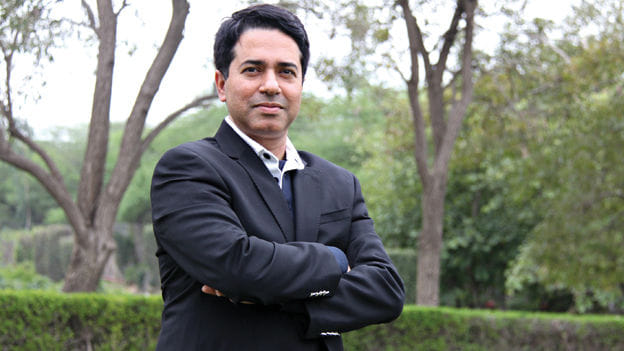
Performance management is an in-process in-time rather than a point-in-time, says Rohit Thakur, Head-HR, Microsoft India
We as an HR team strongly believe that everything that we do in HR should be focused on achieving business results. Performance management, therefore, is about setting the right goals, providing the path to achieving the goals, evaluating performance in a consistent and fair manner and communicating the basis of measuring performance and differentiation.
At Microsoft, a system of performance management using a curve was fostering destructive internal competition among peers and putting a lot of focus on individual excellence rather than team excellence. The organization decided to change its performance management process including the element of what an individual has learnt from others, and shared with others. We also shifted our focus to richer and more structured conversations. We call these conversations as “Connects.” A part of this redesign was also to delink these conversations with rewards conversations. The structure of these conversations can be captured in the following questions:
We have also built guidelines around impact, which are very different from 3-point or 5-point rating scales. We are looking at impact as a continuum from low to high. From a tool and process perspective, a manager can input the impact an individual has created and the tool automatically calculates how much increment or bonus the individual is allocated as rewards. In this way, managers are freed from managing the reward numbers and they can focus on the impact individuals created for the organization. The biggest challenge that Microsoft’s managers face is to steer away from the mind-set of managing a bell curve. Managers are no longer forced to label employees with a rating.
Topics
Author
Loading...