







Strategic HR
HR is more outward looking than before





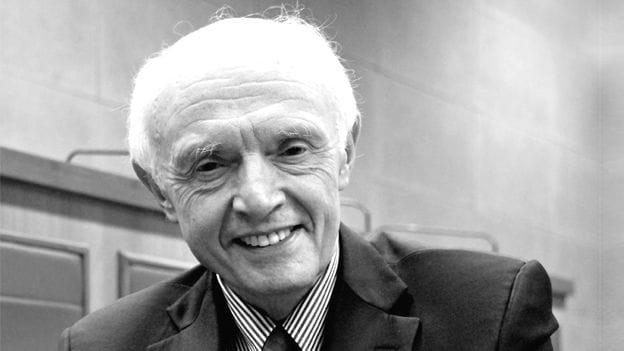
Wayne Brockbank, Clinical Professor of Business, Stephen M. Ross School of Business talks on opportunities for HR
Q. How has the discipline of HR changed in the past decade? What drove those changes?
A. There are three important changes that have occurred in the HR field. The first shift for HR professionals is to look outwards rather than inwards to determine the criteria for HR practices. Earlier, HR would look only inside the organization to add value and they have now realized that what happens on the inside will be relevant in the long run only if it responds exactly to the requirements of customers, competitors and capital markets. This shift from the inside to the outside is driven by economic necessity. Every department in the company needs to be oriented around creating value for the customers. HR cannot be the exception. It is not the employees who decide if the company will stay in business, it is the customer who makes the buying decision.
The second is a shift from focusing primarily on optimizing individual talent to optimizing the total organizations. It is not just having individual talent that matters, but we need to have the ability to design and create effective organizations; and that becomes a critical source of competitive advantage. This is being driven by the fact that increasingly individual talent is commoditized. Research in labour economics says that over time major competitors in the same industry will develop talent, which is roughly equal. The critical question is not the talent you have, but what you do with the talent after you have it.
The third major trend is moving away from being an isolated department that does administrative function activities to being a coach, mentor and counsellor for senior executives as they work to create the organization.
Q. Can you outline some recent international events that potentially transformed the discipline of HR?
A. The advent of the internet has been a fairly big deal and the information age it created. During the past four to five years, the internet has hit an exponential curve; it has changed the way information is identified, accessed, imported, interpreted, analysed, shared and utilized in the company has increasingly become a mandate. Earlier this year, Google bought Nest, which is a household control instrument. With this acquisition, Google will be linking the information it collects on your habit patterns like the time you travel, your house temperature and your movement within the rooms to know about you more than you do! That creates all kinds of technological, organizational and ethical issues. HR will certainly have to get involved to help companies maintain their ability to do those activities in a trusted, yet effective and beneficial way. This particular example not only has implications for HR at Google, but other companies as well as they begin to do similar things. Like Nike can now track where and how you run, how healthy you are and know more about your body then you do. Similarly other companies will follow.
Q. What is the future of HR management? What are the next step changes that will likely happen in this discipline?
A. We do not have to guess the future, we already know. Over the last 25 years, research that we did at the University of Michigan has continuously identified things that HR professionals around the world do not do well, but where they add the greatest value in the few pockets where they are done well. That is the area of opportunity and the potential competitive advantage. We have been able to identify with extraordinary accuracy the trends that are coming around the corner for HR. We have been doing that every five years for the last 25 years.
It takes five to seven years for the HR to catch up with early adopters. Our job is to identify the early adopters. What we have identified in the last round of our competency study is the centrality of information management and the role of HR in it. There are not a lot of companies where HR currently is playing an active role in the total architecture of information, but we certainly have pockets of companies where HR is playing an important role in contributing to certain aspects of information architecture. That is going to be a big deal—how to identify the information which is critical, bring it into the firm and making sure it is utilized.
Let me give one example of the important role that HR can play in information management. Frequently, people do not share information because they don’t want to and there are those don’t want to receive it because they do not want the public image of not knowing; I term this as the Kerr paradox. And yet, sharing information is critical for an organization’s whole to be greater than the sum of its parts. So HR has to understand and think through the logic, incentives and the processes to overcome the Kerr paradox. This is one way through which HR can add significant value to the management of information.
Q. Can you provide some life experiences and how they transformed the way you started looking at people and management?
I have had three relevant experiences in my life that have framed how I think about people and organization. I have an economics professor, when I was doing my PhD in Organizational Theory, who was very tough. He said that before you work with me, you have to convince me that you understand that nothing you do inside the firm means anything unless it creates cash flow on the outside. That was a new way of thinking about people and organisation that I had not considered before.
Second, early in my career, I had the opportunity of working with a company where HR practices were aligned with the misunderstanding of what the marketplace required. Once they realised what exactly the marketplace wanted, they realigned all their HR practices to be consistent with the marketplace. Market share rose 12 per cent in two years, adding $2.4 billion to the top line.
Third, when I finally went to the University of Michigan I began doing large scale research on the impact of HR practices on business performance. I started to understand through 25 years of research that what I had learned earlier in my career wasn’t just the exception, but was statistically accurate. HR professionals that partner in the business focus on a few but critical issues defined by what the company needs to do to grow its revenue. When HR does not have this focus, everything else it does might be nice but it will not add the economic value that is required for competitive advantage.
Q. What is your prophecy for the next few years?
The prophecy is that in the future the great preponderance of effective HR professionals will start to bear responsibility for helping to orchestrate the total flow of information around the firm. They will help to identify the most important information and how to access, import, share, analyse and utilize that information. A significant part of that is big data analytics. About 70 percent of the companies are still discovering big data analytics and they are already behind. It has to start with HR’s understanding of big data analytics and how to use it; how to make sure that a company has the right talent, skill, technical capability and culture to support big data analytics. That is called the management of structured information. The current state of the art among the early adopters is on how to morph unstructured information into structured information so that this huge amount of unstructured electronic information can be utilized for decision making within the company. This can help understand and meet the needs of the customers by providing products and services that the customers want even before the customers cognitively know about them.
However, to create significant competitive advantage, only the very early adopters are thinking about to be more scientific, thorough and rigorous in architecting social algorithms of information analysis. This is not just about taking unstructured information and changing it into structured information, but how to more fully leverage unstructured information which cannot be morphed into electronic medium through more effective meetings, information sharing and overcoming ego and arrogance in giving and accepting information.
Increasingly, everyone will have the information. The critical issue is not to have the information and analyse it, but it is to have people with the right ability, intellect and social skills to understand and reach conclusions based on the way people react. I am quite confident based on our experience of 25 years of research that this will be the next major trend in the HR field. Early adopters will win.
Topics
Author
Loading...