







Employee Engagement
People & innovation are at the core of TomTom’s success



 ||
||

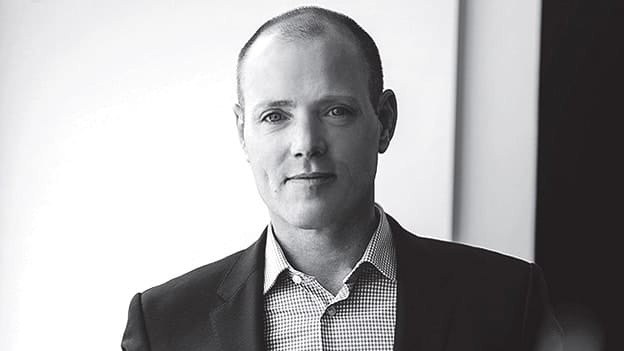
In an exclusive interview with People Matters, Arne-Christian van der Tang, SVP - Group Human Resources at TomTom narrates the organizations transformation journey, the companys continued focus on diversification & how HR is customizing employee experiences
Arne-Christian van der Tang heads the HR function for the TomTom group, a $1 billion-plus Dutch company that providesconsumer, automotive, navigation, and mapping solutions. Van der Tang has been credited to have secured significant investments in HR to execute large-scale change management.
TomTom has recently adopted Workdayís HCM solutions for its HR & talent management operations.
Product companies have undergone massive transformation due to the technological advancements happening in the industry. How has TomTom transformed to keep pace with the industry? What has been your transformation journey like?
TomTom started as a software company back in 1991 and in our 25 years of operation, we have diversified and transformed many times. We started with developing software for B2B mobile applications and Personal Digital Assistants (PDAs) for consumers. We have since thendiversified into other avenues – navigation software, software for organizers, etc. – but we have been all about software development. It was then that we connected with a digital mapping company called TeleAtlas. And for the first time in 2002, we started applying our knowledge of software and content creation with GPS network. GPS was open to the general public which created a fantastic opportunity for locating people through their GPS position on the map,which led to ournavigation product; and that navigation product turned into our story.As good as that was, we were also hit very hard when the market crashed in 2009-10. We had planned for diversification of our revenue long before that though and moved from the consumer space towards business to business, fleet management and automotive solutions.
However, the acquisition of Tele Atlas in 2008 was the catalyst in TomTom’s transformation process. Had we not pursued that acquisition, we might not be having this conversation today, as it has proven to be of great strategic value to the company.
When the times were difficult for the organization, how did you manage to take everybody along with you?
It is not easy trying to engage with your people when your revenue has been down for four years straight. But we have managed going through that phase. It is a part of the journey, and we look at it as a feel good story, a comeback story. When the industry started to decline, many analysts ruled us out and said that we would go out of business. We were surrounded by detractors and employees had also started losing faith in TomTom and were leaving us, but we managed that transition. We did it by keeping a true relationship with all our employees, and we ensured that our leadership was visible in the organization. We have amplified our culture and our brand.
We don’t define ourselves as a disruptive company, but we do believe that we bring innovation that impacts millions. We are here to make technology easy to use for everyone andwe are doing that in navigation, sports, maps, and so on. We have had a great impact in the lives of millions of people over the globe.
What are the things you have done extremely well from a people perspective that has helped TomTom make a strong comeback?
Like every company that grows as quickly as TomTom did, we also made many mistakes. We wanted to achieve more, faster as a company and in the process, we also managed to make the organization a lot more corporate than we wanted it to be.
It was in December 2011 while we were discussing how people were losing the connection with the products we were building and selling, that we decided to change the entire organizational structure. And we decided to have product teams who had end-to-end responsibility for a particular product, and this includes everything, from product management, creation& development, to selling and marketing it.
We also changed our management layers from eight to maximum five. Mostly, we created teamsaround the products we were trying to deliver in the market which worked tremendously well for us. People knew what they were contributing towards and could see the impact of their contribution. Looking back, that was probably the best thing we could have done. The journey wasn’t easy, but it worked out really well for us and I think our employees would agree with that.
After having managed through the difficult period of transition and coming back to a sustained growth stage, what has been the focus area for TomTom from a talent standpoint for the current year?
Our ambition is to be recognized as the Top Tech Employer to work for, and our aim is to be in the Top 10 especially in those locations where we create products and have software/hardware development centers, for instance in Pune in India, the UK, Poland and the US.
It is as much as an ambition as it is a necessity. We want to be recognized as a true power in the market. If we are not on the top of people’s mind, then how would we attract the great minds in Stanford or MIT or some of the great institutes in India?
We may have a fantastic opportunity to attract talent as we continue to innovate but the value proposition we want to extend is that they can be a part of a company that is shaping the future of driving and location-based products; and it is a huge promise. If you are to change the future of driving, you need to have an access to the world’s best minds – it is not a luxury, it is a necessity.
And to achieve that, we are doing three things from an HR standpoint. First is leadership. We, in the HR team, are working towards creating a great TomTom experience, and the leadership has the power to drive that. Working at TomTom means you will be working in an environment where you have the world’s best leaders who enable their teams to achieve more. The second change that we have brought in HR is changing our technology. We have started using Workday which we believe, will have an impact on our candidate, employee and management experience. The third pillar of what we do in HR is spreading the word. We have never been a loud employer but we are spreading the word about the company, the work we do and our culture. We have a team of six marketers who work with the HR team. They work on creating content to spread the word about our culture internally and externally. We have 4800 testimonials from our people on why TomTom is unique and we amplify that message at every touchpoint.
What are the top three things that differentiate TomTom from others?
I would like to mention the one thing which has been most impactful. My team did not create TomTom employee experience, but it articulated what is already present. Our employer brand is only successful as those who represent it. That has been my team’s biggest contribution: we have helped our employees articulate, acknowledge, and experience what makes it unique to come to this organization. Everybody speaks the same language and when people speak about our employer brand, it is always consistent. We, in HR, just articulate it, celebrate that culture, and create that environment.
You have a millennial dominant workplace. You have spoken at large about customizing a lot of offerings – whether it is rewards, learning interventions, etc. How are you customizing that experience?
55 percent of our workforce aremillennials. And we customize the experience for each of our employees. We don’t do that on hunch. Webase it on proper data-driven research. We have done extensive research among our current staff about their work preferences, their work priorities and the kinds of tools they prefer using.
We no longer have one performance management system in the company. After analyzing data, we learnt that engineers in Germany and Poland have a greater preference for a 360-degree continuous feedback process when it comes to performance, so we have adopted that. Likewise, we have different bonus plans for people in Pune than in Netherlands because rewards preferences are also different across cultures. We try to create an employee experience which is about the employee and not about what HR wants.
We manage to do this by segmenting our workforce data into patterns and then creating customized solutions. In hindsight, this has also added a lot of complexity – the reason we have moved to Workday. Ideally, we would have 4800 tailored solutions for each of our employees, but that is not practical. Adding so much complexity in customization can be seen as a risk, but it is one that we are ready to take for our employees.
What is your future business plan? What would be your talent strategy for it?
We foresee a fantastic future for TomTom in the digital maps space and location based products. In Consumer, we will continue to launch easy to use sports and navigation products, and expect exciting news to hit the markets in Q4. We will see the biggest growth coming from our Automotive and Telematics business units. Our talent strategy is to attract the best in the market through a compelling value proposition, which allows the right people to achieve more, and have great impact on our success. And we will support their personal development, in each step of their careers at TomTom.

Loading...