







Leadership
Building culture one person at a time





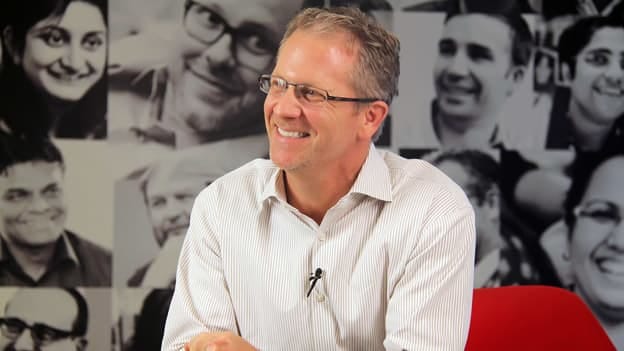
Sapient CEO Alan Herrick tells People Matters how to create a positive, sustainable corporate culture
Q. Take us through how the company got started. What was the philosophy in building the organization and what was the role of people at that time?
A. If you go back to 1991, the founding ideal was about impact. The world didn’t need another consulting company. Our founders Jerry (Greenberg) and Stuart (Moore) focused on value, culture and vision of purpose before they had any people in the company. The original purpose has evolved over the years, but it’s all in the same genre: To make a huge dent in the world. In terms of people, the idea was that if you could have really smart people, if you could have a differentiating approach, and you could put those two together, you’d have the ingredients of a pretty great company right there. There was a lot about the relationship between people and talent. That’s why we use “Sapient People” and not employees because we don’t want that contractual relationship; we are in a journey together. People debate if culture can scale or not. I think culture scales if you design it and you are committed to it; and if you have a group of people with the same purpose and a culture that really enables them to go after it, then you have something special.
Q. How do you move from strategy to execution when it comes to making effective business culture a reality?
A. Some companies do it well, but I’d say most companies don’t. The question you have to answer is: Do you really use purpose, vision and values to make decisions, or are these simply something that you put up on a wall, while the decision-making process is actually something different? Do you reward somebody for being open, for pointing out a problem and bringing it to a client, or don’t you? Culture is the connection of purpose, vision, values, behavior, fabric, tradition… there’s a lot that goes into this. I think to make a culture authentic, your leaders need to live it every day and you need to have measurement and consequences. People are very smart; they’ll tune into what you care about. If you tend to a goal like profitability more than you tend to your value system, they’ll notice that. You have to reinforce culture as a company grows. Your leadership has to pay attention to it, and when you’re looking at promotion, development and compensation, culture has to be part of what you measure.
Q. In your mid-level and top management, you have huge levels of retention, which is quite uncommon for today’s environment. What’s your formula for success?
A. I think it’s a connection between individual ambition and the fact that our people feel that they’re united in a cause. An investor told me a couple of weeks ago that over the last 20 years, nobody has transformed like Sapient, and I think that comes back to our commitment to a vision and our courage to go after it even when things get bumpy. It’s both difficult and empowering, but I think that’s why we’ve enjoyed so much success.
People always want to be part of something bigger than themselves; the culture really drives that. I have a person who sits in my office and he is the global leader for culture. His job is to focus on how to design and tend to culture as the company scales? This is to ensure that when we grow up, which will be a long time from now, we’ll still like who we are as a company. I think sometimes culture gets away from companies. You can influence and shape culture by your commitment and your authenticity.
Q. How do you manage to sustain a long-term view & yet nurture an approach to culture despite the quarter-on-quarter pressure the business keeps facing?
A. If you get very focused on a quarter-to-quarter idea, then I will say that you are not really vision and mission focused. For me, it is about focusing on the long-term vision and that will deliver value over time. Obviously, you have daily pressures that make that harder or easier, but it gets down to being able to manage the pressure and keep the perspective because this is a marathon. Talk a little bit more about your structure of “People Success”— It is a very interesting terminology for what people traditionally call human resources. I don’t like the term HR because, to me, it feels like people are being commoditized. It’s as though as an employee you’re to be used as part of an equation and that’s just not who we are. Our entire success depends on having tremendously talented people all over the world; you couldn’t have a more precious or valuable resource. We are the people that we have. “People Success” has been named that way because they’re a group of people that stands for the success of our people, and they make sure our employees can succeed across the world.
Q. How much of your personal time as a global CEO goes into “People Success”?
A. Quite a bit. As I said, I share an office with our global head of culture. We spend a lot of time thinking about the development of people, leadership, and culture worldwide. If you look at our business and the amount of disruption we’ve caused in the market, you can see how culture creates advantage. If you think about the service industry, it’s all about intellectual capital and retaining really bright, creative people. I think creativity is highly correlated with innovation, which is something our clients need. A lot of things change — advantages and disadvantages — open and close, but I think one of the most sustainable advantages a company can have over a long period of time is creativity. People often talk about how technology drives change, and that’s obviously true, but it’s really people that continue to re-invent the ways a company does business. Companies have to grasp the new creativity, globally distributed talent and massive changes in technology trends.
Q. How do you sustain creativity in business?
A. You can’t create a formula for creativity. It comes back to whether you create an environment, a petri dish, in which interesting and cool things can happen. If you bring together a lot of curious people in such an environment, you’re more likely to encourage creativity. Creativity is an inspiration that’s often the culmination of a lot of incremental developments over time, so if everyone is always striving to make things a little bit better and a little more connected, I think you’re on the right track.
Q. From the people function perspective, what is the key element that it takes for a business to be successful?
A.
Selection is critical, but you also have to get the growth of people right. I think that a lot of our success has come from the emphasis we place on team-based success. You have to get people that want to work on a global team with a million different perspectives. One of the things we teach is that you have to value diversity, because a lot of our creativity comes from teams with input from all over the world.Q. The “Talent Conclave” seems like it’s a key component in your culture of development and is a priority for your business. What was the business concept behind this idea?
A. I think this is really a game-changing program. This differs from classical on-the-job training in which you have to follow a plan or a checklist in your role at the company. We’ve created an inverted marketplace, where people can direct their own career development and their own learning. We say to our employees, “you’re very talented, you’re very smart, we’re creating a marketplace of opportunities for you to develop yourself. You assemble your training.” This gives people a great opportunity to figure out how they want to develop their career. Of course you still have to have some classical training, but I think our people find this approach more rewarding. In our global framework, classical training just wasn’t getting the results we wanted. People want to learn faster than the old method allows.
I think this program gives our people perspective on their own careers, which is something I would’ve liked in my own career. For instance, we have a track called leadership confessions, where leaders talk about a failing or issue they had. And I think it helps to hear about the problems that the leader of a division or company struggles with, because you begin to understand that failure is necessary for success.
Topics
Author

Loading...