







Employee Skilling
Deloitte's SV Nathan on aligning approach with talent





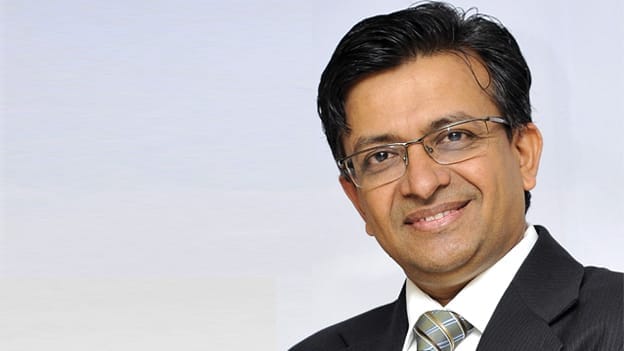
In a special interview with People Matters, SV Nathan, Partner and Chief Talent Officer, Deloitte India shares his views on skill development, leadership, diversity, and millennials.
SV Nathan is Partner and Chief Talent Officer at Deloitte and has over 29 years of professional experience in Human Resource management. Nathan served as the President of the Hyderabad chapter of the National Human Resource Development Network (NHRD) until 2011.
Continuous learning is of paramount importance as that is the lever for supporting anyone through the change, especially employees. What do you have to say about this?
Top Leadership recognizes that there is inertia in the area of learning and the changes in today’s times' predicate – learning, unlearning and re-learning. As we learn to put greater emphasis on change management for newer things, we neglect the power of lifelong learning that prioritizes education continuously. I believe the ability to always learn and un-learn ensures continuity and adaptation to change. Learning makes one create an impact for themselves. What is more important is that the application of learning and that comes in from an ‘attitude’ to use that learning. Most successful leaders do this with elan. They also focus on making their environment conducive to learning, more of a creating a continuous learning environment, a cultural shift rather than making adaptation a series of start- slow and-stop events that are confusing.
The HR teams have to be ahead of the curve and not in terms of reacting to the external changes, but in being proactive and be ready with the right training and development programs to meet the industry requirements. Do you think HR has lagged behind in doing this? Or do you think HR is gaining momentum?
Today, learning and development function has changed from just training providers to content curator and experience facilitators; they are focusing on making learning a self-driven pursuit and relevant to a business context. They are also focusing on bringing about a cultural shift by reinforcing the value of learning and in their work that is transformational, something that moves the needle on its application that is felt all over. The traditional training is getting revolutionized and it is moving from ‘push’ training to ‘pull’ learning. Training departments have started to provide learning on-the-go, through gamification; they are also focusing on providing experiential learning. Digital learning, micro-learning, and interactive learning are the ways that HR functions are leading organizations and are making an impact and rising to the industry needs. It is no longer a good-to-have, but a must-have today.
Diversity of thinking is gaining prominence as a disruptive force to break through the status quo
Traditionally, diversity was associated with programs — just a group of people, initiatives designed around providing equal opportunity. Now, there is equal focus on Diversity and Inclusion both and the focus is on leveraging our differences to make them a strength. It is about recognizing the uniqueness of each individual and leveraging differences to generate a culture characterized by respect, fairness, a sense of belonging and the feeling of being valued regardless of who you are. Diversity in the market and diversity within our talent pool has generated a more nuanced kind of diversity – diversity of thoughts, and not just gender. It also had a greater impact on inclusion – how do we bring in the greater power of diversity through inclusion. The concept of diversity of thought is disrupting our workforce by redefining how we define and harness our human capital. Diversity of thought goes beyond just affirming equality, by acknowledging differences and responding to them. Inclusion makes it happen in a thoughtful way.
HR drives business profitability too. What do you think?
Any business works in two markets — the client/customer market, and the people market. The business market cannot be addressed without people. HR influences this market in a major way. To address this, let’s look at how organizations are structured today. Individual professional silos are breaking down and business verticals are not working in isolation anymore, but are moving towards increased collaboration and interdependency. HR stays with every employee through their entire employee lifecycle, right from recruitment, onboarding to training, developing and strengthening each employee. Since these professionals are what determines our profits, finding the right talent and particularly honing and developing it, finding the right opportunities and aligning each individual to play to their strengths is the responsibility of HR and that’s where the value lies. Profitability of a firm is driven by its human capital and managing this talent is how HR drives the business. Productivity can be increased by raising the right issues that people face and having them addressed suitably. Beyond programs, the direct impact is what HR functions do to drive the business needs, and thereby the profitability. The cost of hiring, retention, and utilization of all drive profits. Developing people also impacts the bottom-line. In terms of a more direct impact, HR professionals can also be effective catalysts in forging alliances and networks and improving relationships with clients.
How critical is it that the diversity of talent at Deloitte mirrors its diverse client base?
Diversity of markets, customers, ideas, and talent are essential for us. Understanding and satisfying an increasingly diverse client base is critical to thriving in today’s environment, and at the same time, we invest in developing and growing talent and building a culture of diversity in thoughts. At Deloitte, our purpose is to make an impact that matters to our people and clients. Our approach to diversity helps us recruit, retain, and engage high-performing talent, build our brand and win work – and get closer to our clients. It also helps us better connect our colleagues – thereby unleashing greater collaboration and innovation within our organization.
According to Deloitte’s Millennial Survey findings, millennials appreciate working in a collaborative and consensual environment rather than one that directly links accountability and responsibility to seniority (or pay). This suggests that the workforce is evolving and that organizations have to try harder to attract and retain talent. Do you agree with this?
Today, the workforce is definitely evolving. At Deloitte, over 80 percent of the workforce is millennials. Companies are beginning to adapt to a new, implicit social contract with employees – where the demands and expectations of today’s diverse, multi-generational, mobile workforce require a more flexible, employee-centric work environment — one which companies are just beginning to learn to develop. The key here would be to tailor our approach so that it is aligned with the talent we are targeting. We have to meet their expectations which are different but not necessarily harder to meet. Some key aspects to include would be to focus on wellbeing and flexibility. Additionally, there needs to be a strong emphasis on being digital and leveraging technology to the fullest. Job rotations, secondment projects, shadowing opportunities also help in building a culture and environment that is largely conducive to retaining employees.
Do you think that a majority of businesses see technological disruption as an opportunity—particularly cognitive technologies, artificial intelligence and machine learning? And if at all, what is giving these companies a disruptive edge?
Digital changes are now everywhere, from mobile apps, GPS, 3D touch-enabled sensors to activity trackers, and wearables. In this era, we are observed by digital devices and influenced by recommendation and suggestions of digital analytics. Industry leaders view technology as a great opportunity to be leveraged as opposed to a threat that needs to be minimized. We are currently living in a digital era, where technology extends beyond just workspaces it has seeped into our home, our personal lives, our governments, and our education systems. It touches all spheres. What gives organizations an edge is harnessing machine intelligence that mimics human cognition to create added enhanced value. It makes the organizations more insight-driven and highlights patterns and opportunities that would not necessarily be visible. If we start looking at these advances as “co-bots” not robots, the possibilities are limitless.
How can organizations move beyond the myopic perception of digital to consider employee engagement and innovation that everyone can relate to?
To drive employee engagement and innovation, it is important we leverage digital. For a firm to be digital doesn’t just mean getting new technology and tools available. It means establishing a digital mindset, a truly digital culture. To talk about employee engagement in particular, rather than focusing narrowly on engagement in isolation, organizations need to improve the employee experience as a whole supported by a strong digital culture. Being digital, therefore, is not a perception we should have, it is an integral resource that seeps into all our practices to maximize our potential. Having established the impetus of how digital culture plays is important for our practices, it is more important to have a digital mindset as it drives innovation.
How can organizations bridge the digital divide between business leaders and digital natives and effectively track and measure workplace digital investments?
Digital has reshaped the way we work, how organizations are structured, and how workforce operates. In order to succeed, organizations need to assess and prepare how technology will impact their processes and their bottom line. We are in Digi economy and it is important that business leaders craft their digital strategy and focus on areas where technology will help them succeed. Some organizations also bring in a ‘reverse mentoring’ program that addresses this in a nice way. Older business leaders learn from the digital natives, their mentors on technology. There has to be a cultural change as well and this is where we need a sharper focus. In a way, this will engender new learning within an organization. Digital investments pay over a longer period of time and not in the shorter run. In a way, it is the way of the future and any assessment now would be premature. We need to, however, find mechanisms to track the progress of what this means. Some of these are also intangibles.
Industry leaders view technology as a great opportunity to be leveraged as opposed to a threat that needs to be minimized
Do you think automation could be regarded as a route through which millennials (and other employees) can increase their influence within organizations rather than see it diminished?
Millennials recognize the potential of automation in terms of productivity and economic growth; they also see it providing opportunities for value-added or creative activities or the learning of new skills. Millennials are generally optimistic about the future of business, according to the 2017 Deloitte Millennial Survey. Analysis of the data shows millennials worldwide are ready to accept the reality of workplace automation. Employees are welcoming the idea of having more time to focus on creative activities and strategic responsibilities that matter most to them and their careers. All millennials want is a ‘say’ and a ‘purpose-led’ organization. These find expressions through these means.
The HR industry is currently at its most dynamic form. We have recently been seeing a lot of change in HR business processes because of the advent of newer technologies such AI and Cognitive Intelligence. Not only should HR professionals and leaders need to embrace change but they also need to create long-term sustainable working models that enable the smooth functioning of organizations. How do you think HR professionals can manage this change for business and people both?
The use of artificial intelligence (AI) and Cognitive intelligence is growing. From simple AI pieces to problem-solving uses, it has multiple benefits that can help make employees more productive and engaged. As an example – AI can help improve and streamline operations significantly; Cognitive computing can transform key dimensions such as Operations, Talent Acquisition, and Talent Development, thereby reducing administrative work. This will let the HR professionals focus more on improving experiences of employees and thereby making an impact that matters. The focus is on leading the change and the HR leaders who embrace the change and help the business champion it would be the ones most wanted by the organizations. Businesses need to survive and grow. If HR does help here, it makes a significant change in its influence.
What machines cannot do is distill the insight; the ability to marry information and insights lies with humans
Robotics hasn’t matured to the level of cognitive thinking but it can handle lots of disparate data and follow instructions. And ‘empathy’ is something that cannot be learnt as it is a lot about Emotional Intelligence, something which is very difficult for machines to learn. What do you feel is the future of work in this context?
Although automation at workplace helps in achieving improved safety and security, better product quality, higher product output, higher employee value and freedom from mundane tasks, Emotional intelligence (EI) plays a role in everything. Highly emotionally intelligent people rank high on responsiveness, empathy, listening, and self-awareness. They excel at interpersonal interaction. People skills are so important now and will continue to be in high demand in the future. Data is the new currency. From it comes the information using the tools available. What machines cannot do is to distill the insight. The ability to marry information and the insights lies with humans. Besides, the ability to handle people and their emotions are to be respected and understood in a larger context of an organization. Machines can but manage some things. The human touch is another. Sensitivity and sensibilities will not vanish, ever.
In Deloitte's last year’s Millennials survey report, it was noted that millennials were “pro-business” but expected more from leaders and corporations. However, this year’s respondents sent a strong signal that those higher expectations are not being met—and that the “pro-business” sentiment has deteriorated." How do you think business leaders can prove themselves as agents of positive change?
The millennials are a group of young people who want to make a difference to the world and to themselves. They care about speed and response to their needs and the impact made to society. However, these are not questions that the Gen X ever asked but today, most organizations are run by Gen Xers. The big question between the last year’s survey and this year’s survey is not about the intensity, but about the speed. Not about intention, but about results. Not about optimism, but about feeling a sense of being let down. Not about will you make an impact, but when will you make an impact? Intention, to plan, to action, to communication and review is the way the millennials work. In all of this, they also care about the purpose of an organization and how it impacts society.
Leaders in this new age need to embrace the fact that we have a special set of people who are tuned-in to the world of apps for their needs. One way is to include millennials in their leadership mix. This way, their voices are heard, which works because these people are not a shy lot. A clear plan has to be made as to what the purpose of each business is – making money and growing to a large corporation has been around for 400 years. The change that is being sought for is ‘what impact will you make?’ I would read more optimism in the response, and make this out as a cautionary call from the youth of the country.
Change can be effected by making the following three things work for them through: Relevance: Create a Mission for an enterprise that incorporates the ask of today; Review: Keep looking at all that we, as leaders do, that works to the Mission of any organization; and Regulate: Make changes along the way that reaffirm what we always wish to do — stay on plan. What millennials also need beyond inclusion is a way to participate in two important things that matter to them: What is the larger purpose? Am I working towards that larger purpose?
A good way is to involve, engage and more importantly, communicate with the millennials.
What is different between the year before and now is the agility that is asked for and the response that is experienced.
Author
Loading...