







Leadership
Unlocking the human potential: Dr. Tomas Chamorro-Premuzic





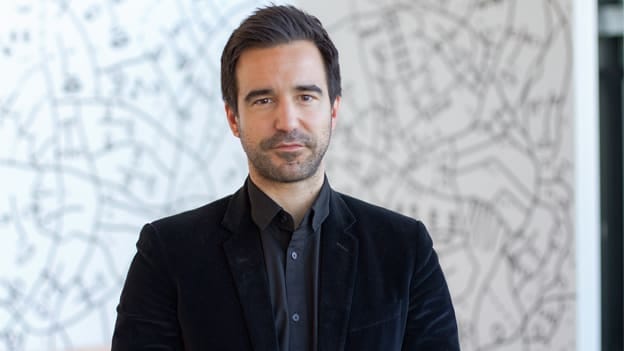
In a series of interactions with People Matters during TechHR 2017, Dr. Tomas Chamorro-Premuzic, CEO of Hogan Assessments and an international authority in psychological profiling, talent management, and people analytics, shares his insights on psychological science of talent, the key to unlocking human potential and the future of personality assessments.
Dr. Tomas Chamorro-Premuzic is the CEO of Hogan Assessment Systems, Professor of Business Psychology at University College London (UCL), and visiting Professor at Columbia University. He has published 8 books and over 120 scientific papers, making him one of the most prolific social scientists of his generation. His work has received awards by the American Psychological Association and the International Society for the Study of Individual Differences. Dr. Tomas is also the director of UCL's Industrial-Organizational and Business Psychology program, and an Associate to Harvard's Entrepreneurial Finance Lab. Over the past 15 years, he has consulted to a range of clients in the financial services, advertising, media, consumer goods, fashion and government sectors. Hogan Assessments are available in India through their Authorized Distributor, ThreeFish Consulting.
In this exclusive feature, Dr. Tomas shares his perspectives on talent, potential, assessments and leadership effectiveness.
How do you think data, not intuition is the key to unlocking human potential? Can human potential ever be measured reliably and accurately?
Human behavior is complex, and our intuition is clouded by our own biases and prejudices — we see what we want to see, and hear what we want to hear. Fortunately, technology has enabled us to capture a wide range of rigorous and granular data on human behavior.
With the help of scientific theories – mostly from Organizational Psychology – these data can be used to predict and understand human behavior, and that includes the development of robust models on human potential, defined as an employee’s probability of displaying work-related talent, especially talent for leadership, in the future.
Human potential can be evaluated fairly, accurately and reliably. Potential is about probability i.e. about quantifying the ability or making a bet that an individual will do something in the future. To give an example, if you are interested in high potential employees, you are making a bet that an individual will be a good leader in the future, or an entrepreneurial employee, and so forth. I think first of all we need to understand what talent is.
Talent is an explanation that we choose to account for exceptional levels of achievement in an area whether it is sports, science, arts, or work. And potential is talent in the making i.e. talent before you can see it. So really, to the degree that you can quantify talent and explain exceptional performance, you are trying to identify what causes that and measuring these things ahead of time.
You have done a lot of work in the domain of personality and psychological assessments. How have you seen this entire space evolve over years? Do you see a correlation between personality and potential?
At Hogan, we focus very much on personality and our basic premise is that “Who you are determines how you lead”. So personality is key to leadership potential. These are not just our studies (and we profiled over 5 million leaders over the past three decades), but independent academic research shows that personality alone accounts for 45-50 percent of the variability in leadership effectiveness. The personality of the CEO accounts for 25 percent of our ability in firm performance. This is just after one hour of assessment of a CEO’s personality. So it is not the only thing that matters, but it is very consistent and important. So that’s what we focus on.
I think the most profound realization is that not much has changed. We tend to focus on superficial changes, which is what technology seems to bring. The only thing that has changed is that technology enables you to do the same faster, quicker, and simpler. A note of caution here is that we need to wait for many of these novel technologies to prove that today’s tools have similar validity and reliability as old school methods. So I think there is a lot of potential for the field, but so far we haven’t quite seen a revolution yet.
In your experience have you seen an impact of workforce demographics like gender or culture on personality, and hence on potential?
There is generally a healthy trend amongst organizations to try to become more diverse. Understand that with diversity comes a challenge i.e. one size does not fit all. In the science of personality, we understand that every individual is unique and technology does enable you to understand people at an individual level. So these categorizations are not very healthy i.e. to think that millennials are entitled, millennials are hardworking, and women are less aggressive than men. It depends who you are talking about. Much like you would not indulge in nationality stereotyping, why is it ok to do it with genders or generations?
HR practitioners are generally indifferent to academic research related to understanding and predicting human behavior. How crucial is it for organizations to use academic research, occupational/business psychology or behavioral economics for processes?
It is critical, especially if companies want to do HR right. The answers are available to everyone, so all they need is a willingness to learn. At the same time, academics are also to blame because they tend to live in their own bubble and communicate only among themselves. A popular academic paper may get cited 20 times in a year, and I even doubt people who cite it actually read it. We need academics to become public intellectuals to reduce the gap between science and practice, not only in HR.
Do you see a gap between the science of talent and real-world talent practices? If so how, and what can organizations do to bridge this gap?
I think the gap is big and it’s invaded by charlatans and fake thought-leaders who distract HR professionals with silly fads and counterproductive ideas. The best companies in the world, in terms of HR terms overcome this issue by having well-trained talent management professionals in-house, engaging with the right external expertise, and, above all, having the necessary expertise and confidence to ignore pointless fads. Organizations need to invest in the right HR talent, and the main need today is for HR to be quantitatively skilled, well-versed in organizational science, and enthusiastic about strategy. Intellectual curiosity is key.
Top organizations and their CEOs need to rely on HR for solving their most important challenges, which are people-challenges. The tactical, legalistic, and bureaucratic image of HR has effectively died, and in the best companies in the world, it has given birth to a much more evidence-based, content-driven, and strategic talent management function.
How revolutionary do you think technology and digital is? Apart from speed, what is it that we can expect to see?
What we are going to see in the next five years is firms and algorithms integrating a wide range of data that is already available. Data is being mined currently for marketing and media purposes, but we would leverage that for HR and talent purposes. We know that virtual reality will represent the modern version of assessment centers or work samples. We know that gamification is enhancing the user experience when it comes to assessment. And I think technologies will even apply in digital interviews — video, voice and speech data can actually make more reliable and objective predictions than human raters. We are moving very fast in this field, the next five years will be critical.
A lot of companies have adopted technology-based solutions. One of the reasons they do it is that they feel that it will reduce bias. Are algorithms truly unbiased?
Robots and algorithms cannot be biased, because by definition they don’t care. So you can program them correctly or not, you can train machines and algorithms to ignore relevant or irrelevant variables. But the most important thing is that they will be consistent. So at least if there is an irrelevant bias, you can factor that in, quantify it and de-risk the operation. Whereas, with humans, you may be more biased than I am, I might be biased vis-à-vis a certain group. It is very hard to actually standardize that and when three or four people are interviewing together, it’s a circus! It’s a political kind of a glitch and we operate under the illusion that it adds reliability, but it does not.
You mentioned that nothing has fundamentally or significantly changed for last 2000 years because the core of assessments has remained the same. What can we, as practitioners, do to change that trend as we look into the next 10 or 15 years?
I think the most important message for the HR tech community is to not ignore the well-established practices and sciences that have worked and have been around for ages. And to understand what these can do so that you can build upon them. There is a lot of progress to be made, but there is currently a big divide between technologies who ignore the science, and those who adopt it. It is important for technology firms to not just get engineers, but also content people. Or if not, they should get advice from people who understand content, because technology plus content can produce the biggest advantage. Today we talk a lot about data, but science is data plus theory, and that’s the most powerful combination — when you don’t just describe or predict what’s happening, but you can also explain and understand it. I think to the degree that technology can enhance science, it will advance practice.
In the future, do you think we can do away with assessments?
In the future, passive assessments will play a much more important role. I think if it is done responsibly, they can have huge utility. Mostly in the pre-hire market potentially, they can provide self-awareness so that one can understand oneself better & make better decisions. Employers will gain an indication of what your potential is.
How do you think leadership emergence is different from leadership effectiveness?
One of the interesting things we found in our research is that the personality characteristics that propel people to be nominated for leaders or to become leaders, are very different than the qualities needed to lead effectively. Obviously, you have to emerge in order to be effective, but most people emerge because they self-promote, they are narcissistic, they blow their own trumpet, they are politically savvy and they manage upwards. These people do not become suddenly altruistic and others-oriented when they are in leadership positions. On the other hand we have people who fly under the radar, they may not self-promote but actually they have what it takes to be a good leader. They are empathetic, altruistic, and competent as opposed to confident. So I think most high potential interventions need to get better at differentiating between emergence and effectiveness. They should help individuals who could be effective, emerge; and stop those who naturally emerge from emerging. Because otherwise we have a problem.
Author
Loading...